Speed Advantage: Automated systems operate 6-3,600x faster than manual counting, depending on product type, processing 60-360,000 items per minute versus manual's 5-40 items per minute limit.
Rapid ROI: Monthly savings of $64,800 from eliminating 5% giveaway in high-volume operations deliver ROI within 10-15 months, offsetting initial capital investment of $15,000-$100,000+.
Labor Reduction: Counting automation reduces labor costs by up to 35% as single operators monitor multiple machines, addressing global labor shortages while maintaining 24/7 production capability.
Volume Threshold: Production exceeding 60 packs per minute typically requires automation; manual counting cannot achieve this throughput sustainably without massive workforce expansion.
High-tech utomatic counting machines deliver 10-3,600x faster throughput than manual counting while virtually eliminating human error. Modern systems achieve 99.8% accuracy (±1 piece) compared to manual counting's 1-25% error rate, making counting automation essential for high-volume food manufacturing operations seeking to eliminate product giveaway and reduce labor costs.
This comprehensive analysis examines the technical principles, accuracy metrics, speed benchmarks, and cost implications of both counting methods to help manufacturers make data-driven decisions about automation adoption.
What Is Automatic Counting And How Does It Work?
Automatic counting uses sensor-based or vision-based technology to detect and count individual products as they pass through a controlled system. These machines eliminate human error by employing multi-stage verification, redundant sensors, and AI-powered algorithms to achieve near-perfect packaging line accuracy at speeds impossible for manual operations.
What Are Automatic Counting Machines?
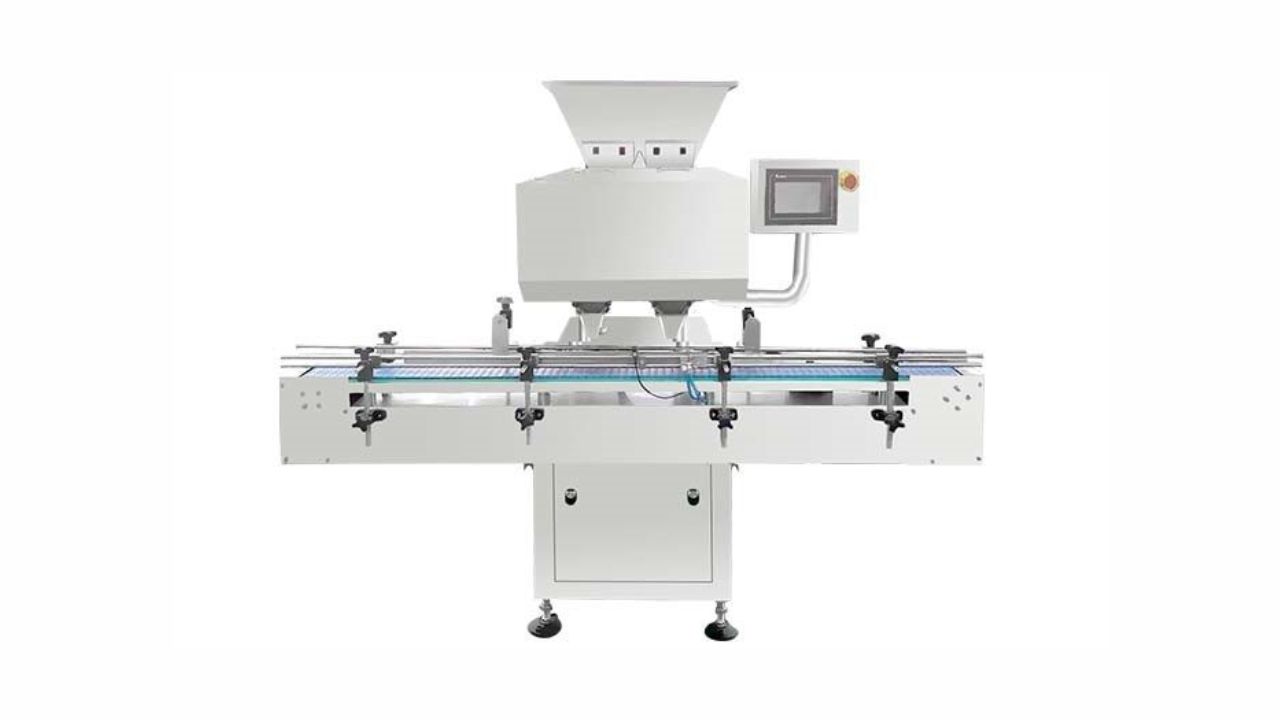
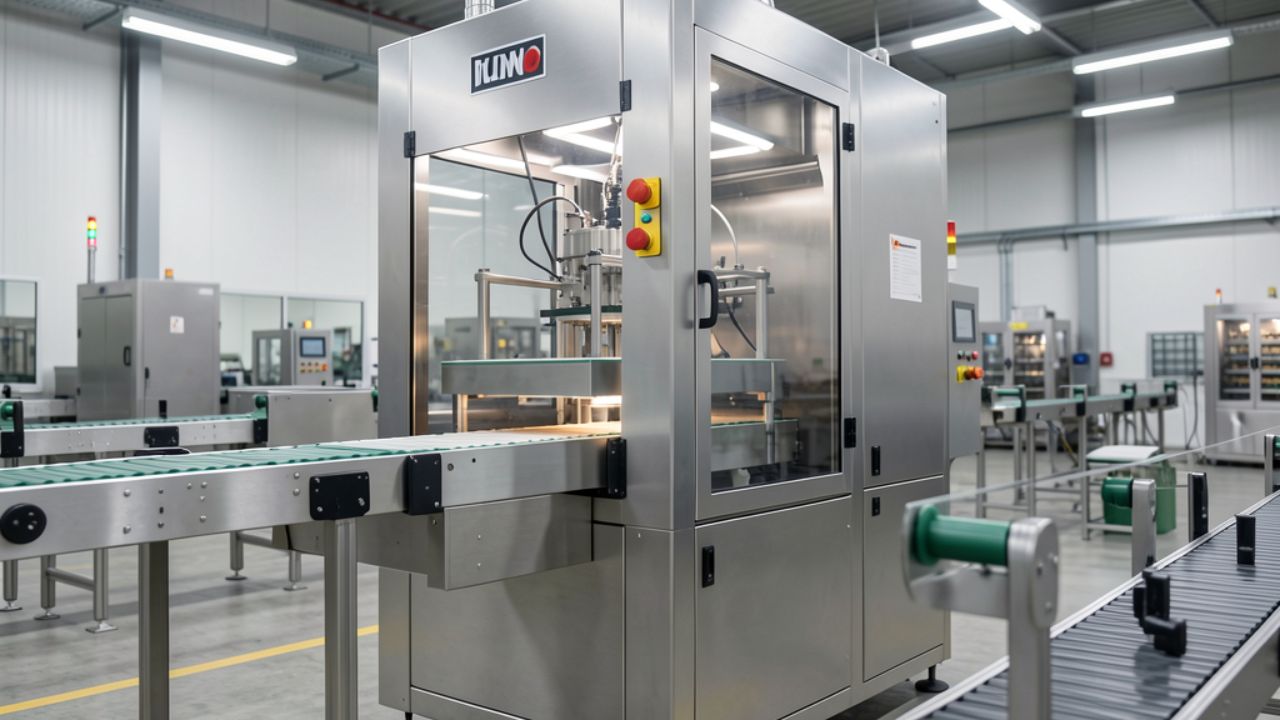
Automatic counting machines are precision devices that count discrete food items, pills, gummies, hardware, or portions using optical sensors or computer vision. Modern counting equipment achieves ±1 piece accuracy in 99.8% of operational cycles through multi-stage error control. Redundant sensors cross-validate each count, ensuring consistent results regardless of production volume or shift duration.
How Do Automatic Counting Machines Operate?
Sensor-Based Systems: Products pass through a controlled flow channel where they interrupt a light beam. Each interruption registers as a count. The system uses photoelectric sensors positioned at designated counting points to detect individual items with millisecond precision.
Vision-Based Systems: High-speed cameras capture real-time images of products moving on conveyor belts or vibratory feeders. AI and machine learning algorithms analyze these images to identify, separate, and count items, even those with similar dimensions or colors. Vision systems maintain 95%+ reliability and achieve 99% accuracy, making them ideal for irregularly shaped products like gummies or sticky items that challenge sensor-based systems.
What Technologies Are Used In Automatic Counting Machines?
Technology
Function
Accuracy Level
Optical/Photoelectric Sensors
Detect individual products via light beam interruption in controlled flow channels
99.8% (±1 piece)
High-Speed Camera Systems
Capture real-time images of products for visual identification
99% accuracy
AI/Machine Learning Algorithms
Train models to identify, separate, and count items with similar dimensions/colors
95%+ reliability
Multi-Stage Error Control
Redundant optical sensors cross-validate counts to ensure accuracy
Near 0% error rate
What Are The Different Types Of Automatic Counting Machines?
Machine Type
Throughput Capacity
Best Application
Key Feature
General Packaging Dispensers
5 to 200 dispenses per minute
Food portions, confectionery
Multi-product flexibility
Single-Chute Packers
Up to 60 packs per minute
Packaged goods, gummies, pills
Pharmaceutical-grade accuracy
Small Parts Counters
Up to 360,000 objects per minute
Hardware, tiny components
Ultra-high-speed processing
Bag/Pouch Systems
Up to 150 bags per minute (per machine)
Food products, frozen items
Integrated filling capability
What Is Manual Counting And How Does It Work?
Manual counting relies entirely on human operators who visually inspect and physically count products. This non-technical method depends completely on operator focus and has no inherent error-control mechanism, making it the most critical flaw in terms of accuracy and consistency. Human fatigue, distraction, and repetitive strain guarantee variable results across shifts and operators.
How Does Manual Counting Differ From Automatic Counting?
Manual counting has no system-driven consistency; it's entirely human-dependent. Error rates range from 1-3% in typical warehouse operations to 25% in high-volume repetitive counting tasks. Production rates are capped by the physical and cognitive limits of operators, who typically maintain focus for only 20-30 minutes before accuracy degrades. The debate ofcounting vs manual laborclearly favors automated systems for maintaining constant performance indefinitely.
What Are The Steps Involved In Manual Counting?
Organize items – Sort and arrange products for counting
Group products – Create batches or clusters for easier counting
Initial count – Physically count each item or group
Verify totals – Double-check counts against expected quantities
Recheck discrepancies – Investigate and recount any inconsistencies
Record results – Document final counts (prone to transcription errors)
What Tools And Techniques Are Used In Manual Counting?
Tools:
Hand-held mechanical counters (clickers)
Tally marks on paper or whiteboards
Basic digital counters
Spreadsheets for recording
Techniques:
Grouping in sets (5s, 10s, 20s)
Pairing method for dual verification
Counting in batches to reduce fatigue
Visual segregation by product type
How Does Speed Compare Between Automatic Counting Machines And Manual Counting?
Automatic counting machines operate 6-3,600x faster than manual counting, depending on the application. While manual counters handle 5-100 items per minute at peak performance, automatic systems process 60-360,000 items per minute without fatigue or accuracy degradation. This speed advantage translates directly to higher production capacity and eliminates labor bottlenecks in packaging line operations.
How Fast Are Automatic Counting Machines?
Automatic counting speeds scale dramatically with product type. General packaging dispensers handle 5-200 dispenses per minute for food portions and confectionery. Single-chute systems achieve up to 60 packs per minute for gummies and pills. Small parts applications reach up to 360,000 objects per minute for hardware.
Bag and pouch production systems process up to 150 bags per minute per machine. These speeds remain constant across full production shifts without performance degradation.
What Factors Affect The Speed Of Manual Counting?
Human fatigue degrades performance over time, especially in repetitive counting tasks lasting more than 30 minutes. Distraction from environmental factors and mental focus lapses affect both speed and accuracy. Product complexity, irregular shapes or similar-looking items, and slow counting significantly affect the process.
Experience level matters; skilled counters perform faster but remain fundamentally limited by human cognitive processing speed compared to automated systems.
How Much Faster Are Automatic Counting Machines Compared To Manual Counting?
Counting Task
Manual Counting Speed
Automatic Machine Speed
Speed Advantage
Food Portions (packs)
5-10 ppm (estimated)
Up to 60 ppm
6-12x faster
Small Items (gummies/pills)
20-40 per minute
5-200+ dispenses per minute
5-10x faster
Tiny Components (hardware)
50-100 per minute
Up to 360,000 per minute
3,600x faster
Bagged Products
2-5 bags per minute
Up to 150 bags per minute
30-75x faster
Are There Any Specific Scenarios Where Manual Counting Is Faster?
Very low volumes under 20 items may make manual counting faster than the machine setup time. Highly irregular products that challenge sensor and vision systems may allow quick manual verification to outpace machine troubleshooting. One-off verification for single-package quality control often proves faster manually than programming and loading a counting machine. These scenarios represent edge cases; production volumes above 100 units per hour always favor automation.
How Accurate Are Automatic Counting Machines Compared To Manual Counting?
Automatic counting machines offer 99.8% accuracy (±1 piece), while manual counting has an error rate of 1-25%. Redundant sensors and AI-powered vision ensure consistent performance, whereas human accuracy decreases due to fatigue, distractions, and monotony.
How Do Automatic Counting Machines Ensure Accuracy?
Error control systems with redundant sensors cross-validate counts, while AI-powered vision systems improve accuracy through machine learning. Real-time calibration ensures 99.8% accuracy in sensor-based systems and 99% accuracy with 95%+ reliability in vision-based systems.
What Are The Common Sources Of Errors In Manual Counting?
Common Manual Counting Errors:
Human fatigue: Performance deteriorates over extended counting sessions; studies report error rates as high as 25% in high-volume tasks
Distractions: Environmental noise, interruptions, and multitasking reduce focus
Repetitive task degradation: Monotony leads to decreased attention and accuracy
Misgrouping: Incorrect batch formation leads to compounding errors
Misplacement: Items miscounted or lost during the counting process
Transcription errors: Mistakes when recording counts
Typical error rate: 1-3% in warehouse operations, but can reach 25% in demanding scenarios
How Reliable Is The Accuracy Of Automatic Counting Machines?
Sensor-based systems offer 99.8% accuracy with near 0% error across millions of counts. Vision-based systems maintain 99% accuracy with 95%+ reliability. These systems provide consistent, error-free performance without fatigue or distractions, essential for industries like pharmaceuticals and food manufacturing.
Are There Any Conditions Where Manual Counting Is More Accurate?
Manual counting may be more accurate for very small, lightweight items affected by airflow or static electricity, irregular or sticky products, and variable weight products, where human judgment is needed to assess clumped items or inconsistent weights.
What Are The Advantages Of Automatic Counting Machines?
Automatic counting machines improve efficiency, reduce costs, and ensure consistency. They operate 24/7 without performance loss, eliminate product giveaway through 100% accuracy, and reduce labor costs by up to 35% while scaling production.
How Do Automatic Counting Machines Improve Efficiency?
Automatic counting increases Overall Equipment Effectiveness (OEE) by operating consistently without human variability. Systems allow scalable production without needing additional labor, with one operator monitoring multiple machines.
How Do Automatic Counting Machines Save Time?
Automatic systems process up to 360,000 items per minute, reducing time spent on counting by 6-75x compared to manual methods. High accuracy (99.8%) eliminates the need for verification and reduces bottlenecks.
What Are The Cost Savings Associated With Automatic Counting Machines?
Product Giveaway: $64,800/month saved by eliminating overfill.
Labor Costs: Up to 35% savings with fewer operators.
Error-Related Losses: Reduced from 1-3% (manual) to near 0% (automatic).
ROI Timeframe: Achieved in 10-15 months for giveaway-intensive applications.
Long-Term Efficiency: Sustained performance vs. human fatigue.
How Do Automatic Counting Machines Reduce Human Error?
Automatic systems guarantee 100% accuracy, removing the 1-25% error of manual counting. This reduces product giveaway, minimizes customer complaints, and ensures regulatory compliance, protecting brand reputation.
What Are The Disadvantages Of Automatic Counting Machines?
Automatic systems require high initial investment, technical expertise, and regular maintenance. Workforce transition planning is needed as manual counting roles decrease.
Are Automatic Counting Machines Prone To Technical Failures?
While automated systems need specialized setup and maintenance, sensor misalignment and vision system failures can occur, requiring recalibration. Unlike manual counting, technical issues halt production until they are resolved.
Do Automatic Counting Machines Require Regular Maintenance?
Automatic systems need daily cleaning and regular calibration, especially in food environments. Preventive maintenance includes part inspections, lubrication, and sensor alignment checks.
How Do Automatic Counting Machines Impact Employment?
Automation reduces labor costs but can lead to workforce displacement. However, workers can transition to higher-value roles such as machine monitoring or maintenance, addressing labor shortages.
Are Automatic Counting Machines Expensive?
Initial costs for high-speed, vision-based systems are high, but ROI is typically achieved within 10-15 months due to savings from reduced giveaway. For high-volume or high-value operations, automation’s financial benefits justify the investment.
What Are The Advantages Of Manual Counting?
Manual counting is flexible, cost-effective, and requires no equipment investment. It’s ideal for low volumes where the setup time for automation exceeds the manual counting duration.
What Is the Flexibility of Manual Counting for Different Items?
Manual counting adapts to any product type without equipment modifications. It’s ideal for mixed SKUs and small batches, where automation setup would be too time-consuming.
Can Manual Counting Be More Accurate In Some Scenarios?
Manual counting is better for products sold by weight with high variance, where human judgment can determine fill levels. It also allows real-time quality checks for defects, something automated systems may miss.
How Does Manual Counting Adapt To Low-Volume Situations?
Manual counting requires no setup or calibration, making it cost-effective for tasks under 20 items. It’s ideal for one-off or variable tasks where automation would be too time-consuming.
What Are The Disadvantages Of Manual Counting?
Manual counting has high error rates (1-25%), limited speed (5-100 items per minute), and cannot scale without increasing labor. It’s unsuitable for high-volume or accuracy-critical tasks.
How Does Manual Counting Increase The Risk Of Human Error?
Error rates range from 1-3% to 25% in high-volume scenarios. Fatigue, distractions, and lack of error control make manual counting prone to mistakes, leading to product giveaway, complaints, and regulatory risk.
Why Is Manual Counting Slower Than Automatic Counting?
Manual counting is 6-3,600x slower than automated systems, with a human speed limit of 5-10 items per minute. The method cannot scale to meet high-volume production demands.
Why Is Manual Counting Less Scalable?
Manual counting requires proportional labor increases to scale, with inconsistent performance across shifts. It’s unable to meet 24/7 production needs, and labor shortages make scaling more difficult without automation.
When Should You Choose Automatic Counting Machines Over Manual Counting?
Choose automatic counting for production volumes exceeding 60 packs per minute, high-value products where giveaway elimination justifies investment, or applications demanding pharmaceutical-grade accuracy (99.8%). Automation becomes economically imperative when labor shortages constrain growth or monthly giveaway losses exceed $50,000.
What Factors Should You Consider When Deciding Between Automatic And Manual Counting?
Production volume determines viability; high-volume operations exceeding 60 ppm require automation to meet demand. Product value drives ROI; high-value products where 5% giveaway equals $64,800 monthly loss justify rapid automation investment. Accuracy requirements mandate automation for applications demanding less than 1% error rate.
Labor availability increasingly favors automation. The ongoing global labor shortage and rising wage costs accelerate automation adoption even in traditionally manual operations. Consider long-term workforce trends, not just current conditions.
In What Situations Are Automatic Counting Machines The Better Option?
High-volume production requiring 60+ packs per minute makes automation essential; manual counting cannot achieve this throughput. Gummy, pill, or discrete food portions where count accuracy eliminates giveaway provide immediate financial return. Pharmaceutical-grade accuracy requirements (99.8% precision) eliminate manual counting as an option.
Twenty-four-seven production lines needing consistent performance across multiple shifts require automation. Operations where $64,800 monthly giveaway losses occur justify capital investment within 10-15 months through savings alone. Integration with pre-made pouch bagging machines further enhances efficiency.
What Are The Cost Implications Of Choosing Automatic Counting Machines?
Higher initial capital investment, ranging from $15,000 for basic sensor systems to $100,000+ for advanced vision systems, creates an entry barrier. However, ROI occurs within 10-15 months for giveaway-intensive applications. A thirty-five percent labor cost reduction in automated operations provides ongoing savings beyond giveaway elimination.
Elimination of giveaways provides immediate monthly savings that accumulate rapidly. Increased Overall Equipment Effectiveness (OEE) contributes to long-term profitability through higher throughput and reduced downtime compared to manual operations.
When Is Manual Counting A Better Option Than Automatic Counting?
Manual counting is best for small volumes (<20 items), intermittent production, or when automation investment isn’t justified due to product value or production frequency. It’s also viable for operations without the capital for $15,000+ equipment or with highly variable, one-off tasks.
What Are The Benefits Of Manual Counting In Low-Volume Scenarios?
Manual counting is more efficient for tasks under 20 items, where machine setup exceeds the time needed for manual counting. It’s ideal during pilot runs or product development phases and for variable, one-off tasks that don't justify automation.
Can Manual Counting Be More Cost-Effective In Certain Situations?
Manual counting is cost-effective for low-value products or seasonal production with less than 20% equipment utilization. Small operations without $15,000+ for automation benefit from manual counting, especially for low-margin items that don’t reach high volumes.
When Is Manual Counting Preferred For High-Value Or Sensitive Items?
Manual counting is preferred for delicate or custom items needing gentle handling and quality inspection. While human oversight is considered secure, automated systems with audit trails can offer more reliable accountability.
How Do Automatic Counting Machines And Manual Counting Impact Businesses?
Automatic counting boosts scalability and consistency, supporting growth without proportional workforce expansion. Manual counting limits production to available labor, affecting efficiency and competitiveness.
How Do Automatic Counting Machines Affect Business Operations?
Automation increases throughput by 6-3,600x, cutting labor costs by up to 35% and improving consistency. It scales production without increasing workforce size, removing bottlenecks, and reducing error variability.
What Are The Cost And Efficiency Implications Of Switching To Automatic Counting Machines?
Automation delivers rapid ROI (within 10-15 months) in high-volume operations by eliminating giveaway losses (e.g., $64,800 monthly). Predictive maintenance and hygienic design reduce downtime and improve compliance.
How Can Businesses Choose Between Automatic And Manual Counting?
Calculate potential giveaway losses (e.g., $64,800/month from 5% overfill).
Evaluate production volume (over 60 ppm requires automation).
Consider labor savings (up to 35% with automation).
Factor ROI (typically 10-15 months for payback).
Which Is Better – Automatic Counting Machines Or Manual Counting?
An automatic counting machine delivers superior performance for operations exceeding 60 packs per minute or experiencing monthly giveaway losses above $10,000. The technology provides 99.8% accuracy, eliminates human error, and achieves ROI within 10-15 months through combined giveaway reduction and labor savings.
Automatic counting machines outperform manual counting for operations with production volumes exceeding 60 packs per minute or monthly giveaway losses above $10,000. They offer 99.8% accuracy, eliminate human error, and achieve ROI within 10-15 months through reduced giveaway and labor savings. Automatic systems also provide faster, more consistent, and accurate performance compared to manual counting, which is prone to errors and slower speeds.
For production volumes over 60 ppm, accuracy needs above 99%, or significant labor cost reductions, automation is the better choice. However, for very low-volume tasks, intermittent production, or high product variability, manual counting remains more suitable.
Ready to eliminate counting errors and reduce giveaway? Contact Wolf Packing's automation specialists to calculate your ROI and explore counting solutions tailored to your production needs.
At Wolf-Packing Machine Company, we believe that the key to success is a commitment to excellence in everything we do. That’s why we use only the highest quality materials and the most advanced technology to create packaging machines that are efficient, reliable, and cost-effective.
What’s new at Wolf Packing?
// <#?php
// /**
// * Exclude Current Posts from the query
// */
// add_action( 'pre_get_posts', function ( $query ) {
// // not an admin page and not the main query
// if ( ! is_admin() && ! $query->is_main_query() ) {
// $query->set( 'post__not_in', array( get_the_ID() ) );
// }
// } );
// ?>
From design through testing, installation and beyond, we work tirelessly to ensure your equipment is running at peak performance and maximizing your application. To learn more about our machines, reach out to set up a free consultation with our in-house experts.
From weigh filling, bagging, wrapping and conveying to capping, labeling, cartoning, case/tray forming, packing and palletizing, we offer packaging solutions for a diverse array of applications.