Giveaway Elimination Drives Rapid ROI: MHWs reduce product overfill by 20%-80% compared to manual processes. For high-volume operations, avoiding just 5% overfill saves $64,800 monthly, enabling full equipment payback within 12-18 months.
Combination Weighing Outperforms All Alternatives: With 10-32 weigh heads creating up to 4.2 billion possible combinations, MHWs achieve 99.5%-99.9% accuracy, far exceeding linear weighers (±2-4g), auger fillers (±0.5%-1%), and volumetric systems while maintaining 60-300+ ppm throughput.
Configuration Matching Maximizes Performance: Head count directly impacts accuracy and speed. Entry-level 10-14 head systems suit uniform products, while 24-32 head configurations handle premium multi-product applications at 180-300+ ppm with minimal giveaway.
Preventive Maintenance Sustains Precision: Regular calibration with certified weights, daily hygienic cleaning via tool-less disassembly, and environmental controls maintain 99.5%-99.9% accuracy over 30+ year lifespans. IoT-enabled predictive maintenance further reduces unplanned downtime.
Regulatory Compliance Is Built-In: MHWs meet NIST Handbook 133, EU Directive 76/211/EEC, FDA/HACCP, and 3A Sanitary Standards through 0.01g internal accuracy, integrated data logging, IP69 protection, and hygienic design, eliminating audit failures and enabling premium market access.
Fill weight inconsistency costs food manufacturers millions annually through product giveaway, regulatory penalties, and brand damage. Multihead weigher technology solves these challenges through precision combination weighing that delivers 99.5%-99.9% accuracy while maintaining high-speed throughput.
This comprehensive guide covers the statistical principles behind MHW performance, configuration selection criteria, maintenance best practices, and proven ROI drivers, including case studies showing 20%-80% giveaway reduction and payback periods under 18 months.
Understanding Fill Weight Problems and How Multihead Weighers Solve Them
Fill weight inconsistency drives significant financial losses and regulatory risk in food manufacturing. Multihead weighers (MHWs) solve these problems through precision combination weighing, delivering 99.5%-99.9% accuracy while maintaining high throughput.
What Causes Inconsistent Fill Weights?
Inconsistent fills stem from six primary factors:
Product density variations due to temperature, humidity, or aeration
Manual counting errors range from 1-3%, typically to as high as 25% in high-volume tasks
Volumetric filling variability, where the weight fluctuates despite consistent volume
Environmental interference, including vibration and airflow disturbances
Improper product feeding resulting in "starving" or "flooding" the system
Product characteristics such as stickiness, irregular shapes, or low density
The Multihead Weigher Solution
MHWs eliminate fill weight problems through five precision-engineered features that enable accurate dosing:
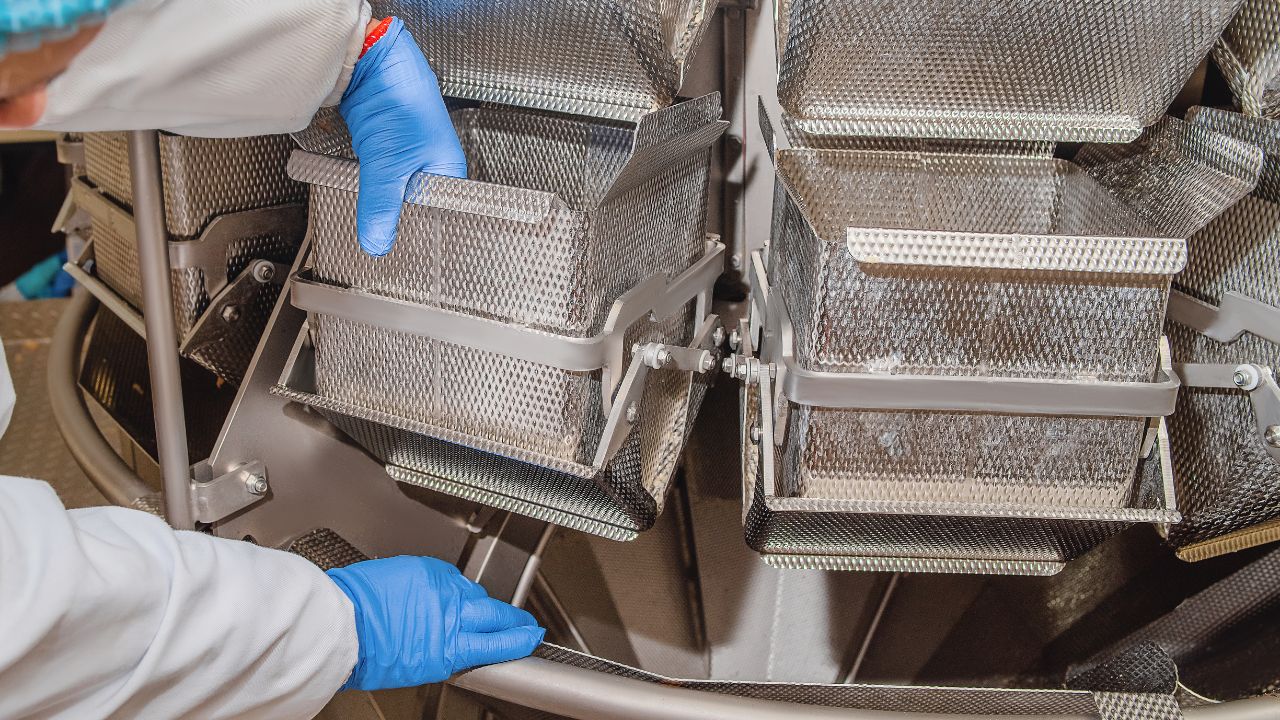
Combination Weighing Principle: Calculates 2^n-1 possible combinations from multiple hoppers (10-32 heads), selecting the best match to the target weight in milliseconds
High-Precision Load Cells: Achieve internal calculation accuracy of 0.01g, measuring each hopper's partial weight independently
Radial Dispersion System: Controlled vibration evenly distributes product into feed hoppers arranged in a circular configuration
Advanced Algorithms: CPU employs statistical optimization to minimize deviation, ensuring weights meet or exceed the target without underfilling
Synchronized Hopper Timing: Coordinates feed and weigh hoppers to maximize speed while maintaining accuracy
Component
Function
Accuracy Impact
Weigh Hoppers (10-32 units)
Measure partial weights via load cells
More hoppers = exponentially more combinations (2^n-1), increasing probability of perfect match
Load Cells
Measure weight with 0.01g internal accuracy
Eliminates density-dependent errors of volumetric systems and checkweigher issues
Central Processing Unit
Calculates optimal weight combinations in milliseconds
Prevents clumping, ensures clean discharge, and maintains consistent feeding
Why Accurate Fill Weight Control Is Critical For Manufacturers
Inaccurate fill weights create cascading financial and operational consequences that erode profitability and brand integrity. MHWs provide the precision required to meet regulatory standards while maximizing material efficiency through proven giveaway reduction strategies.
Financial And Operational Consequences Of Inaccurate Fill Weights
Severe Product Giveaway: 5% overfill rate results in a $64,800 per month loss for single-shift operations
Regulatory Penalties: Underfills expose manufacturers to fines and legal action from Weights and Measures authorities
High Rejection Risk: Variable fill weights increase the probability of failed lot inspections
Operational Inefficiency: Giveaway on high-value products can exceed machine capital cost annually
Standard
Key Requirement
MHW Compliance Feature
Quantified Benefit
NIST Handbook 133
Statistical sampling; Maximum Allowable Variations
99.5%-99.9% accuracy; 25% CV improvement
Minimizes failed audits and regulatory fines
EU Directive 76/211/EEC
"e-mark" eligibility; tight tolerances
0.01g internal accuracy; real-time verification
Qualifies for EU market access
FDA/HACCP
Traceability: critical control points
Integrated data logging and audit trails
Supports food safety compliance and recalls
3A Sanitary Standards
Hygienic design for food contact
IP69 protection; tool-less disassembly; no gaps
28% sanitation time reduction
Multihead Weigher Types And Performance Comparisons
MHWs deliver superior accuracy compared to alternative filling technologies, though each system serves distinct applications. Understanding these trade-offs ensures optimal equipment selection for integration with vertical form-fill-seal systems.
Technology
Accuracy
Speed (ppm/CPM)
Best For
Key Limitation
Multihead Weigher
99.5%-99.9%
60-300+ ppm
Solids, irregular products, high-value items
High initial cost; not for powders
Linear Weigher
±2-4 grams
Low-Medium
Large/bulky items, budget operations
Lower accuracy than MHW
Auger Filler
±0.5%-1%
40-150 CPM
Powders, granules
Density-dependent accuracy
Volumetric Cup Filler
>99% (density-dependent)
Up to 150 CPM
Free-flowing granules
Poor for powders/irregular items
Industries Achieving Proven Results
Confectionery: Ritter Sport: 20% giveaway reduction with 24-head MHW
Premium Chocolate: Valor: 80 ppm consistent throughput for 470g packs with 32-head system
Ready-to-Eat Meals: Cabinplant SF Extreme solves sticky ingredient challenges
Snack Foods: Case study: 0.6% weight reduction + 35% throughput increase = ROI in under 18 months
Selecting The Right Multihead Weigher Configuration
Configuration selection directly impacts accuracy, throughput, and ROI. Match head count and features to product characteristics and production targets for optimal performance.
Critical Product Characteristics For Selection
Shape and Uniformity: Uniform products achieve the highest speeds; irregular items need specialized configurations with memory hoppers
Maintenance, Calibration, And Troubleshooting Best Practices
Sustained 99.5%-99.9% accuracy requires disciplined maintenance protocols. Preventive care extends equipment life to 30+ years while maximizing uptime and precision.
Common Issues And Solutions
Load Cell Drift: Solution: Regular zero-point calibration with certified weights; schedule monthly or after product changes
Product Buildup: Solution: Daily hygienic cleaning with tool-less disassembly; 28% sanitation time reduction achievable
Vibration Problems: Solution: Inspect motors and controllers; ensure upstream equipment isolation from the MHW frame
Environmental Interference: Solution: Install windshields; maintain stable temperature; isolate from high-vibration areas
Software Configuration Errors: Solution: Verify target parameters match product specs; install firmware updates for proper multihead weigher tuning
Preventive Maintenance For Long-Term Performance
Scheduled Calibration: Monthly/quarterly with certified weights; after mechanical service or seasonal changes
Pre-Production Warm-Up: Stabilize systems to operating temperature; prevents thermal drift errors
Condition Monitoring: IoT sensors enable predictive maintenance; some MHWs operate 30+ years with proper care
ROI And Cost-Benefit Analysis
MHW investments deliver rapid payback through giveaway reduction and labor savings. Most installations achieve full ROI within 12-18 months on high-value products.
Cost Category
Typical Range
Key Details
Equipment Purchase
$30,000-$150,000+
Varies by head count (10-32), features, and application
Installation/Integration
$8,000-$40,000
Includes commissioning, line integration, and training
Annual Maintenance
$3,000-$12,000
Service contracts, spare parts, and preventive care
Total First-Year
$45,000-$220,000+
Complete investment, including equipment and setup
Proven ROI Drivers And Quantified Results
Giveaway Elimination: 20%-80% reduction vs. manual; monthly savings can equal capital cost in 12-18 months
Labor Savings: Automation reduces manual weighing/filling labor by up to 35%
Throughput Gains: Case study: 35% throughput increase during peak demand while maintaining accuracy
Downtime Reduction: 40% reduction in changeover time; 28% faster sanitation
Compliance Protection: Avoiding 5% overfill saves $64,800/month on high-volume operations
The Competitive Advantage Of Multihead Weigher Technology
MHW technology transforms fill weight challenges from persistent operational drains into competitive advantages. The combination of precision, automation, and proven ROI positions manufacturers for sustained market leadership.
Future-Proofing: IoT integration and Industry 4.0 readiness support continuous improvement
Operational Longevity: 30+ year lifespan maximizes ROI across decades
Adopting Multihead Weigher Technology
For manufacturers facing fill weight problems, multihead weigher technology delivers a compelling combination of precision, speed, and profitability. With proven giveaway reductions of 20%-80%, ROI timelines under 18 months, and accuracy approaching 100%, MHWs represent not just a solution to fill weight problems, but a strategic investment in operational excellence and competitive advantage.Ready to eliminate fill weight problems and maximize profitability? Contact Wolf Packing's engineering team to discuss your application and receive a customized MHW configuration recommendation as part of our commercial grade packaging machines lineup.
At Wolf-Packing Machine Company, we believe that the key to success is a commitment to excellence in everything we do. That’s why we use only the highest quality materials and the most advanced technology to create packaging machines that are efficient, reliable, and cost-effective.
What’s new at Wolf Packing?
// <#?php
// /**
// * Exclude Current Posts from the query
// */
// add_action( 'pre_get_posts', function ( $query ) {
// // not an admin page and not the main query
// if ( ! is_admin() && ! $query->is_main_query() ) {
// $query->set( 'post__not_in', array( get_the_ID() ) );
// }
// } );
// ?>
From design through testing, installation and beyond, we work tirelessly to ensure your equipment is running at peak performance and maximizing your application. To learn more about our machines, reach out to set up a free consultation with our in-house experts.
From weigh filling, bagging, wrapping and conveying to capping, labeling, cartoning, case/tray forming, packing and palletizing, we offer packaging solutions for a diverse array of applications.