Rated speed is a ceiling, not a guarantee: Real throughput averages 70-90% of rated speed depending on operational discipline.
Balance speed with accuracy: Optimal speed maximizes throughput without quality compromise; typically 80-85% of rated capacity.
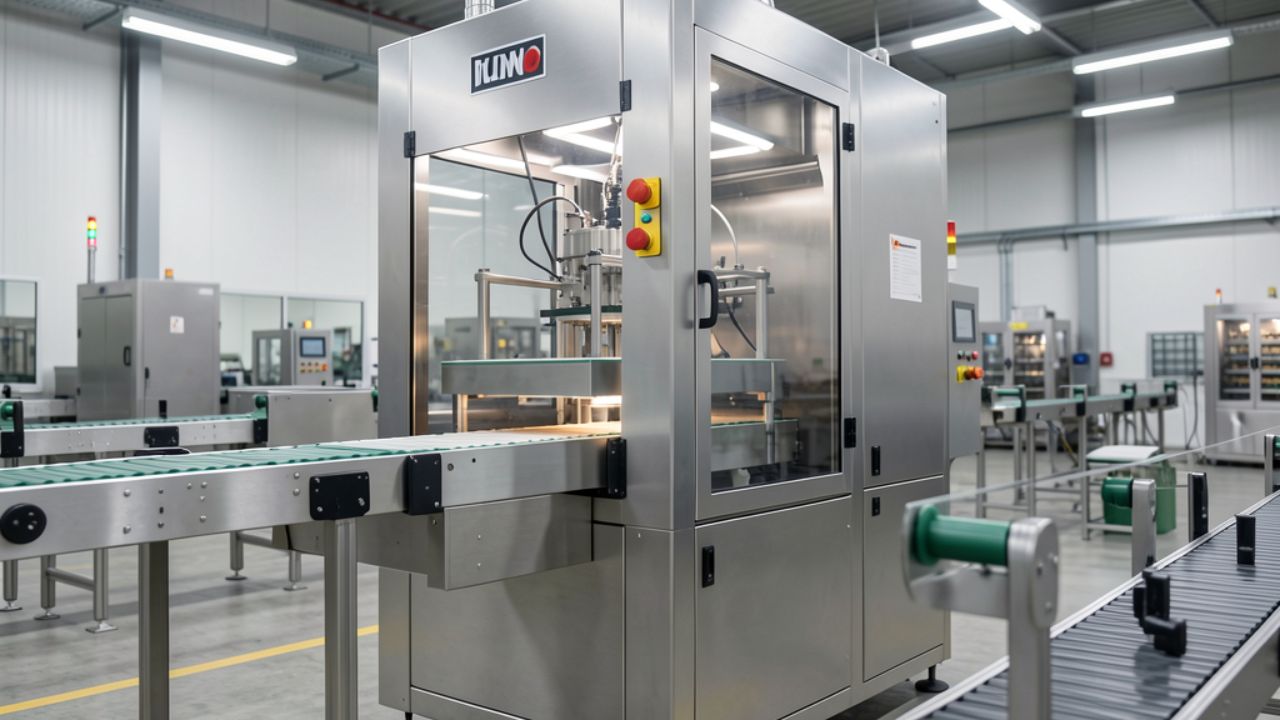
Match equipment to volume tier: Under 60 CPM requires semi-automatic; 60-200 CPM needs automatic; 200+ CPM demands high-speed systems.
Calculate total cost: High-speed equipment costs more to purchase and operate, but justifies investment at sufficient production volumes.
Plan for growth: Size equipment for 3-5 year projections with 50-100% capacity headroom to avoid premature replacement.
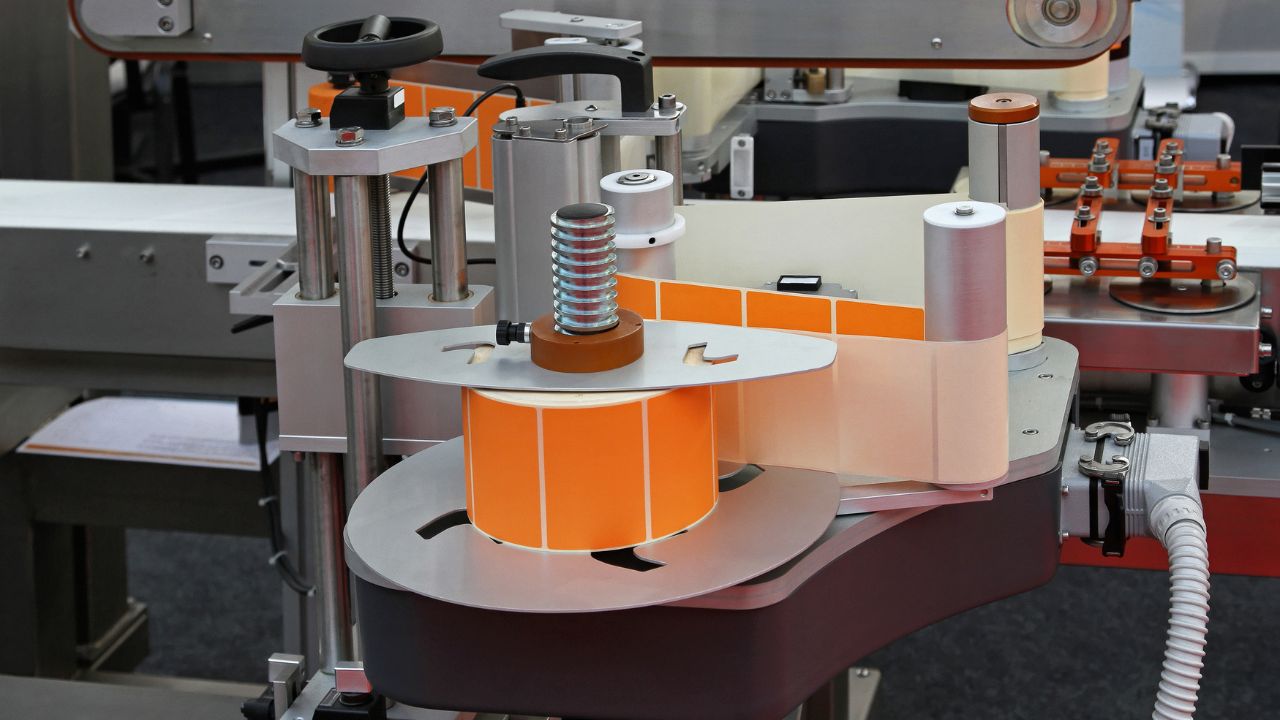
Labeling machine speed ratings dominate equipment specifications and vendor pitches, but these numbers rarely reflect actual production performance. Manufacturers invest in high-speed equipment expecting rated output, only to discover real throughput falls 20-30% short due to changeovers, material variations, and line imbalances. Understanding the gap between rated specifications and achievable throughput is critical for accurate capacity planning, equipment selection, and ROI calculations.
This guide decodes labeling speed ratings, explains factors affecting real-world performance, and provides actionable strategies for optimizing production efficiency labeling. Whether you're scaling from manual operations or upgrading existing automation, these insights will help you make data-driven equipment decisions that align with your actual production requirements.
Understanding Labeling Machine Speed Ratings
Speed ratings define a labeling machine's maximum theoretical output under ideal conditions, a critical metric for production planning and equipment selection. However, these ratings represent peak performance, not sustained real-world throughput.
Manufacturers use multiple units to express labeling machine speed: BPM (Bottles Per Minute), LPM (Labels Per Minute), CPM (Containers Per Minute), BPH (Bottles Per Hour), and PPM (Packages Per Minute). Understanding these ratings helps you match equipment capacity to production requirements and avoid costly bottlenecks.
Speed Ratings By Machine Type
Machine Type
Speed Range
Performance Category
Primary Applications
Wraparound Labelers
150-400 BPM
High-Speed
Beverages, condiments, cylindrical containers
Front/Back Labelers
Up to 120 LPM
Medium-Speed
Flat/rectangular bottles, personal care
Sleeve Labelers
Up to 300 CPM (54,000 BPH)
Very High-Speed
Complex shapes, full-body graphics
Print-and-Apply
40-175 PPM
Variable
Serialization, variable data, logistics
Speed ratings matter for four critical reasons: accurate production capacity planning and line balancing, justified equipment selection and capital investment decisions, regulatory compliance (particularly pharmaceutical traceability requirements requiring inspection systems), and ensuring compatibility with upstream filling and downstream capping equipment speeds.
How Speed Ratings Impact Real-World Production
Rated speeds rarely translate to actual labeling throughput. Real-world production typically achieves 70-90% of rated speed due to container stability issues, changeovers and maintenance windows, line speed mismatches with other equipment, and material variations. Overall Equipment Effectiveness (OEE), calculated as Availability × Performance × Quality, quantifies this gap between theoretical and actual output.
Speed and accuracy exist in tension. Front/back labelers achieve ±1-1.5mm placement accuracy at 120 labels per minute, but maintaining this precision becomes increasingly difficult above 200 BPM. Premium products often operate at 70-80% of rated speed to ensure consistent quality and minimize rejects. The key is matching machine capability to product requirements, not simply maximizing speed.
Key Factors Affecting Labeling Speed
Three primary factors determine labeling machine speed: label material type, container characteristics, and automation level. Understanding these variables helps manufacturers select equipment that matches production requirements without overinvestment.
Label Material Type:
Pressure-sensitive (paper/film): 120-200 BPM
Shrink film (PET, PVC, OPS): Up to 300 CPM due to continuous application
Thermal materials: Limited by print speed (up to 16 IPS)
Container Characteristics:
Cylindrical: Highest speeds (150-400 BPM with wraparound labelers)
Flat/rectangular: Limited to 120 LPM (front/back labelers)
Complex contours: Sleeve labelers handle at 300 CPM
Automation Level creates the starkest performance divide:
Manual vs. Automatic Performance
Feature
Manual/Semi-Automatic
Fully Automatic
Speed Range
10-30 CPM
120-400+ CPM
Label Accuracy
±3-5mm (variable)
±1-1.5mm (consistent)
Investment
$2,000-$15,000
$30,000-$200,000+
Best For
Low-volume (<60 CPM)
Medium to high-volume production
Optimizing Machine Speed Performance
Maintaining rated speeds requires disciplined operational practices. Five key optimizations maximize throughput and minimize downtime:
Regular calibration maintains ±1-1.5mm accuracy. Schedule calibration after every changeover and monthly during continuous runs. Optimal material selection matches adhesive type and label properties to machine specifications; incompatible materials reduce speed by 15-30%. Preventive maintenance replaces wear items at 75-80% of service life, not at failure.
Line synchronization balances all equipment speeds to eliminate bottlenecks that cascade through production. Proper line speed calculation ensures that filling, capping, and labeling equipment operate in harmony. Minimized changeover time through organized materials and cross-trained operators reduces non-productive periods.
Worn components dramatically impact speed and revenue. Degraded rollers or applicators can reduce effective speed by 25%, a 200 BPM machine dropping to 150 BPM. A $500 roller replacement prevents $2,880 in lost revenue per shift at typical product margins. Preventive maintenance costs remain trivial compared to downtime losses and quality rejects.
Benefits And Challenges Of High-Speed Labeling
High-speed labeling machines deliver substantial throughput gains but introduce operational complexity and cost pressures. The decision to invest requires weighing financial returns against maintenance demands.
Benefits:
Increased throughput: 400 BPM produces 24,000 bottles/hour versus 12,000 at 200 BPM, doubling capacity
Labor reduction: One 200 BPM labeler replaces 6-8 manual operators, eliminating $240K-$320K in annual labor costs
Scalability: Built-in capacity headroom supports business growth without new equipment purchases
Challenges:
Higher costs: High-speed machines cost 1.5-2.5X more than standard models; operating expenses run 20-30% higher
Accelerated wear: Components require replacement 2X more frequently due to continuous high-speed operation
Maintenance complexity: Servo systems and advanced controls demand specialized technicians
Greater downtime impact: A 30-minute stop at 400 BPM loses 12,000 bottles, $6,000-$15,000 in production value
Successful operators mitigate risks through three practices: running at 85-90% of rated speed to extend component life, implementing condition monitoring for predictive maintenance, and maintaining strong OEM relationships for rapid parts supply. These strategies balance throughput demands with long-term equipment reliability.
Choosing The Right Machine Speed
Equipment selection requires matching speed capability to production volume, container type, and growth trajectory. Five factors guide optimal machine selection:
Production Volume Tiers:
Low (<60 CPM): Semi-automatic systems
Medium (60-200 CPM): Automatic wraparound (150-200 BPM) or front/back (120 LPM)
High (200+ CPM): High-speed wraparound (300-400 BPM) or sleeve (300 CPM)
Container Type: Cylindrical containers suit wraparound labelers; flat containers require front/back systems; complex contours need sleeve labelers for container and jar packaging systems.
Line Integration: Match or exceed upstream equipment speeds (filling, capping) to prevent bottlenecks.
Growth Planning: Size for 3-5 year demand projections, not just current volume.
Budget: Factor both capital costs ($60K-$200K+) and ongoing operating expenses (maintenance, parts, utilities).
A manufacturer running 100 BPM today faces a strategic choice: a 150 BPM machine ($70K) provides 50% headroom, while a 300 BPM machine ($140K) provides 200% headroom. Growing businesses should size equipment for 3-5 year demand to avoid costly mid-life replacements. A single larger machine operating at 60-70% capacity typically proves more economical than multiple smaller machines over 5-7 years when factoring in maintenance, floor space, and labor costs.
Future Trends In Labeling Speed Technology
Innovation is accelerating labeling speed capabilities while reducing operational complexity. Four key trends are reshaping the industry:
Servo technology: Enables speeds up to 600 CPM with ±1mm accuracy while reducing maintenance requirements by 30-40% through elimination of mechanical clutches and adjustments.
AI integration: Self-tuning systems automatically optimize speed and accuracy parameters; predictive maintenance algorithms forecast component failures before they cause downtime.
Advanced materials: Faster-curing adhesives and high-strength thin-gauge label stocks enable higher application speeds without sacrificing bond quality.
Linerless labeling: Currently limited to 60-100 BPM, but expected to reach 200+ BPM within 3-4 years as material and dispensing technologies mature.
Servo technology will democratize 400+ BPM speeds to mid-tier pricing within 5-7 years, making high-speed labeling accessible to smaller manufacturers. AI-powered systems will reduce changeover time from hours to minutes by automatically adjusting for new label and container specifications.
Sustainable materials are driving innovation in rapid-cure adhesive technologies that minimize energy consumption while maximizing throughput. These advances will compress the cost-performance gap between equipment tiers, enabling more manufacturers to justify automation investments.
Making Speed Ratings Work In Real Production
Speed ratings establish theoretical limits, but real-world performance depends on operational excellence: material quality, maintenance discipline, operator training, and line synchronization. The most successful operations match appropriate equipment (speed tier to volume requirements) with systematic optimization practices. A 200 BPM labeler operated excellently delivers 180-190 BPM sustained throughput, while the same machine poorly maintained might achieve only 100-120 BPM. The path to labeling efficiency isn't merely buying the fastest machine; it's matching equipment capability to organizational maturity and continuously improving both. Focus on achieving 85-90% of rated speed consistently rather than chasing maximum specifications that real production conditions rarely support.Ready to match the right labeling solution to your production requirements? Contact Wolf Packing's engineering team for a consultation on optimizing your packaging line speed and efficiency—from labelers to automatic counting machine systems.
At Wolf-Packing Machine Company, we believe that the key to success is a commitment to excellence in everything we do. That’s why we use only the highest quality materials and the most advanced technology to create packaging machines that are efficient, reliable, and cost-effective.
What’s new at Wolf Packing?
// <#?php
// /**
// * Exclude Current Posts from the query
// */
// add_action( 'pre_get_posts', function ( $query ) {
// // not an admin page and not the main query
// if ( ! is_admin() && ! $query->is_main_query() ) {
// $query->set( 'post__not_in', array( get_the_ID() ) );
// }
// } );
// ?>
From design through testing, installation and beyond, we work tirelessly to ensure your equipment is running at peak performance and maximizing your application. To learn more about our machines, reach out to set up a free consultation with our in-house experts.
From weigh filling, bagging, wrapping and conveying to capping, labeling, cartoning, case/tray forming, packing and palletizing, we offer packaging solutions for a diverse array of applications.