Key Takeaways:
- Industry-standard accuracy is ±0.5%, with advanced fill-by-weight systems achieving ≤±0.3% tolerance for high-value powders.
- Servo motors with closed-loop feedback continuously adjust fill cycles, compensating for product density and flow variations in real time.
- Multi-stage filling (bulk, dribble, settling) enables high-speed operation while maintaining precision through optimized acceleration profiles.
- Split hopper designs and quick-disconnect augers reduce changeover downtime by 25%, maintaining accuracy across multiple SKUs.
- Integrated checkweighers provide automatic correction feedback, adjusting fill parameters without stopping production when drift occurs.
Auger fillers are the backbone of powder packaging operations. Precision matters because giveaway costs add up fast. The industry benchmark is ±0.5% accuracy, but the best systems now reach ±0.3%. This article explains how to achieve and maintain that precision across production runs.
What does auger filler accuracy mean in modern powder packaging?
Accuracy defines how consistently an auger filler dispenses the target weight. It's expressed as a percentage deviation from the set point. Modern operations demand tight tolerances to control costs and meet regulatory requirements.
How is dosing precision defined for auger fillers?
Dosing precision is the percentage variance between actual fill weight and target weight. The industry benchmark for high-precision auger fillers is ±0.5% or better. A 100-gram fill with ±0.5% accuracy means fills range from 99.5g to 100.5g. This standard applies to production conditions, not just lab testing.
What does a +0.5% accuracy tolerance represent in real production?
A ±0.5% tolerance translates to predictable costs and consistent quality. For high-value products, even small inaccuracies create significant financial losses. The most advanced systems using fill-by-weight technology achieve ≤±0.3% tolerance. At scale, a company filling 100,000 units per day at 100 grams each saves 50 kilograms of product daily by improving from ±1% to ±0.5% accuracy.
How do free-flowing vs. non-free-flowing powders influence weight variation?
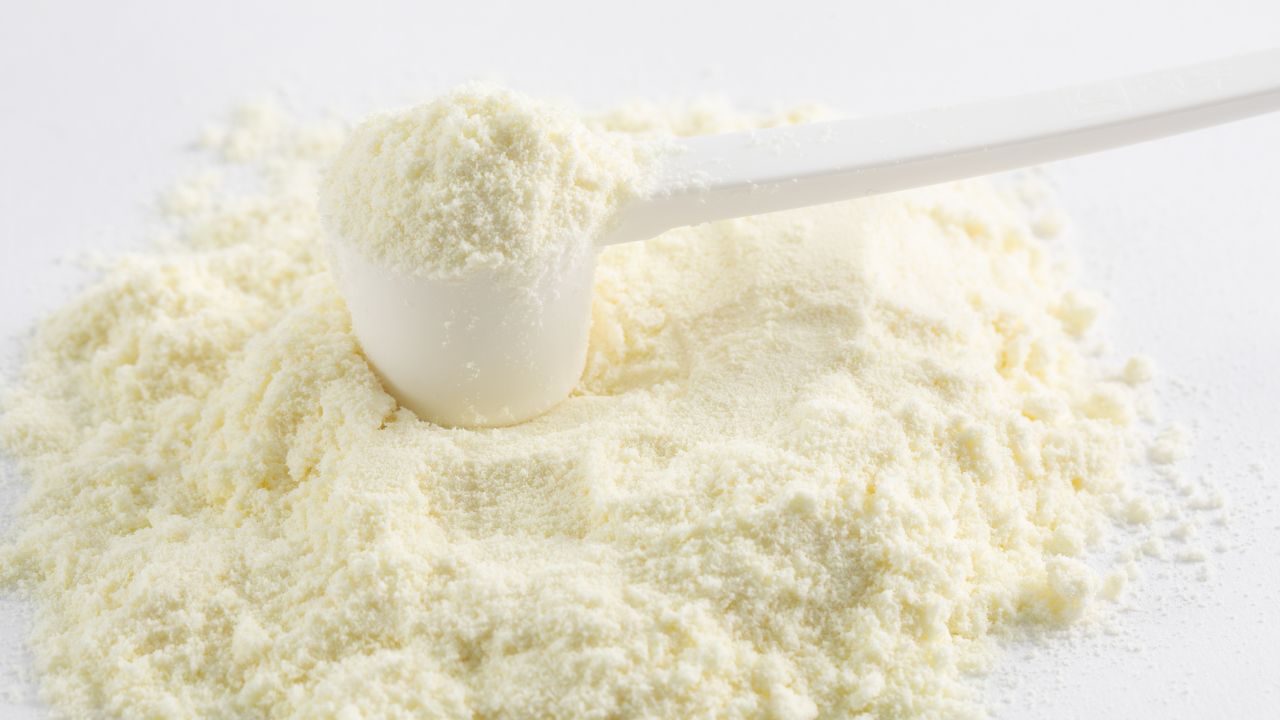
Free-flowing powders like granulated sugar dispense consistently because particles move independently. Non-free-flowing powders such as protein blends contain cohesive particles that clump together, creating bridges in the hopper and dispensing irregularly. Free-flowing materials often achieve ±0.3% precision with standard configurations. Non-free-flowing materials may require agitation systems and modified auger geometries to reach ±0.5% accuracy.
What core components determine auger filler accuracy?
Five components drive accuracy: servo motors, auger screw design, hopper geometry, agitation systems, and the product delivery path. Each must work together seamlessly. When one component underperforms, the entire system loses precision.
How do servo-driven motors improve dosage repeatability?
Servo motors provide precise control over the auger's rotation. Unlike pneumatic or AC motors, servos adjust speed in real time with micron-level precision. The servo can stop rotation within a single degree of motion, preventing overfill. Repeatability improves because the motor performs identically across thousands of cycles.
How do auger screw geometry and funnel design affect dispensing accuracy?
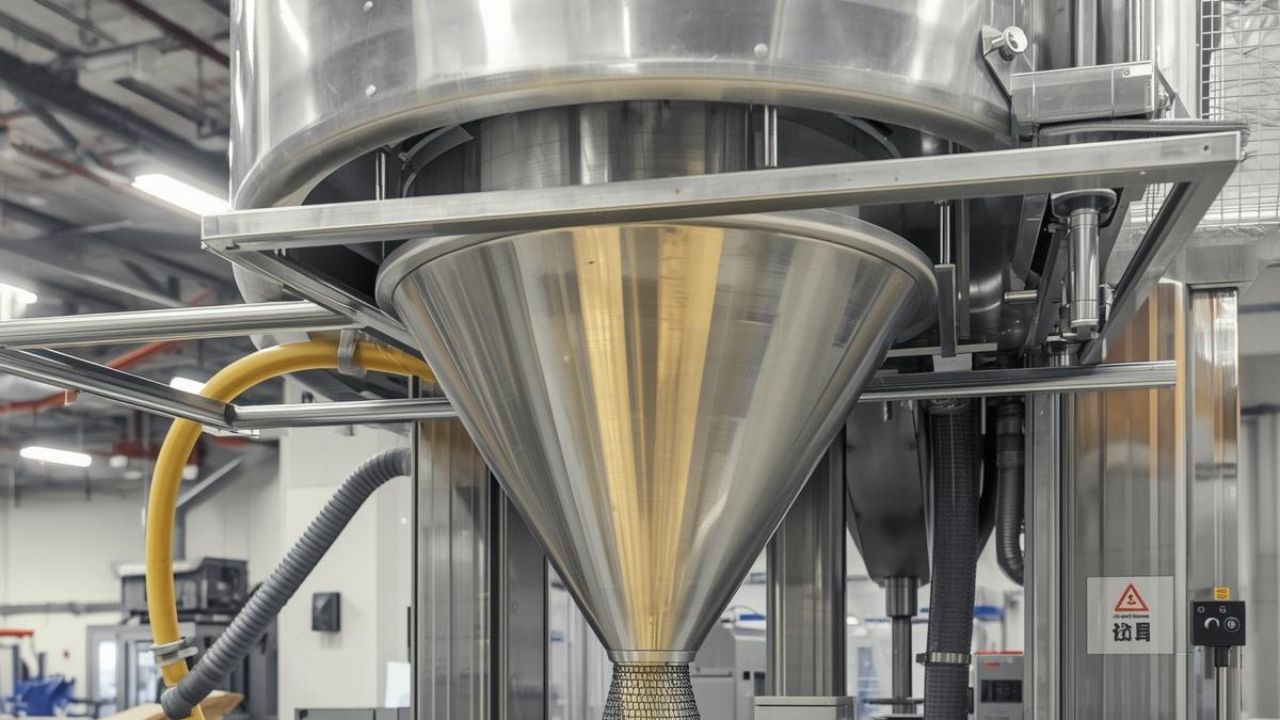
Auger pitch, diameter, and flight depth determine product displacement per revolution. A tight-pitch auger moves less product per turn, enabling finer control. The funnel's angle and opening size regulate product flow into the auger. A 60-degree cone angle with a smooth interior surface keeps material flowing uniformly.
What impact does product agitation and hopper conditioning have on fill consistency?
Agitation systems break up clumps and maintain even product density in the hopper. Without agitation, cohesive powders form bridges that collapse unpredictably, causing fill weight spikes. Common agitation methods include vibration, paddle stirrers, and pneumatic pulses. Hopper conditioning maintains a stable bulk density for consistent feeding.
How does tooling wear or improper setup reduce accuracy over time?
Auger flights wear down from abrasive products, changing displacement per revolution. A worn auger dispenses 2-5% less product than a new one at identical RPM settings. Improper setup creates systematic errors from the first fill. Setup errors compound with wear, requiring more frequent recalibration.
What environmental and product factors affect accuracy performance?
Temperature, humidity, vibration, and product characteristics all influence fill precision. Understanding these factors is essential for maintaining accuracy across shifts and seasons.
Why do humidity, vibration, and dust create dosing fluctuations?
Humidity causes hygroscopic powders to absorb moisture and clump. A protein powder at 40% relative humidity flows freely; at 70% humidity, it forms dense clumps. Vibration from nearby equipment affects product settlement in the hopper, increasing bulk density. Dust accumulation introduces friction and false weight readings on load cells.
How do bulk density changes influence fill weight stability?
Bulk density determines how much product the auger dispenses per revolution. If density increases by 10%, the same number of auger turns delivers 10% more weight. Real-time weight feedback from integrated load cells allows the system to compensate for variations in product density. Monitoring bulk density and adjusting auger speed maintains consistent fill weights.
How do particle size, aeration, and cohesiveness impact auger control?
Fine particles (under 100 microns) flow like liquids when aerated, but lock together when static. Coarse particles (over 500 microns) flow freely but may jam if the auger clearance is too tight. The closed-loop control system continuously adjusts the fill cycle to compensate for variations in product flow characteristics, making adjustments in milliseconds.
How do manufacturers achieve +0.5% precision using auger systems?
Precision comes from calibration, multi-stage filling, closed-loop feedback, and optimized motion profiles. No single element guarantees accuracy—the system must function as an integrated whole.
What calibration steps are required to reach high accuracy?
Calibration begins with tare weight verification. Operators run test fills at target weight, measuring 20-30 samples to establish baseline variance. Fine-tuning adjusts bulk fill and dribble fill speeds. Bulk fill runs at high speed for 80-90% of the target weight. Dribble fill completes the last 10-20% at reduced speed for precision.
How does multi-stage filling improve micro-dosing performance?
Multi-stage filling divides the fill cycle into bulk, dribble, and settling phases. Bulk fill operates at maximum speed to minimize cycle time. Dribble fill slows the auger to 10-20% of bulk speed, adding product in small increments. A settling delay allows material to stabilize before final weight measurement.
How does closed-loop feedback from checkweighers maintain accuracy?
Real-time weight feedback from integrated load cells enables closed-loop control. The system continuously adjusts the fill cycle to maintain the target weight. Checkweighers downstream provide additional verification. When a checkweigher detects drift, it sends correction data back to the auger filler for automatic adjustment.
How do optimized acceleration/deceleration profiles prevent overfill and underfill?
Smooth acceleration over 0.5-1.0 seconds establishes stable product delivery before bulk filling begins. The auger must slow gradually to prevent the product from continuing to flow after rotation stops. A properly tuned deceleration curve accounts for product momentum and auger inertia.
What industry standards and compliance frameworks define acceptable accuracy?
Multiple regulatory bodies set accuracy standards for packaging. Understanding which standards apply helps manufacturers design appropriate quality control protocols.
Which accuracy guidelines apply (NIST Handbook 133, OIML, W&M standards)?
NIST Handbook 133 defines acceptable sampling plans and Maximum Allowable Variations (MAVs) for packaged goods in the United States. The International Organization of Legal Metrology (OIML) publishes R87 for pre-packages in international trade. Weights and Measures laws in each state enforce these standards.
How do FDA and GMP expectations affect accuracy validation for powders?
FDA regulations under 21 CFR Part 117 require food manufacturers to establish Critical Control Points. Good Manufacturing Practices require written procedures, regular calibration records, and statistical process control. Manufacturers must document accuracy verification and prove their process remains in control.
How frequently should accuracy verification and recalibration occur?
Daily verification checks confirm the system maintains accuracy. Five consecutive fills within tolerance verify proper operation. Full recalibration occurs weekly or after 10,000 cycles. Annual third-party calibration of load cells ensures traceability to national standards.
What are the most common causes of auger filler inaccuracy?
Accuracy problems stem from product issues, mechanical wear, incorrect settings, or operator error. Identifying root causes quickly minimizes downtime and product waste.
How does inconsistent product flow create dosing errors?
Bridging occurs when the product forms an arch over the auger inlet, creating a void. When the bridge collapses, material floods the auger suddenly. Segregation separates fine and coarse particles during handling. As the hopper empties, bulk density changes and fill weights drift.
How do mechanical issues (backlash, wear, misalignment) impact accuracy?
Backlash in the drive system creates inconsistent auger rotation. Bearing wear allows the auger shaft to move radially, increasing clearance on one side. Product flows backward through the enlarged gap, reducing net displacement. These issues typically cause accuracy to drift over weeks or months.
How do improper auger speed and dwell settings create fill deviations?
Excessive bulk fill speed causes material to overshoot the transition to dribble fill. Insufficient dwell allows product in-flight to fall into the container after weight measurement, causing systematic overfill. Optimal dwell time equals the settling period for the product to reach static equilibrium.
How do operator setup errors lead to weight inconsistencies?
Incorrect recipe parameters create systematic bias. Tare weight errors occur when operators fail to zero the scale properly. Improper auger installation introduces immediate accuracy problems. Training and standardized setup procedures prevent these errors.
How can inline inspection systems support accurate performance?
Inline inspection catches issues before they become costly problems. Integration between checkweighers, metal detectors, and labelling systems creates a comprehensive quality control network.
How does a checkweigher provide live accuracy correction?
Checkweighers measure every package immediately after filling. When weight drifts outside the tolerance band, the checkweigher sends feedback to the filler controller for automatic adjustment. The system tracks average weight, standard deviation, and control chart limits for early warning of problems.
How do integrated metal detectors protect product integrity during filling?
Metal detectors identify contamination from worn tooling or foreign material. Detection occurs after filling but before case packing. Modern multi-frequency detectors differentiate between product effects and actual contamination, reducing false rejects while maintaining sensitivity.
How does label accuracy and handling affect downstream weight verification?
Label accuracy ensures traceability between fill weight data and finished packages. Misapplied labels disrupt automated sorting. If a label covers the weighing area or shifts the package's centre of gravity, checkweigher readings become inaccurate.
How does auger filling compare with other powder filling technologies?
Each filling technology has strengths and limitations. Understanding these differences helps manufacturers select the right equipment.
How does auger accuracy differ from multi-head weighers?
Multi-head weighers achieve ±0.1% accuracy but cost significantly more than auger fillers. Auger fillers handle cohesive and dusty powders better because the product stays contained within the housing. For protein powders, spices, and pharmaceutical ingredients, auger fillers are often the better choice.
How does auger performance compare with volumetric filler accuracy?
Volumetric fillers dispense consistent volumes with ±1-2% accuracy. When bulk density varies, weight accuracy suffers. Auger fillers measure or calculate weight, providing better accuracy across products with varying bulk density.
When is auger filling the preferred method for powders?
Auger filling is preferred for cohesive powders, products requiring high accuracy, and fills under 5 kilograms. Applications include supplements, spices, protein powders, and pharmaceutical powders. Standard single-head auger fillers operate at 10 to 35 fills per minute. High-speed, multi-head rotary fillers achieve up to 300 units per minute.
What should companies evaluate when selecting a high-accuracy auger filler?
Selecting the right auger filler requires analyzing product characteristics, production requirements, and integration needs. Focus on features that directly impact accuracy and reliability.
What machine specifications directly affect achievable accuracy?
Servo motor resolution determines the smallest weight increment the system can dispense. Load cell accuracy should be 10 times tighter than the required fill tolerance. Controller processing speed affects feedback loop response time. The system should store at least 50 recipes with all parameters for each product.
How should hopper design, agitator type, and auger size match product needs?
Split hopper designs and quick-disconnect augers allow for rapid cleaning and changeover, reducing downtime by up to 25%. Cone angle should match product flow characteristics: 60 degrees for free-flowing, 70-80 degrees for cohesive materials. Auger diameter and pitch must match fill size.
How does line integration with VFFS or premade pouch systems impact accuracy?
Integration requires synchronisation between the filler and bagger. The auger filler must communicate with the bagger to coordinate fill timing with bag forming. Poor synchronisation causes timing errors that reduce accuracy and potentially cause spills.
What acceptance testing and FAT protocols verify accuracy claims?
Factory Acceptance Testing should include accuracy verification over 100 consecutive fills using the actual product. Calculate mean, standard deviation, and maximum deviation. Speed testing verifies the filler achieves the rated capacity while maintaining accuracy. Site Acceptance Testing repeats key FAT protocols after installation.
What industries require +0.5% accuracy in powder packaging?
Several industries demand tight fill accuracy due to regulatory requirements, product cost, or quality expectations.
Why does the supplement industry require high micro-dosing precision?
Supplement manufacturers must meet FDA label claims for nutritional content. A 5-gram serving with 2,000mg of active ingredient requires ±100mg accuracy. Underfilling creates liability for label fraud. Overfilling wastes expensive active ingredients.
How do food manufacturers balance speed and accuracy for powders?
Food manufacturers face thin profit margins on commodity products. A 500-gram package overfilled by 2% costs $10 per 1,000 units in giveaway. Modern food facilities use 4-6 head rotary auger fillers to achieve 150-300 fills per minute at ±0.5% accuracy.
How do pharmaceutical and wellness brands maintain regulatory tolerances?
Pharmaceutical manufacturers operate under 21 CFR Parts 211 and 117. Validation studies prove the filling process consistently meets specifications. Manufacturers must demonstrate process capability (Cpk) of at least 1.33, requiring equipment capable of ±0.3% accuracy.
What operational practices maintain long-term auger filler accuracy?
Maintaining accuracy requires disciplined preventive maintenance, continuous monitoring, and proper cleaning procedures.
How does preventive maintenance reduce accuracy drift?
Weekly inspections check for loose fasteners, worn seals, and proper lubrication. Monthly maintenance includes cleaning sensors and verifying mechanical alignments. Quarterly teardowns allow detailed inspection. Component replacement follows a schedule based on cycle counts and material abrasiveness.
How should operators monitor and record accuracy over time?
Statistical Process Control charts track fill weight trends. Control limits set at ±3 standard deviations capture normal variation. Digital systems automatically record every fill weight with a timestamp, operator ID, and product code. Weekly reports show the accuracy performance by shift and product.
What cleaning and sanitation practices protect fill consistency?
Cleaning removes product residue that affects accuracy. Quick-disconnect augers facilitate rapid cleaning—operators remove the auger in seconds for thorough washing between products. Approved cleaning agents and proper disassembly prevent damage to load cells and seals.
How does Wolf-Packing Machine Company support +0.5% accuracy requirements?
Wolf-Packing designs auger fillers for manufacturers who need reliable accuracy at production speeds. Their machines deliver precision through engineering excellence.
What accuracy-focused engineering features are built into the WPMC Auger Filler?
WPMC auger fillers use high-resolution servo motors with closed-loop position feedback. Load cells mount directly under the fill head. The controller samples the weight at 1,000 Hz, enabling real-time adjustments. Funnel geometry is optimized for product flow.
How does Wolf-Packing integrate checkweighers and VFFS for accuracy control?
Wolf-Packing machines communicate natively with major checkweigher brands. When checkweigher data indicates drift, the auger filler adjusts calibration automatically. VFFS integration synchronizes bag forming with fill timing to eliminate timing errors.
How do Wolf-Packing's customization options improve precision across product types?
Wolf-Packing offers custom auger geometries, funnel designs, and agitation systems matched to specific applications. Interchangeable tooling allows a single machine to handle multiple products. Changeover involves swapping the complete tool set and loading the appropriate recipe.
How does long-term technical support ensure consistent accuracy?
Wolf-Packing provides remote diagnostic capabilities. When accuracy issues arise, technicians access the machine control system to review parameters and identify problems. On-site commissioning includes operator training on accuracy verification and preventive maintenance. Annual service contracts include recalibration and performance verification.
What are the most frequently asked questions about auger filler accuracy?
Can auger fillers maintain +0.5% accuracy at high production speeds?
Standard single-head fillers achieve ±0.5% accuracy at 10-35 fills per minute. High-speed, multi-head rotary fillers can achieve speeds of up to 300 units per minute while maintaining ±0.5% precision through parallel processing. Properly sized equipment maintains specification across its full operating range.
Can accuracy be preserved across multiple SKU changeovers?
Accuracy is preserved if changeover procedures are followed correctly. The control system stores product-specific parameters in recipes. Thorough cleaning and inspection between products is essential. Some facilities maintain dedicated augers for each product to eliminate cross-contamination risk.
Can cohesive or dusty powders still meet +0.5% precision?
Cohesive and dusty powders remain achievable with proper equipment. Vacuum tooling at the end of the fill cycle prevents product dripping and waste, improving accuracy. For cohesive products, mechanical agitation and modified auger designs maintain consistent flow.
Can inline adjustments correct fill drift without stopping production?
Modern auger fillers make inline adjustments automatically through closed-loop control. When integrated checkweighers detect drift, they send correction data to the filler controller. Changes take effect on the next fill cycle without production stoppage.
What are the key takeaways for achieving +0.5% precision in powder filling?
What should teams focus on to sustain long-term accuracy?
Equipment must have advanced control systems, including servo motors and real-time weight feedback. Closed-loop control that continuously adjusts the fill cycle is essential. Preventive maintenance practices including quick-disconnect augers and split hopper designs, minimize downtime. Training ensures operators understand how their actions affect accuracy.
What are the next steps to help manufacturers reach higher accuracy standards?
Start with an accuracy audit of existing equipment. Measure current performance to establish a baseline. Evaluate product characteristics systematically. Consider system integration opportunities—integrated systems with checkweighers reach exceptional accuracy. Partner with equipment suppliers who understand powder filling and bring application expertise to equipment selection.
Ready to eliminate giveaway and achieve consistent ±0.5% accuracy?
Wolf-Packing Machine Company specializes in precision auger filling systems designed for the demands of modern powder packaging. Our engineers work directly with you to match equipment configuration to your specific products, ensuring you achieve accuracy targets from day one. From servo-driven control systems to integrated checkweigher feedback, every component is engineered for long-term precision.
Contact Wolf-Packing Machine Company today to discuss your accuracy requirements. Our team will analyze your products, production goals, and integration needs to recommend the optimal weighing and filling machine for your operation—whether you're packaging powders, granules, or free-flowing materials. Request a consultation or product demonstration from our team and discover how the right equipment partner helps you maintain ±0.5% precision year after year.