HFFS delivers fastest packaging speeds at 300-600+ ppm, 2-4x faster than VFFS (50-300 ppm) and 5-10x faster than premade pouch systems (35-120 ppm)
Five-year TCO remains competitive at $2,135,000 for 50M units/year ($0.0427/unit), comparable to VFFS ($2,105,000) despite 40% higher capital cost
Servo-driven systems reduce changeover time 50% from 60-90 minutes (mechanical) to 30-45 minutes through digital recipes and automated adjustments
Seal reliability of 96-99% surpasses alternatives (VFFS: 95-98%, premade pouch: 92-96%), reducing customer complaints and product waste
Best applications are individual items with consistent 2-12 inch dimensions requiring airtight seals, cookies, candy, medical devices, and pharmaceutical blister packs
Horizontal flow wrap machines dominate high-speed packaging operations across food, pharmaceutical, and consumer goods manufacturing. These flow wrapping systems wrap individual products at speeds up to 600+ packages per minute while maintaining 96-99% seal reliability, the highest among all bagging technologies. Operations running 50+ million units annually achieve lowest per-unit costs through HFFS despite premium capital investment of $80,000-$140,000 for servo-driven systems.
This guide provides operations managers and packaging engineers with data-driven selection criteria, total cost of ownership analysis, and maintenance protocols for evaluating horizontal flow wrap equipment.
What Are Horizontal Flow Wrap Machines?
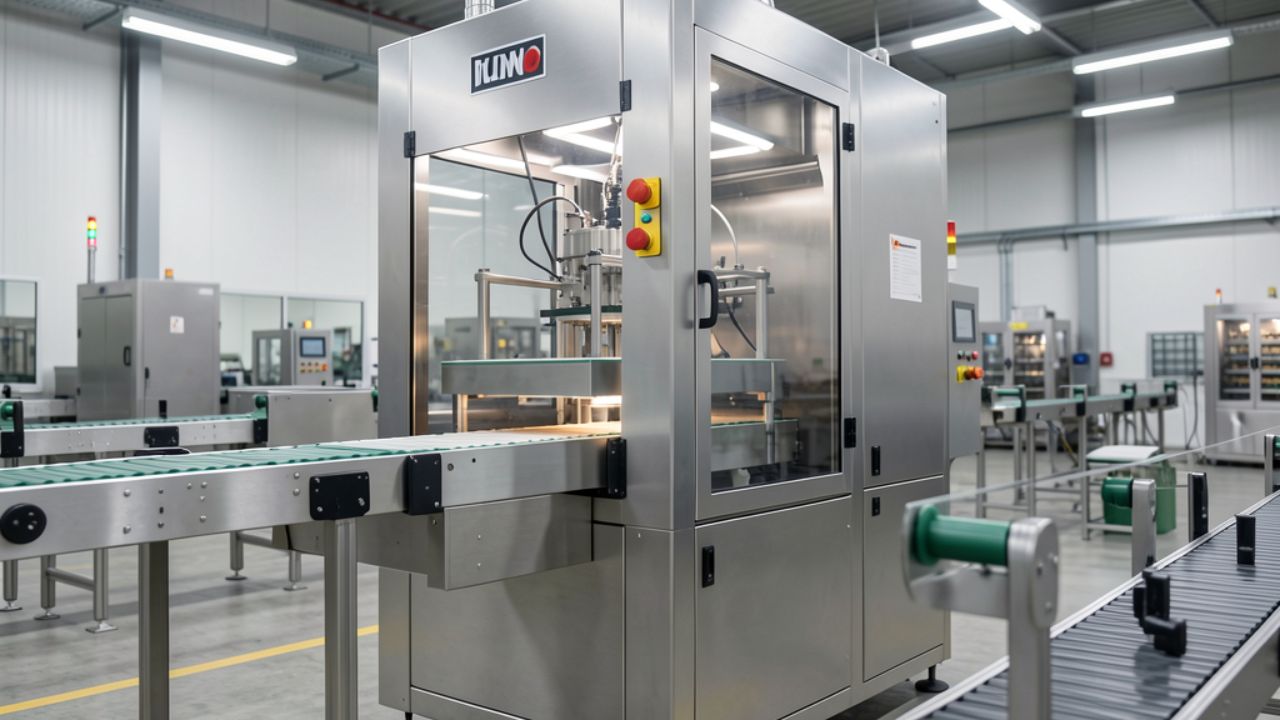
Horizontal form-fill-seal (HFFS) machines wrap individual products in continuous film at speeds up to 600+ packages per minute. These systems excel at high-volume, single-product applications where maximum throughput is critical. A horizontal flow wrap machine costs more upfront than VFFS but delivers the fastest packaging speeds available.
How The Machines Work
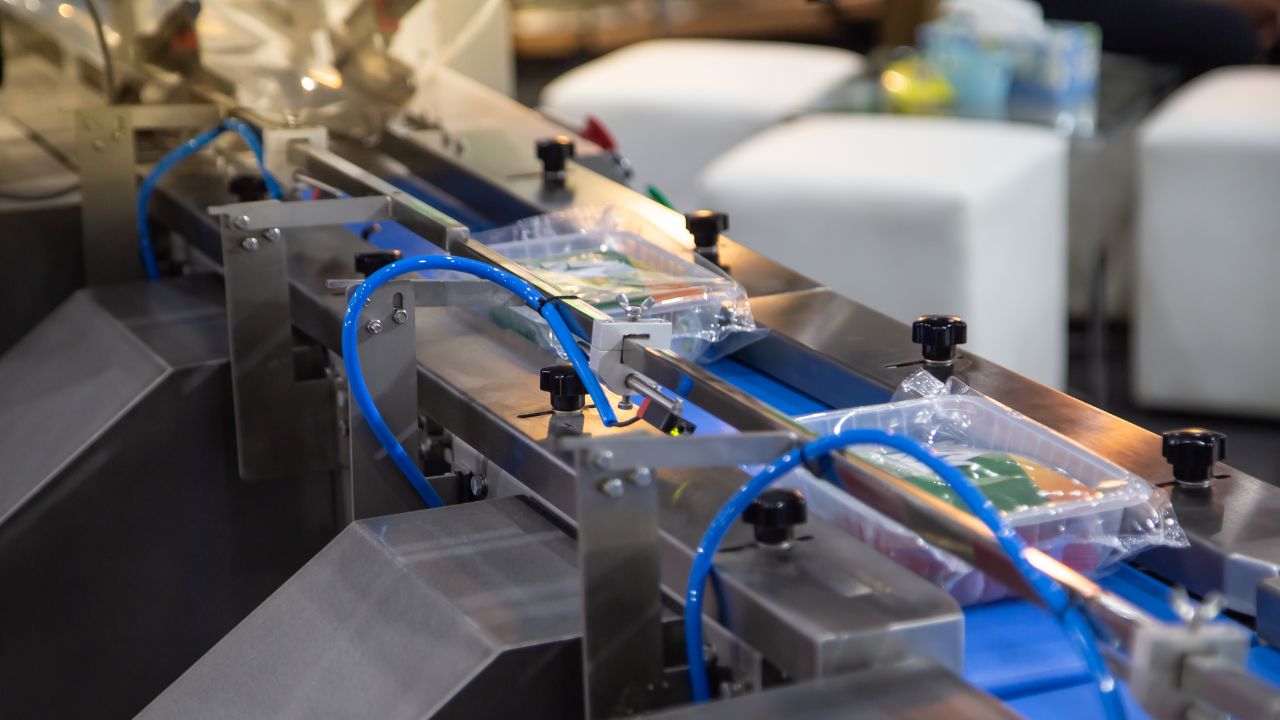
HFFS wraps products horizontally using a single film roll fed through a forming box. Film creates a tubular envelope around the product with a fin seal (longitudinal) joining overlapping edges. End seals form at the cutting head while simultaneously separating packages. Continuous cycle operation enables consistent high-speed wrapping at 300-600+ ppm.
Key Components Of The Machine
Component
Function
Forming Box
Shapes film around product; fixed (width-specific) or adjustable (multiple sizes)
Fin Seal Wheels
Creates a longitudinal seal where film edges overlap using heat and pressure for fin seal packaging
End Seal Jaws
Creates transverse seals and cuts packages; rotary motion (500-600+ ppm) or box motion (200-400 ppm)
Registration Photo Eye
Detects printed marks for accurate cutting and consistent graphics placement
Control System (HMI)
Digital interface for parameters, monitoring, and recipe storage
What Are The Key Applications Of Horizontal Flow Wrap Machines?
HFFS machines dominate high-speed packaging lines across food, pharmaceutical, and consumer goods manufacturing. Industries select HFFS when speed and seal integrity outweigh concerns about changeover complexity or capital cost.
Applications By Industry
Food Processing (36% of market): Achieves 300-600+ packages per minute for bakery, snack, and confectionery operations
Pharmaceutical: Hygienic design with IP65/IP69K ratings, validation documentation, serialization capabilities
Medical Device: Sterile packaging maintains product integrity through validated sealing processes
Retail Consumer Goods: Individual wrapping with consistent graphics for shelf appeal
Customization Capabilities
Modified Atmosphere Packaging (MAP): Gas flushing injects nitrogen/CO₂ to extend shelf life 2-4 weeks for produce, and prevents oxidation in snacks
Hygienic Design: Stainless steel construction (304/316 grade), IP65 or IP69K ratings for high-pressure washdowns in food applications
Integration: Ethernet (EtherNet/IP, PROFINET) or serial communication for line synchronization with feeders and downstream equipment
What Are The Key Benefits Of Horizontal Flow Wrap Machines?
HFFS machines deliver the highest packaging speeds with superior seal reliability compared to other bagging systems. Five-year total cost of ownership remains competitive with VFFS despite higher capital investment, particularly for operations running fewer than five SKUs across diverse flow wrap applications.
Seal reliability: 96-99% (highest among bagging systems)
MAP capability extends shelf life 2-4 weeks for perishables
Airtight seals prevent contamination and maintain product integrity
Inspection systems verify seal quality and package integrity in real-time
Waste Reduction
Rollstock film generates 2-5% waste during splices/changeovers. Servo-driven systems with digital recipes minimize trial-and-error waste. Registration photo eye ensures accurate cutting, reducing scrap from misalignment.
How To Choose The Right Horizontal Flow Wrap Machine For Your Needs?
Machine selection depends on production volume, product variety, and changeover frequency. Servo-driven systems cost more but deliver faster changeovers and higher speeds. Match machine capabilities to your annual volume and SKU count for optimal TCO.
Machine Type Comparison
Type
Speed (ppm)
Changeover Time
Best For
Price Range
Mechanical HFFS
200-400
60-90 min
Single products, longer runs
$4,500-$80,000
Servo-Driven HFFS
300-600+
30-45 min
Multiple products, high-speed
$80,000-$140,000
Fixed Former
400-600+
45-90 min
Dedicated single width
Varies
Adjustable Former
250-500
30-60 min
Multiple widths
Varies
Key Features To Prioritize
Servo motor control: Reduces changeover from 60-90 min to 30-45 min via digital recipes
Gas flushing capability: Essential for perishables; extends shelf life 2-4 weeks
Hygienic design (IP65/IP69K): Required for food applications with washdown needs
Registration photo eye: Ensures consistent graphics placement for branded products
Data connectivity: Ethernet/IP or PROFINET for Industry 4.0 traceability
Determining Size And Capacity
Production Need
Recommended Speed
Machine Size
Capital Cost
6-18M units/year
50-150 ppm
Small/Entry
$4,500-$30,000
18-36M units/year
150-300 ppm
Medium
$30,000-$80,000
48-72M+ units/year
400-600+ ppm
Large Servo-Driven
$80,000-$140,000
Additional Costs
Installation/commissioning: $8,000-$15,000
Operator training: $2,000-$5,000 (3-5 days on-site)
Annual maintenance: $18,000-$30,000
Energy/compressed air: $15,000-$25,000 annually
Integration with equipment: $10,000-$50,000
How Can You Maintain And Troubleshoot Horizontal Flow Wrap Machines?
Preventive maintenance schedules maintain MTBF of 2,500-5,000 hours and minimize unplanned downtime. Daily cleaning and weekly inspections prevent most seal failures and film breakage issues. Annual maintenance totals 60-120 hours across all procedures. Follow a comprehensive packaging equipment maintenance checklist to prevent costly production interruptions.
Maintenance Schedule
Daily (15-30 min): Clean sealing surfaces, inspect film tension
Weekly (30-60 min): Deep clean, inspect wear, lubricate moving parts
Adjust to 180-220°C; extend dwell time (0.5-1.5 sec)
Essential Spare Parts
Sealing wheels: $2,000-$4,000 (replace every 1-2 million bags)
End seal jaws, film tension rollers, registration sensors
Heating elements, cutting knives, drive belts
Pneumatic seals and O-rings
How Do Horizontal Flow Wrap Machines Compare To Other Packaging Machines?
Horizontal flow wrap machines deliver the fastest speeds but require longer changeovers than premade pouch systems. While these systems are ideal for high-speed, high-volume operations, other bagging machines, such as pillow pack machines, are often used for simpler or smaller product lines where the need for speed is not as critical. Pillow pack machines are particularly suited for products like soaps and small consumer goods, offering a cost-effective solution for lower-volume production.
Vertical Form Fill Seal (VFFS) offers greater bag style variety at a lower capital cost, but cannot match the throughput of HFFS machines. Select HFFS for high-volume operations running fewer than five SKUs where speed justifies the premium, while pillow pack machines may be more suitable for smaller batch sizes with less complex wrapping needs.
HFFS vs. VFFS
Factor
HFFS
VFFS
Speed
300-600+ ppm (fastest)
50-300 ppm
Capital Cost
$4,500-$140,000 (highest)
$3,000-$90,000 (lowest)
Changeover
30-90 min (longer)
20-60 min
Bag Styles
Limited (flow wrap, pillow)
High variety (gusseted, quad-seal, sachets)
Best For
Individual items: cookies, candy, medical devices
Bulk/flowing: powders, granules, liquids
Seal Reliability
96-99%
95-98%
HFFS vs. Premade Pouch
Factor
HFFS
Premade Pouch
Speed
300-600+ ppm
35-120 ppm
Material Cost
$0.02-$0.10/unit
$0.05-$0.20/unit (2-4x higher)
Changeover
30-90 min
10-30 min (fastest)
Best For
High-volume single products
Multiple SKUs, premium branding
What Are The Best Brands And Manufacturers Of Horizontal Flow Wrap Machines?
Supplier selection impacts long-term total cost of ownership through service availability, spare parts access, and training quality. Established manufacturers with 20+ years in business demonstrate stability and commitment to ongoing support. Verify local service coverage and parts inventory before committing to a supplier.
Leading Manufacturers
Bosch (Syntegon): Premium servo systems up to 600+ ppm; pharmaceutical/food applications; global service network
Omori Machinery: Ultra-high-speed rotary seals (600+ ppm) for candy/chocolate; precision temperature control (±1°C)
Ilapak: User-friendly HMI with recipe management; adjustable formers for width changes without tooling
Sigma Equipment (BW): US-based service with 24/7 support; specializes in baked goods/produce
Evaluating Suppliers
Verify 20+ years of longevity for stability and ongoing support
Request 2-3 customer references with similar products/volumes
Ensure local service within 4-hour travel time; spare parts in 2-3 days
Confirm comprehensive training (3-5 days on-site) with hands-on practice
Check warranty terms (standard 1-2 years parts/labor)
Verify remote diagnostic capabilities for faster troubleshooting
Making Your HFFS Investment Decision
Flow wrapping systems offer unmatched speed and seal reliability, achieving 300-600+ ppm with 96-99% seal quality. With a five-year TCO of $2,135,000 for 50 million units annually, the cost per unit ($0.0427) remains competitive, despite a 40% higher capital investment compared to VFFS. High-volume operations justify the $80,000-$140,000 servo-driven investment, reducing labor and operating hours.
Choosing the right machine requires matching capabilities to production volume and changeover frequency. Calculate the required ppm based on annual volume (e.g., 180 ppm for 50M units annually) and match it to your capital budget. Systems with 4+ SKUs and frequent changeovers (2+ daily) benefit from servo-driven machines for faster recovery.
Food applications need IP65+ hygiene, while pharmaceutical operations require validation documentation. MAP capability can extend shelf life by 2-4 weeks. Industry trends highlight the shift towards Industry 4.0 integration, predictive maintenance, and sustainable packaging.Ready to automate your packaging line with American-made reliability? Contact Wolf Packing's engineering team for a free consultation on solutions from automatic counting machine systems to complete line automation, plus ROI analysis tailored to your production needs.
From design through testing, installation and beyond, we work tirelessly to ensure your equipment is running at peak performance and maximizing your application. To learn more about our machines, reach out to set up a free consultation with our in-house experts.
From weigh filling, bagging, wrapping and conveying to capping, labeling, cartoning, case/tray forming, packing and palletizing, we offer packaging solutions for a diverse array of applications.