Key Takeaways
- Measurable Performance Gains: Integrated labeling systems deliver 30-50% throughput increases, 40-60% labor reduction, and 65% fewer labeling defects compared to manual operations, with ROI periods ranging from 6-24 months depending on investment level.
- Speed Varies by Bag Type: Automatic labeling systems achieve 80-120 bags/min for flat bags, 60-100 bags/min for stand-up pouches, and 50-80 bags/min for gusseted bags, with placement accuracy from ±1.0mm to ±2.0mm.
- Integration Complexity Differs: Flat bags present low integration complexity with 5-10 minute changeovers, while gusseted bags require high complexity integration with 15-20 minute changeovers—plan accordingly when selecting bagging line machinery.
- HACCP Compliance Requires Automation: Industry 4.0 features, including vision verification, barcode readers, and automated reject systems, make bag labeling machines essential for HACCP-compliant packaging equipment in food and pharmaceutical applications.
- Match Automation to Volume: Production volume determines optimal equipment—manual applicators for <10K units/month, semi-automatic for 10K-100K, integrated lines for 100K-500K, and fully automated systems for >500K monthly production.
Integrating bag labeling machines into existing bagging line machinery transforms packaging operations through improved speed, accuracy, and regulatory compliance. Modern automatic labeling systems deliver 30-50% throughput increases, 40-60% labor reduction, and 65% fewer labeling defects compared to manual processes.
Whether operating pre-made pouch bagging machines for food products or HACCP-compliant packaging equipment for pharmaceuticals, integrated labeling systems provide the precision and traceability today's markets demand. This guide examines the technical requirements, implementation strategies, and measurable benefits of packaging automation through bag labeling integration—helping manufacturers select, install, and optimize automatic labeling systems that match their production volumes, container types, and industry-specific compliance requirements.
What Are Bag Labeling Machines and Why Are They Essential for Packaging Automation?
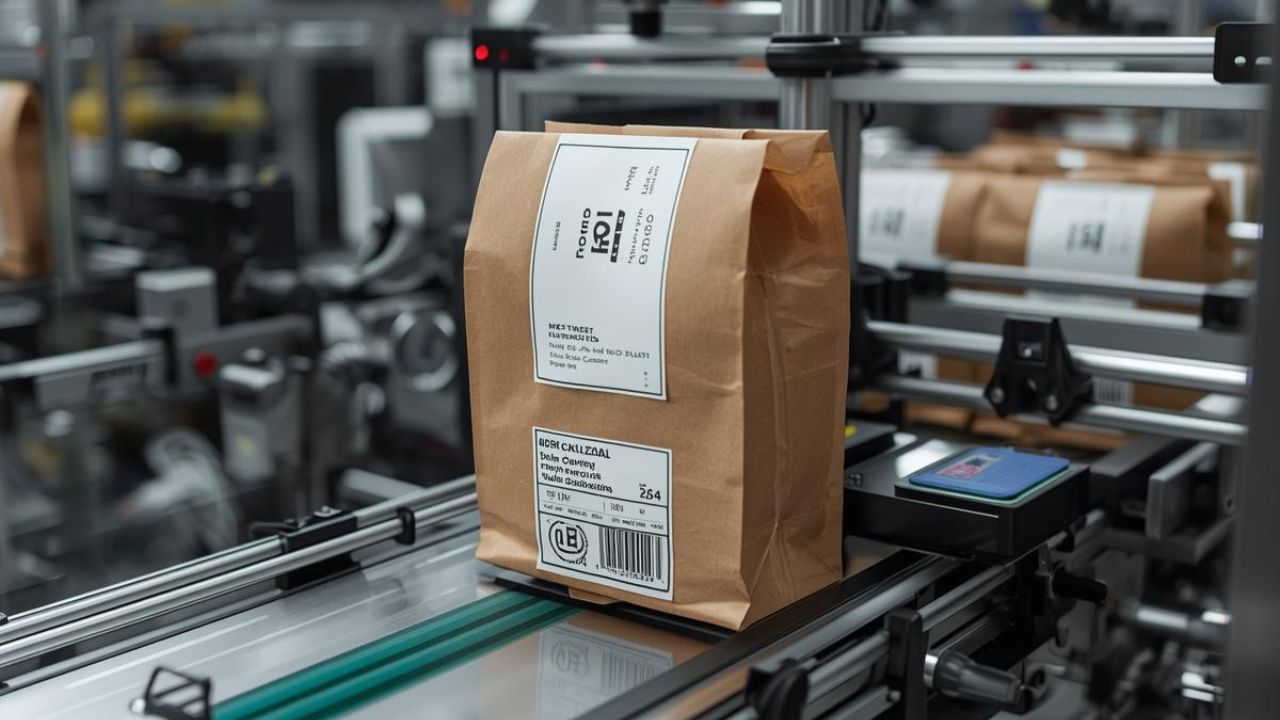
Bag labeling machines apply codes, marks, and labels to packaged products during the bagging process. These integrated labeling systems connect directly to bagging line machinery to ensure every package leaves the line with accurate, compliant labeling. Modern packaging automation depends on this integration to maintain production speed while meeting regulatory standards.
Definition of Bag Labeling Machines
Bag labeling machines are specialized equipment that integrates coding, marking, and labeling capabilities with bagging systems. They ensure product traceability, regulatory compliance, and supply chain visibility throughout the packaging process. These automatic labeling systems are essential for meeting food safety standards, protecting brand integrity, and optimizing operational efficiency. By automating label application, they improve production line performance and reduce operational costs compared to manual labeling processes.
How Bag Labeling Machines Fit into the Packaging Automation Process
Bag labeling machines integrate with four primary bagging system types. Vertical Form-Fill-Seal (VFFS) machines create bags from film rolls and suit powders, granules, and small products—offering high-speed operation for pillow bags and quad-seal designs. Horizontal Form-Fill-Seal (HFFS) machines unwind film horizontally and work best for solid products, pastes, and items requiring gentle handling.
Pre-made pouch bagging machines accept pre-manufactured pouches and achieve speeds up to 100 bags per minute in dual-configuration setups with precise filling accuracy. Open-mouth bagging systems handle larger packages (5-50 kg) and process up to 600 bags per hour with precise weight control for granular or free-flowing materials. Each system type requires specific labeling integration to maintain speed and accuracy.
How Can I Successfully Integrate a Bag Labeling Machine into My Existing Bagging Line?
Successful integration of bag labeling machines into existing bagging line machinery requires systematic planning and execution. The process involves compatibility assessment, physical installation, control system integration, and comprehensive testing to ensure seamless operation with your current packaging automation infrastructure.
Steps for Integrating a Bag Labeling Machine into an Existing Packaging Line
Begin with compatibility assessment and planning—evaluate materials, surface textures, production speeds, and space constraints for both current and future volume needs. Determine optimal placement and mounting to align with your packaging process without impacting other operations while maintaining service accessibility. Proper mounting ensures stability during high-speed operations.
Connect the labeling equipment to your bagging machine's PLC system for synchronized processes and consistent code placement. Configure software to control printing parameters (font size, message content, print speed) and variable data requirements (lot codes, expiration dates, batch numbers). Establish clear project timelines, define success metrics, and allocate resources for installation. Execute comprehensive testing protocols including alignment verification, print quality assessment, speed synchronization, and control system integration validation. Implement regular calibration schedules, consumable replacement routines, and performance monitoring—automated monitoring systems identify potential issues proactively.
Overcoming Common Integration Challenges
Older bagging systems often require infrastructure upgrades to integrate with modern automatic labeling systems. Collaborate with equipment suppliers to assess your existing setup and propose necessary upgrades. Operational challenges include dust, environmental pollution, temperature fluctuations, vibration, and uneven package shapes—select robust labeling solutions that maintain consistent mark quality under these conditions.
Properly executed integration delivers measurable performance improvements: 30-50% throughput increases, 40-60% labor reduction, and changeovers under 15 minutes for advanced integrated labeling systems. While initial capital investment is substantial, comprehensive ROI analysis shows average benefit realization (60.8%) significantly outweighs average challenge severity (54.2%), supporting a strong business case for integration into pre-made pouch bagging machines and other bagging line machinery.
What Are the Benefits of Automating the Labeling Process in Your Bagging Line?
Automatic labeling systems deliver measurable improvements in speed, accuracy, and labor efficiency. These integrated labeling systems combine advanced sensors, precision motors, and real-time monitoring to optimize bagging line machinery performance while reducing operational costs.
Increased Efficiency and Accuracy with Automatic Labeling Systems
Advanced sensor technology uses electric eyes to detect product presence and label gaps, ensuring precise placement and minimizing misalignment during high-speed operations. Stepper and servo motors provide precise control over label movement for consistent application across different bag sizes and shapes. PLC integration coordinates machine timing and sequence for smooth, consistent operation while reducing human error.
Real-time feedback systems monitor for misalignment, missing labels, or jams—providing immediate alerts for quick correction and preventing downtime. Speed capabilities vary by bag type: stand-up pouches achieve 60-100 bags/min, flat bags reach 80-120 bags/min, and gusseted bags process 50-80 bags/min. Placement accuracy meets exacting standards: ±1.0 mm for flat bags, ±1.5 mm for stand-up pouches, and ±2.0 mm for gusseted bags.
Labor Cost Reduction through Packaging Automation
Integrated labeling systems reduce labor requirements by 40-60% compared to manual operations. The automation level directly impacts operator reduction: semi-automatic systems deliver 30-40% reduction, automatic systems achieve 50-60%, integrated lines reach 60-70%, and smart factory implementations attain 70-80% labor reduction.
Beyond staffing efficiency, automatic labeling systems reduce labeling defects by 65%, minimizing rework costs and material waste. These combined labor and quality improvements make bag labeling machines a high-ROI investment for modern packaging automation, particularly in HACCP-compliant packaging equipment applications where consistency and traceability are critical.
How Do Bag Labeling Machines Contribute to HACCP Compliant Packaging?
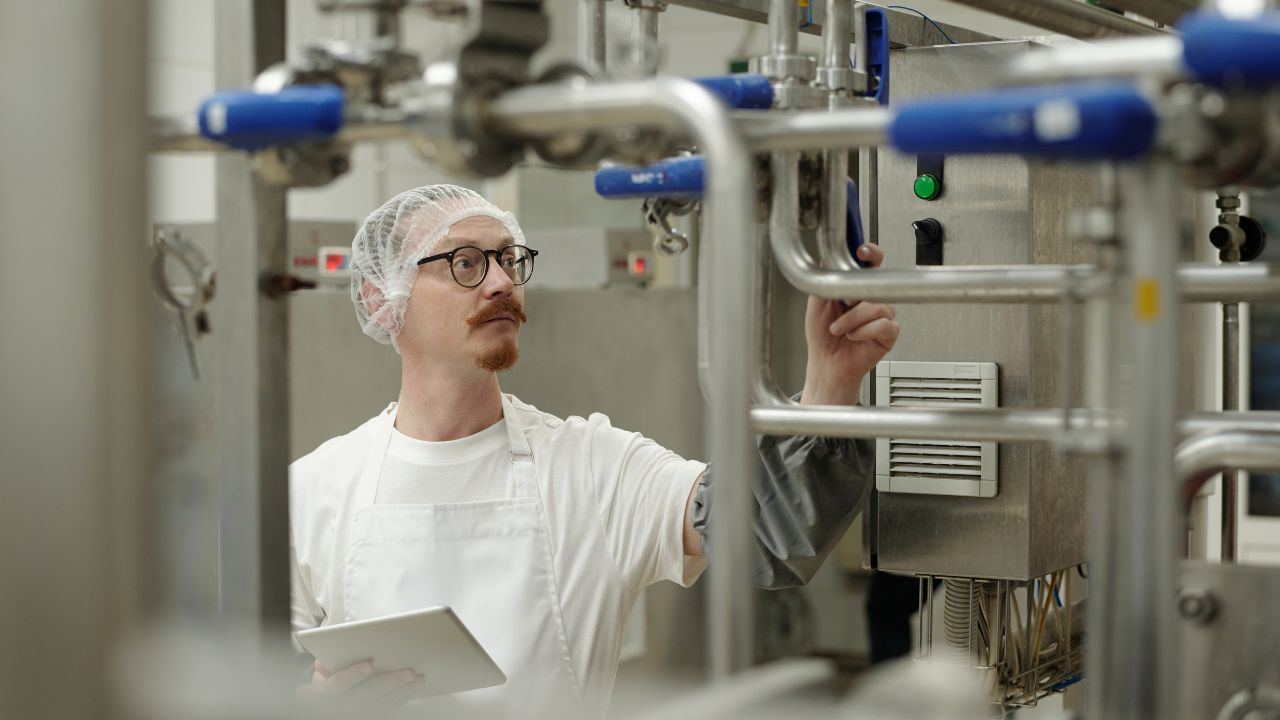
HACCP-compliant packaging equipment requires consistent, accurate labeling to ensure food safety and regulatory compliance. Automatic labeling systems eliminate human error in critical control points, making them essential for maintaining HACCP standards throughout the packaging process.
Ensuring Compliance with HACCP Standards
Industry 4.0 integration incorporates vision verification, barcode readers, and reject systems into bag labeling machines to ensure product quality and compliance while reducing manual intervention. These integrated labeling systems accurately apply critical information—expiry dates, batch codes, and nutritional information—on food packaging without variation or omission.
Automated tracking and data collection support traceability requirements mandated by HACCP protocols, creating digital records for every labeled package. Reject systems identify and remove non-compliant products before they reach the market, preventing distribution of improperly labeled goods. This automated verification makes bagging line machinery inherently more reliable than manual processes for maintaining HACCP compliance, particularly in pre-made pouch bagging machines and other high-speed packaging automation environments where human inspection cannot match production rates.
What Features Should You Look for in Bag Labeling Machines for Effective Integration?
Selecting the right bag labeling machines requires evaluating technical capabilities, production requirements, and integration complexity. Key features determine whether automatic labeling systems can meet your speed, accuracy, and flexibility needs within existing bagging line machinery.
Key Features of Integrated Labeling Systems
Advanced sensor technology uses electric eyes to detect product presence and label gaps, reducing downtime by identifying potential issues before they cause disruptions. High-precision stepper and servo motors provide crucial control over label movement for high-speed production lines, ensuring consistent application across different bag sizes.
PLC integration coordinates machine timing and sequence for smooth, consistent operation from labeling to sealing. Adjustable settings accommodate various product sizes and label types, enabling businesses to use the same machine for multiple products without compromising accuracy. Real-time feedback systems provide immediate alerts for quick correction, preventing downtime. High-quality components and regular maintenance ensure long-term accuracy and prevent inconsistencies. Scalability and speed capabilities maintain precision when handling thousands of labels per hour. Adaptability across bag styles—flat-bottom, stand-up pouches, and valve bags—maximizes equipment utilization in packaging automation environments.
Choosing the Right Labeling Machine Based on Your Production Needs
Match automation level to production volume: manual applicators for low volumes (<10K/month), semi-auto bag labelers for medium volumes (10K-100K/month), integrated bag lines for high volumes (100K-500K/month), and fully automated lines for very high volumes (>500K/month).
Changeover time varies by bag type: flat bags require 5-10 minutes (lowest complexity), stand-up pouches need 10-15 minutes (medium complexity), and gusseted bags take 15-20 minutes (highest complexity). Consider integration complexity when selecting equipment—flat bags offer simplest integration, stand-up pouches present medium complexity, and gusseted bags require advanced integration capabilities. These factors directly impact operational efficiency in pre-made pouch bagging machines and other integrated labeling systems.
Which Industries Benefit Most from Integrating Bag Labeling Machines?
Multiple industries rely on bag labeling machines to meet regulatory requirements, ensure traceability, and maintain brand consistency. Automatic labeling systems provide critical capabilities for food safety, pharmaceutical compliance, and consumer product labeling across diverse packaging applications.
Packaging for the Food and Beverage Industry
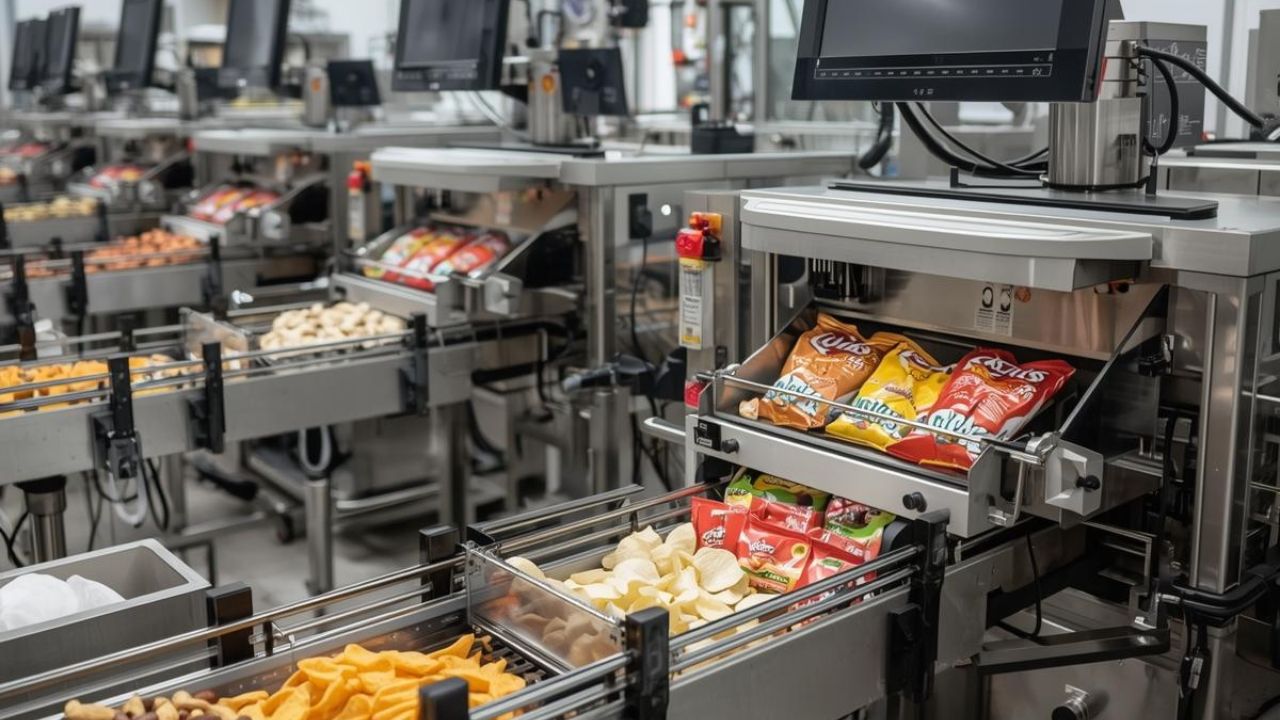
Food and beverage operations use integrated labeling systems to apply expiry dates, batch codes, and nutritional information on stand-up pouches for snacks, chips, and ready-to-eat products. Coffee bags require precise label placement and variable data printing to meet consumer expectations and regulatory standards. Gusseted bags for granular products—flour, sugar, grains, and pet food—demand accurate placement of regulatory compliance information and allergen warnings.
HACCP compliant packaging equipment ensures food safety standards throughout the labeling process, making automatic labeling systems essential for manufacturers prioritizing traceability and quality control. The best packaging machines, including pre-made pouch bagging machines integrated with labeling equipment, deliver the speed and consistency required for high-volume food production.
Packaging Solutions for Pharmaceutical and Consumer Goods Sectors
Pharmaceutical and medical device manufacturers apply permanent laser marks or high-resolution labels with critical traceability data on bags containing medical devices, pharmaceutical products, and sterile supplies. These applications demand the highest accuracy and compliance standards available in packaging automation.
Chemical and mineral producers label large open-mouth bags (5-50 kg) with product information, safety warnings, and handling instructions for fertilizers, industrial chemicals, and construction materials. Consumer goods manufacturers use bagging line machinery to label flat bags and pouches for household products, personal care items, and retail goods—ensuring brand consistency and regulatory compliance across product lines. These diverse applications demonstrate how integrated labeling systems adapt to industry-specific requirements while maintaining operational efficiency.
What Are the Key Challenges and Considerations When Implementing Bag Labeling Machines?
Implementation challenges range from technical compatibility issues to environmental factors affecting performance. Understanding these obstacles and planning mitigation strategies ensures successful integration of automatic labeling systems into existing packaging automation infrastructure.
Addressing Integration and Setup Challenges
Older bagging systems often require infrastructure upgrades to integrate smoothly with modern bag labeling machines. Mechanical interfaces, electrical connections, and control system protocols may need updating to achieve seamless communication between legacy bagging line machinery and new integrated labeling systems.
Operational challenges include dust, environmental pollution, temperature fluctuations, vibration, and uneven package shapes—all affecting label placement accuracy and equipment reliability. Select robust labeling solutions designed to withstand harsh production environments while maintaining consistent mark quality. Plan for changeover time requirements: flat bags require 5-10 minutes (fastest), stand-up pouches need 10-15 minutes, and gusseted bags take 15-20 minutes (most complex). These factors impact production scheduling and overall equipment effectiveness in packaging automation environments.
Evaluating Packaging Line Compatibility
Evaluate production line requirements including materials, surface textures, production speeds, and space constraints before selecting equipment. Consider both current and future needs to ensure bag labeling machines can accommodate increasing volumes without requiring premature replacement or costly modifications.
Integration complexity varies by bag type: flat bags present low complexity, stand-up pouches require medium complexity integration, and gusseted bags demand high complexity solutions. Collaborate with coding equipment suppliers to assess existing infrastructure and propose necessary upgrades for pre-made pouch bagging machines and other specialized applications. Verify compatibility with industrial communication protocols—Ethernet/IP, Profinet, Modbus TCP/IP, and OPC UA—to ensure seamless data exchange between automatic labeling systems and existing control systems. This compatibility assessment prevents costly integration failures and ensures HACCP-compliant packaging equipment functions properly within your production environment.
Is Integrating a Bag Labeling Machine Right for Your Packaging Line?
Integrated labeling systems deliver measurable ROI through increased throughput, reduced labor costs, and improved accuracy. The decision to integrate bag labeling machines into bagging line machinery depends on production volume, accuracy requirements, and budget—but the benefits of packaging automation typically outweigh initial investment costs across all operation sizes.
Next Steps for Implementing an Integrated Labeling System
ROI periods vary by investment level: small batch systems ($5K-$25K) return investment in 6-12 months, medium automation ($80K-$150K) in 12-18 months, and high-precision systems ($150K-$250K) in 18-24 months. These timelines reflect labor savings, error reduction, and throughput improvements from automatic labeling systems.
Implement a phased approach for successful integration. Assessment: Audit existing production lines, define project scope, and establish KPIs for measuring success. Selection: Request Factory Acceptance Tests (FAT) from vendors and compare proposals for pre-made pouch bagging machines and other equipment. Installation: Complete site preparation, mechanical and electrical installation, and control system integration with existing bagging line machinery. Commissioning: Conduct Site Acceptance Tests (SAT), train operators, and develop standard operating procedures. Optimization: Execute initial production runs, monitor performance against KPIs, and implement continuous improvement protocols.
Contact HACCP-compliant packaging equipment suppliers to evaluate solutions tailored to your industry, production volume, and integration requirements. Request demonstrations with your actual products to verify performance before committing to purchase.
Ready to Optimize Your Bagging Line with Integrated Labeling Solutions?
Wolf-Packing Machine Company specializes in integrated labeling systems designed for seamless integration with your existing bagging line machinery. Our automatic labeling systems deliver the precision, speed, and reliability required for modern packaging automation—from pre-made pouch bagging machines to HACCP-compliant packaging equipment across food, pharmaceutical, and industrial applications.Contact our packaging automation experts today for a customized assessment of your production line. We'll evaluate your requirements, recommend optimal bag labeling machines for your operation, and provide ROI projections based on your specific production volume and accuracy needs. Request a Factory Acceptance Test with your products to see our integrated labeling systems in action before making your investment decision.