Key Takeaways
- Wrap-around label machines excel with round containers, delivering up to 100 labels/min, 95-100% coverage, and faster ROI (12-18 months) with lower operating costs ($12-15/hour), while front-back systems offer superior accuracy (±0.8mm) and design flexibility for rectangular containers.
- Automatic jar labeling reduces labor requirements by 40-60% and increases throughput 30-50% with integrated systems, directly addressing labor shortages in food manufacturing while achieving ROI within 6-24 months depending on automation level.
- Five-year total cost of ownership drops from $818,500 (manual) to $349,500 (integrated systems), reducing cost per 1,000 labels from $16.37 to $6.99—proving affordable packaging automation delivers measurable savings for small to medium-sized businesses.
- Industries requiring 99.9%+ accuracy—pharmaceuticals, cosmetics, and regulated food products—benefit most from AI vision systems and high-speed inline configurations, while consumer goods and chemicals achieve efficiency with standard automatic tabletop systems.
- Match production volume to automation level: manual/semi-auto for <10,000 units/month, automatic tabletop for 10,000-100,000/month, inline automatic for 100,000-500,000/month, and multi-head systems for >500,000/month to optimize investment and scalability.
Jar labeling machines are essential equipment for food, pharmaceutical, cosmetic, and industrial manufacturers requiring consistent, high-speed label application. Choosing between wrap-around and front-back labeling systems impacts production efficiency, operational costs, and product presentation. Automatic jar labeling addresses critical challenges—solving labor shortages in food manufacturing, reducing operational expenses, and maintaining regulatory compliance.
This guide examines how labeling systems improve throughput, which industries benefit most from jar packaging systems, and why affordable packaging automation proves crucial for modern manufacturing. Understanding production volume requirements, system compatibility, and customization options ensures you select the right jar labeling machine for your business needs, maximizing ROI while supporting long-term growth and operational stability.
What is the Difference Between Wrap-Around and Front-Back Labeling Machines for Jars?
Jar labeling machines use two primary methods: wrap-around and front-back application. Wrap-around label machines apply a single continuous label around the entire container, while front-back label machines apply separate labels to designated surfaces. Your choice depends on container shape, production speed requirements, and label design flexibility needs.
What are Wrap-Around Labeling Machines?
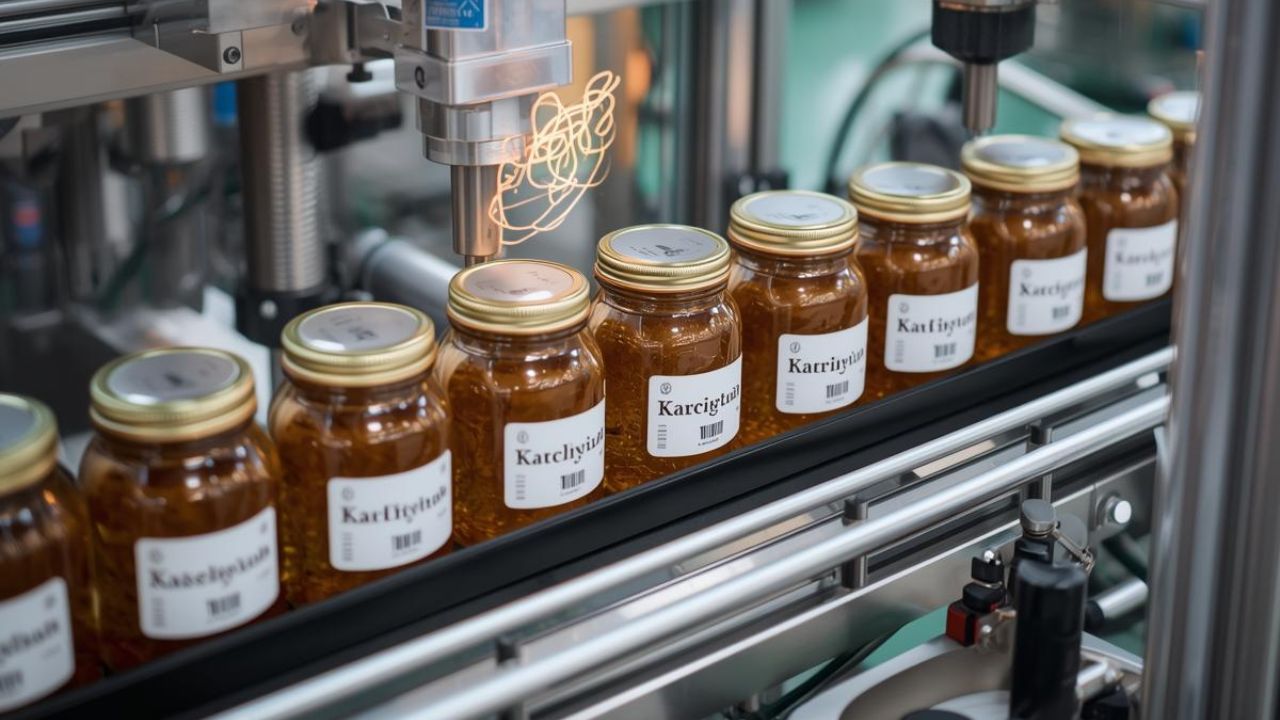
Wrap-around label machines apply a single continuous label around cylindrical or round containers, covering 95-100% of the surface. These labeling systems excel in jar packaging systems with round bottles, cans, and cylindrical containers, delivering speeds up to 100 labels per minute with ±1.0 mm placement accuracy.
These automatic jar labeling systems offer significant economic advantages for high-volume operations. Setup takes 15-20 minutes, operating costs run $12-15 per hour, and maintenance averages $300-400 monthly. The ROI period of 12-18 months makes wrap-around systems attractive for solving labor shortages in food manufacturing. They work best with pressure-sensitive, paper, and vinyl labels, providing excellent regulatory compliance through ample surface area for required information—critical for pharmaceuticals and heavily regulated industries that need jar labeling machines.
What are Front-Back Labeling Machines?
Front-back label machines apply separate labels to two surfaces, typically covering 60-70% of the container. These systems achieve 85-90 labels per minute (upgradeable to 100+ with dual applicators) with superior ±0.8 mm placement accuracy. They excel on rectangular, flat-sided containers and handle irregular surfaces through tamp-blow technology.
Front-back labeling systems provide unmatched design flexibility—separate front and back labels can use different materials and designs. Initial investment runs $35,000-$45,000 with operating costs of $14-17 per hour and maintenance at $400-500 monthly. The 15-20 month ROI delivers affordable packaging automation for market-specific products requiring frequent back-label changes. Setup takes 20-25 minutes, and shorter labels reduce skew and flagging risks. These systems maintain high product visibility, making them ideal for transparent containers where consumers view contents.
Wrap-Around Vs. Front-Back Labeling: A Comparative Overview
Wrap-around systems deliver faster speeds (100 labels/min vs. 85-90), quicker setup (15-20 min vs. 20-25 min), and better economics—lower initial investment ($40,000-$50,000 vs. $35,000-$45,000), operating costs ($12-15/hr vs. $14-17/hr), maintenance ($300-400/month vs. $400-500/month), and faster ROI (12-18 months vs. 15-20 months). However, they struggle with irregular surfaces and square containers.
Front-back label machines offer superior placement accuracy (±0.8mm vs. ±1.0mm), label material flexibility including die-cut options, and market adaptability through easy back-label swapping. They handle rectangular and irregular containers excellently and reduce skew risk with shorter labels. Both systems provide excellent recycling compatibility. Choose wrap-around for round containers and maximum coverage; choose front-back for rectangular containers, design flexibility, and product visibility in jar packaging systems.
How Do Automatic Jar Labeling Machines Improve Production Efficiency?
Automatic jar labeling machines transform production efficiency through three primary mechanisms: reducing labor requirements, increasing throughput, and maintaining consistent quality. These labeling systems address critical manufacturing challenges while delivering measurable ROI across industries that need jar labeling machines.
Reducing Labor Costs with Automatic Labeling Systems
Automatic jar labeling directly addresses workforce challenges, offering a practical solution for solving labor shortages in food manufacturing. Semi-automatic systems reduce operator requirements by 30-40%, while fully automatic systems eliminate 50-60% of manual labor needs. Integrated line systems cut operators by 60-70%, and smart factory implementations achieve 70-80% reduction.
This affordable packaging automation scales with production needs. Most operations achieve 40-60% overall labor reduction with integrated jar packaging systems, reallocating workers to higher-value tasks. The decreased dependency on manual labor stabilizes production schedules, eliminates training bottlenecks, and reduces labor-related downtime—critical advantages in today's tight labor market.
Boosting Throughput with Automatic Labeling Machines
Automatic labeling systems dramatically increase production capacity without adding shifts or floor space. Semi-automatic systems boost throughput 50-100%, automatic systems deliver 150-250% increases, integrated lines achieve 300-400% gains, and smart factory configurations exceed 400-500% improvements. Standard integrated jar labeling machines increase overall throughput 30-50%.
Advanced systems complete changeovers in under 15 minutes, minimizing downtime between production runs. This speed advantage allows manufacturers to handle multiple SKUs efficiently, respond quickly to market demands, and maximize equipment utilization. High-speed wrap-around label machines and front-back label machine configurations maintain consistency even at peak throughput levels.
Maintaining Product Quality and Consistency
Labeling systems ensure precision through integrated technology. Electric eyes and advanced sensors detect product presence and label gaps, ensuring accurate placement and minimizing misalignment during high-speed operation. Stepper and servo motors deliver precise control over label movement, maintaining consistency across different jar sizes and shapes.
PLC integration coordinates machine timing and sequence, creating smooth operation from labeling through sealing while eliminating human error. Real-time feedback systems detect misalignment, missing labels, or jams instantly, triggering immediate alerts for quick correction and preventing costly downtime. High-quality components paired with regular maintenance schedules preserve long-term accuracy, ensuring every labeled product meets quality standards regardless of production volume.
What Industries Benefit Most from Jar Labeling Machines?
Industries that need jar labeling machines span food and beverage, pharmaceuticals, cosmetics, chemicals, and consumer goods. Each sector demands specific labeling capabilities—from regulatory compliance and traceability to brand consistency and safety information. Understanding industry-specific requirements helps manufacturers select appropriate jar packaging systems.
Food and Beverage Industry
Food manufacturers rely on jar labeling machines for sauces, jams, preserves, condiments, and bottled beverages. These labeling systems must apply expiry dates, batch codes, nutritional information, allergen warnings, and promotional content while meeting strict regulatory standards. Continuous Inkjet (CIJ) printers handle expiry dates, batch numbers, serial numbers, barcodes, logos, and promotional codes at speeds up to 508 meters per minute across plastic, glass, metal, film, and paper surfaces.
Thermal Transfer Overprinting (TTO) delivers 300 dpi print quality directly onto flexible substrates, ideal for flat, thin films in jar packaging systems. Vision systems provide 99.9%+ accuracy for label inspection, ensuring compliance with food safety regulations. Both wrap-around label machines and front-back label machine configurations serve high-volume food production, offering affordable packaging automation while solving labor shortages in food manufacturing through consistent, high-speed application.
Pharmaceutical and Cosmetic Industries
Pharmaceutical operations demand the highest precision for vials, ampoules, and small bottles. Recommended systems combine AI vision with high-speed inline automatic jar labeling, achieving 99.9%+ accuracy with serialization capabilities for regulatory compliance. Investment ranges from $150,000-$250,000 with 18-24 month ROI periods. Laser marking creates permanent, consumable-free marks containing critical traceability data—essential for pharmaceutical supply chain security.
Cosmetic manufacturers prioritize aesthetic precision for lipstick tubes, small jars, and sample vials. Automatic tabletop labeling systems provide gentle handling while maintaining brand consistency across product lines. These industries that need jar labeling machines require flexible systems accommodating frequent design changes, premium finishes, and multi-SKU production runs without sacrificing placement accuracy or visual appeal.
Industrial Applications and Consumer Goods
Chemical and mineral processors use labeling systems for large open-mouth bags (5-50 kg), applying product information and safety warnings at speeds up to 600 bags per hour with precise weight control. These jar packaging systems handle harsh environments and demanding substrates while maintaining regulatory compliance for hazardous materials labeling.
Consumer goods manufacturers label flat bags, pouches, and containers for diverse products—from pet food to household items—ensuring brand consistency across retail channels. Industrial applications typically require $50,000-$100,000 investments with 12-20 month ROI periods. Both wrap-around label machines and front-back configurations serve these sectors, providing affordable packaging automation that scales with production volumes while maintaining quality standards.
Why Is Affordable Packaging Automation Crucial for Modern Manufacturing?
Affordable packaging automation addresses three critical manufacturing challenges: persistent labor shortages, rising operational costs, and increasing sustainability demands. Jar labeling machines deliver measurable ROI while improving production consistency, reducing waste, and stabilizing operations against workforce volatility.
Overcoming Labor Shortages in Food Manufacturing
Solving labor shortages in food manufacturing requires automated jar packaging systems that eliminate dependency on manual staffing. PLC-based automated control systems coordinate machine timing and sequencing, reducing human error while maintaining production schedules regardless of workforce availability. This affordable packaging automation keeps production lines running during staffing gaps.
Proactive sensors detect potential issues before they cause downtime, minimizing disruptions that manual operations cannot prevent. Vision verification, barcode readers, and automated reject systems reduce manual intervention while improving overall system performance. These labeling systems enable small teams to manage high-volume operations—critical for industries that need jar labeling machines but face tight labor markets and rising wage pressures.
Cost Benefits of Packaging Automation for Small to Medium-Sized Businesses
Five-year total cost of ownership demonstrates clear advantages for automatic jar labeling. Manual operations cost $818,500 versus $349,500 for integrated systems—a 57% reduction. Cost per 1,000 labels drops from $16.37 (manual) to $10.51 (semi-automatic), $7.80 (automatic), and $6.99 (integrated), proving affordable packaging automation delivers immediate savings.
Investment scales with business size. Semi-automatic systems ($10,000-$25,000) achieve 6-12 month ROI, automatic systems ($30,000-$60,000) return investment in 12-18 months, and integrated lines ($75,000-$150,000) pay back in 18-24 months. Even smart factory implementations ($200,000+) achieve ROI within 24-36 months. Both wrap-around label machines and front-back label machine configurations offer scalable solutions—small businesses start with semi-automatic systems and upgrade as production grows, protecting initial investments while expanding capacity.
Enhancing Sustainability with Automated Labeling
Automated labeling systems reduce environmental impact through precision application and waste reduction. Laser marking technology creates permanent marks without consumables—no inks, ribbons, or adhesive labels—eliminating ongoing material costs and disposal requirements. This consumables-free approach lowers operational costs while minimizing environmental footprint.
Pressure-sensitive labels used in wrap-around and front-back jar labeling machines offer excellent recycling compatibility, supporting circular packaging initiatives. Automated systems apply labels accurately the first time, reducing scrap rates and material waste compared to manual application. These jar packaging systems help manufacturers meet sustainability goals while lowering costs—precision application means fewer rejected products, less rework, and reduced material consumption across production cycles.
What to Consider When Choosing a Jar Labeling Machine for Your Packaging Line?
Selecting the right jar labeling machine requires evaluating production volume, system compatibility, and versatility needs. Matching labeling systems to current capacity while planning for growth ensures optimal ROI. Consider container types, integration requirements, and customization capabilities before investing in automatic jar labeling equipment.
Production Volume and Speed Requirements
Production volume dictates appropriate automation levels. Low-volume operations (<10,000 units/month) suit manual or semi-automatic systems, medium volume (10,000-100,000/month) requires automatic tabletop machines, high volume (100,000-500,000/month) needs inline automatic systems, and very high volume (>500,000/month) demands multi-head configurations. This scaling ensures affordable packaging automation without over-investing.
Wrap-around label machines deliver up to 100 labels per minute, while front-back label machine systems achieve 85-90 labels/min (upgradeable to 100+ with dual applicators). High-speed jar labeling machines maintain precision handling thousands of labels hourly—essential for expanding businesses. Choose wrap-around systems for maximum speed with round containers or front-back configurations for flexibility with rectangular jars and frequent design changes.
Compatibility with Jar Packaging Systems
Successful integration requires comprehensive compatibility assessment covering production line requirements, materials, surface textures, production speeds, and space constraints. Control system integration connects labeling equipment to existing PLC systems, ensuring seamless operation and synchronized processes across jar packaging systems. This coordination eliminates bottlenecks and maintains production flow.
Optimal placement aligns labeling systems with packaging processes without impacting other operations while maintaining service accessibility. Software configuration controls printing parameters—font size, message content, print speed—and accommodates variable data like lot codes, expiration dates, and batch numbers. Testing and validation confirm alignment accuracy, print quality, speed synchronization, and integration with existing control systems before full deployment, preventing costly production disruptions.
Customization and Versatility of Labeling Systems
Adjustable settings enable jar labeling machines to accommodate various product sizes and label types, allowing businesses to run multiple SKUs on the same equipment without compromising accuracy. This versatility proves essential for industries that need jar labeling machines handling diverse product portfolios—from small cosmetic jars to large food containers.
Label material compatibility varies by system. Paper labels (standard and coated) work excellently with both wrap-around and front-back systems. Vinyl delivers high durability on both configurations at medium-high cost. Polyester performs well on wrap-around systems but excels on front-back machines with very high durability. Clear and transparent labels rate fair for wrap-around but excellent for front-back applications. Modular system designs allow capacity expansion and technology upgrades without replacing entire systems, protecting long-term investments as production volumes grow and labeling requirements evolve.
Choosing the Right Jar Labeling Machine for Your Business Needs
Selecting appropriate jar labeling machines requires balancing container types, production volumes, budget constraints, and long-term growth plans. The right labeling systems deliver ROI through reduced labor costs, increased throughput, and consistent quality while supporting business expansion.
Evaluating Your Labeling Needs and Choosing the Best Fit
Choose wrap-around label machines for round and cylindrical containers requiring maximum information display, cost efficiency, and high-speed production. These systems excel in pharmaceutical and food applications where regulatory compliance demands extensive labeling space. Wrap-around configurations offer faster ROI (12-18 months), lower operating costs ($12-15/hour), and speeds up to 100 labels per minute—ideal for solving labor shortages in food manufacturing.
Select front-back label machine systems for rectangular containers, market-specific products requiring frequent label changes, product visibility needs, and irregular container shapes. Front-back labeling systems provide superior placement accuracy (±0.8mm), design flexibility with separate front and back labels, and excellent handling of non-uniform surfaces. This configuration suits industries that need jar labeling machines serving multiple markets or requiring premium front labels paired with economical back labels for cost control.
Requesting a Consultation or Quote for Jar Labeling Machines
Engage packaging equipment suppliers early in the evaluation process to assess production line integration requirements, workflow optimization opportunities, and staff training needs. Pre-implementation planning ensures automatic jar labeling equipment aligns with existing jar packaging systems without disrupting operations. Establish clear project timelines, define measurable success metrics, and allocate sufficient resources for installation, testing, and operator training.
Request Factory Acceptance Tests (FAT) to validate equipment performance before purchase. FAT demonstrations verify labeling accuracy, speed capabilities, changeover times, and compatibility with your specific containers and label materials. This validation protects your investment in affordable packaging automation by confirming systems meet specifications before delivery—preventing costly modifications or returns after installation.
Get Expert Jar Labeling Solutions from Wolf-Packing Machine Company
Wolf-Packing Machine Company delivers comprehensive jar labeling solutions tailored to your production requirements. Our team helps you select the optimal wrap-around or front-back labeling system based on container types, production volumes, and budget constraints. We provide Factory Acceptance Tests (FAT) to validate equipment performance before purchase, ensuring seamless integration with your existing jar packaging systems. From semi-automatic solutions for growing businesses to high-speed inline systems for large-scale operations, we offer affordable packaging automation that solves labor shortages while maximizing ROI. Contact Wolf-Packing Machine Company today for a consultation and discover how our weighing and filling machine systems, labeling solutions, and complete line integration improve efficiency, reduce costs, and ensure consistent quality across your production line.