Volume determines the winner: Premade pouches cost less below 15-20 million units annually ($0.0950/bag), while FFS systems dominate above 50 million units ($0.0421/bag) where material savings compound.
Material costs drive 60% of TCO: At 50 million bags annually, the $0.005 per unit material advantage of rollstock film saves $961,500 over five years, far exceeding capital cost differences.
Changeover frequency changes the calculation: Each daily changeover adds $45,000 in annual downtime costs for FFS systems. Operations running 3-4+ changeovers daily recover this loss with premade pouches' 10-20 minute transitions.
Speed ranges dictate application fit: Premade pouches handle up to 90 ppm, VFFS reaches 300 ppm, and HFFS achieves 600+ ppm. Match your throughput requirements to system capabilities; don't overpay for unnecessary speed.
Sustainability presents trade-offs: Premade pouches use 33% less energy but require 2x more material per unit. FFS systems consume more electricity but reduce packaging material by 50%. Choose based on whether energy or material efficiency matters most.
Selecting between premade pouch vs form fill seal packaging represents one of the most consequential decisions in production line planning. The choice directly impacts material costs, labor requirements, changeover efficiency, and total cost of ownership over the equipment's 15-20 year service life. Manufacturers often focus exclusively on capital investment, where premade pouch systems cost $41,500 versus $70,000-$115,000 for FFS systems, while overlooking the material cost differential that dominates long-term economics.
At 50 million bags annually, this material advantage saves $250,000 per year, compounding to nearly $1 million over five years. Yet volume alone doesn't determine optimal bagging system selection. Changeover frequency, SKU complexity, speed requirements, and branding strategy all influence which technology delivers the lowest total cost of ownership.
This packaging method comparison examines the operational and financial trade-offs between premade pouch and form-fill-seal systems, providing the data-driven framework you need to make the right choice for your production environment.
What Is Premade Pouch Packaging?
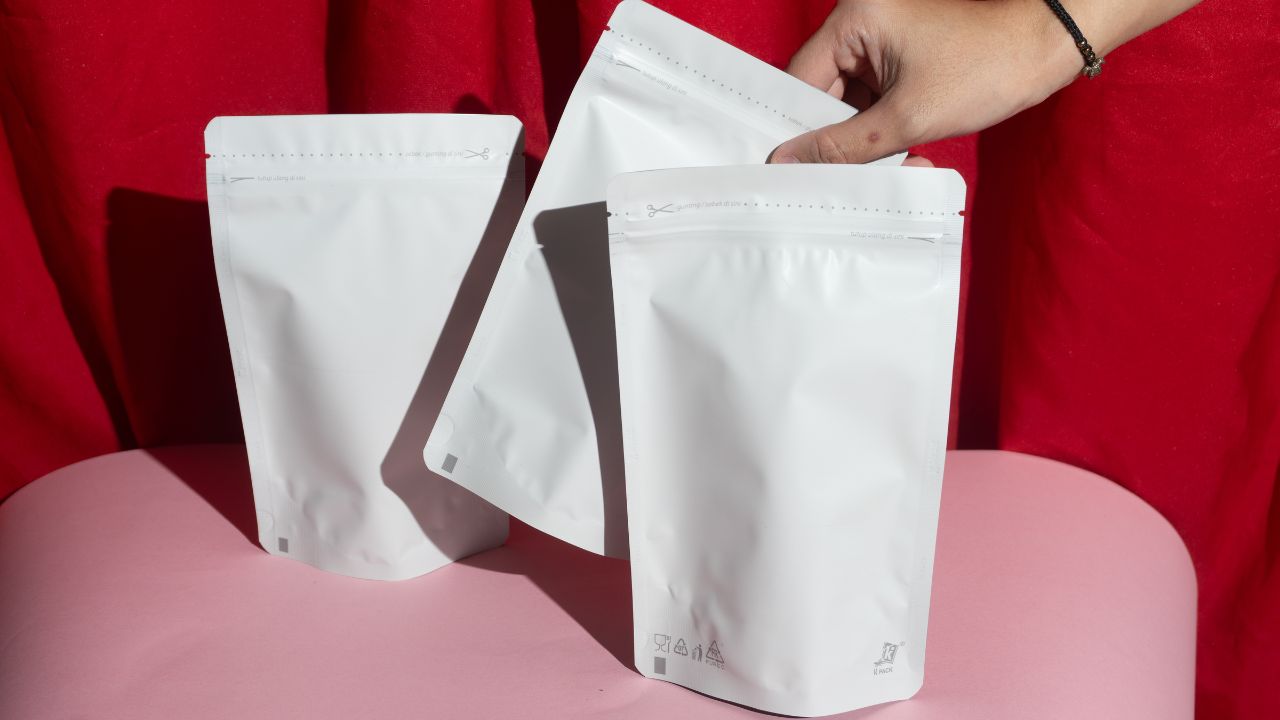
Premade pouch packaging machines fill and seal pre-manufactured bags rather than forming them from rollstock film. A rotary or inline machine opens each pouch, dispenses product, and seals the opening, eliminating the film-forming process entirely.
Key Features: Pre-manufactured pouches loaded into the machine; opens, fills, and seals. Speed ranges from 35-90 ppm depending on configuration (simplex to duplex). Compact footprint of 100-200 sq ft. Available in stand-up pouches, flat bags, gusseted styles, zipper closures, and spouted pouches.
Best For: Premium snacks, coffee, pet food, beverages, and cosmetics. High-value products where shelf presence directly drives sales and brand differentiation matters.
Advantages: Fastest changeovers in the industry at 10-20 minutes versus 30-90 minutes for FFS systems. Lowest operator skill requirements reduce training costs and turnover impact. Superior shelf appeal with stand-up capability and premium appearance. Lower maintenance burden of 20-40 hours annually versus 40-120 hours for FFS. Reduced labor costs of $60,000 per year versus $80,000 for FFS operations.
Drawbacks: Material cost runs 2-4x higher at $0.010-$0.020 per unit versus $0.005-$0.010 for rollstock film. Slower speeds of 35-90 ppm versus 300-600+ ppm for HFFS. Higher total cost of ownership at high volumes, 45% more expensive than VFFS for 50 million bags annually.
What Is Form-Fill-Seal Packaging?
Form-fill-seal systems create bags from rollstock film in a continuous operation, forming the package around the product before sealing. Two primary configurations exist: vertical (VFFS) and horizontal (HFFS).
How It Works:
VFFS (Vertical): Film fed vertically through a forming tube, product dispensed into the tube via weighers and fillers, vertical and horizontal seals created, bags cut and discharged. Speed ranges from 50-300 ppm. Versatile for multiple bag styles, including pillow pouches, gusseted bags, and quad-seal formats.
HFFS (Horizontal): Film wraps product horizontally through a forming box, creating a fin seal along the length and end seals at both sides. Speed ranges from 300-600+ ppm, making it the fastest packaging method available. Ideal for individual items and flow-wrapped products.
Benefits: Lowest material costs at $0.005-$0.010 per unit. Highest speeds with HFFS, achieving 600+ ppm. Cost-effective at scale with VFFS running $0.0421 per bag at 50 million bags annually. Excellent seal reliability between 95-99%. A single machine handles multiple bag styles and sizes.
Disadvantages: Higher initial investment ranging from $70,000-$115,000 versus $41,500 for premade pouch systems. Longer changeover times of 20-90 minutes, depending on configuration. Higher operator skill requirements and maintenance demands. Longer lead times of 8-16 weeks versus 6-10 weeks for premade systems.
Key Differences: Premade Pouch vs. Form-Fill-Seal
Understanding the ffs vs premade pouch trade-offs requires examining capital costs, operational expenses, and throughput capabilities side by side.
Cost Comparison (50M bags/year):
Cost Factor
VFFS
HFFS
Premade Pouch
Initial Investment
$70,000
$115,000
$41,500
Annual Material Cost
$250,000
$250,000
$500,000
Annual Labor Cost
$80,000
$80,000
$60,000
5-Year TCO
$2,105,000
$2,135,000
$3,066,500
Cost Per Bag
$0.0421
$0.0427
$0.0613
Key Insight: Material costs dominate at 60% of total operating expenses. At high volumes, premade pouches cost 45% more over five years despite lower labor and capital requirements.
Speed & Changeover:
Machine Type
Speed (ppm)
Changeover Time
Best For
VFFS
100-300
20-30 min
Medium volume, multiple bag styles
HFFS
300-600+
30-45 min
Maximum speed, few SKUs
Premade Pouch
35-90
10-20 min
Frequent changes, premium branding
Critical Fact: Each additional changeover per day adds approximately $45,000 in annual downtime costs for FFS systems. For operations running 4+ changeovers daily, premade pouch systems recover this loss through faster transitions.
Sustainability:
Factor
FFS
Premade Pouch
Energy Use (annual)
$12,000-$15,000
$8,000 (33% lower)
Production Waste
2-5%
1-3%
Material Consumption
50% less per unit
Higher per unit
FFS systems generate more waste during film splices and changeovers, but consume less material per package. Premade pouches reduce energy consumption and waste but require more material per unit due to manufacturing inefficiencies in pouch production.
When To Choose Premade Pouch Packaging
Premade pouch systems excel in environments where flexibility and branding outweigh raw throughput. The lower capital investment and faster changeovers make them ideal for manufacturers managing diverse product lines with moderate volumes.
Choose Premade Pouch When: Production volume stays below 15-20 million units annually. Managing 10+ SKUs with 3-4 changeovers per day, where downtime costs eliminate FFS speed advantages. Premium shelf presence is critical for brand differentiation, and stand-up pouches command consumer attention. Limited floor space constrains options to 100-200 sq ft footprints. Minimizing initial investment at $41,500 versus $70,000-$115,000 for FFS systems.
Cost-Effectiveness Example: At 10 million bags annually, premade pouches cost $0.0950 per bag versus $0.1200 per bag for VFFS, a 21% advantage. The break-even volume occurs between 15-20 million units annually, where material costs overtake the capital and changeover savings.
Branding Advantage: Stand-up pouches command 10-20% retail price premiums over pillow pouches. Superior shelf appeal with gusseted bottoms and resealable zippers justifies higher material costs when brand differentiation drives purchasing decisions. Premium positioning often recovers the $0.005-$0.010 per unit material cost differential.
When Form-Fill-Seal Is The Better Option
FFS systems dominate high-volume operations where speed and material efficiency determine profitability. The higher capital investment and maintenance requirements pay off through dramatically lower per-unit costs at scale, particularly when integrated with automated packaging lines.
Choose FFS When: Production volume exceeds 50 million units annually, where material savings offset higher equipment costs. Running single products or a few SKUs minimizes changeover frequency, the primary FFS disadvantage. Maximum speed is a priority with HFFS producing 6x more units per hour than premade systems. Total cost of ownership drives decision-making over initial investment concerns.
Volume Economics: At 50 million bags annually, FFS saves $961,500 over five years, 31% lower TCO than premade pouches. At 100 million bags annually, FFS saves $4 million+ over five years. The material cost advantage of $0.005 per unit compounds exponentially at scale.
Best Applications: VFFS handles powders, granules, snacks, and liquids at 100-250 ppm with versatile bag style options. HFFS processes individual items, baked goods, and confectionery at 300-600+ ppm, where maximum throughput justifies limited format flexibility.
How To Choose The Right Packaging Method
Select the optimal system by matching production requirements against each technology's strengths. Volume, changeover frequency, and speed requirements determine which platform delivers the lowest total cost of ownership.
Decision Framework:
Production Volume: Below 15M units annually → Premade Pouch captures cost advantage through lower capital and labor requirements. Between 15-50M units annually → VFFS balances speed and flexibility with reasonable material costs. Above 50M units annually → VFFS or HFFS required where material efficiency determines profitability.
Changeover Frequency: Three to four changes daily → Premade Pouch saves $45,000 annually per daily changeover through 10-20 minute transitions. One to two changes daily → VFFS handles moderate changeover demands with 20-30 minute transitions. Less than one change daily → HFFS maximizes throughput where changeover time becomes negligible.
Speed Requirements: Below 100 ppm → Premade Pouch meets demand without speed penalty. Between 100-300 ppm → VFFS delivers necessary throughput with bag style versatility. Above 300 ppm → HFFS required for maximum production capacity.
Budget Constraints: Limited capital expenditure → Premade Pouch at $41,500 minimizes initial investment. Focus on per-unit cost → FFS systems deliver $0.0421 per bag at scale versus $0.0613 for premade.
Lead Time: Urgent delivery in 6-10 weeks → Premade Pouch offers the fastest installation. Standard timeline of 8-12 weeks → VFFS balances delivery speed and capability. Extended timeline of 12-16 weeks → HFFS requires longer customization and integration period.
Cost Analysis: Setup, Materials, And Long-Term Savings
Understanding the total cost of ownership requires examining upfront investment, ongoing material expenses, and operational costs over the equipment's service life. Material costs dominate long-term economics regardless of system choice.
Initial Investment:
Component
VFFS
HFFS
Premade Pouch
Equipment + Installation
$68,000
$112,000
$40,000
Training
$2,000
$3,000
$1,500
Total
$70,000
$115,000
$41,500
Premade pouch systems require 40-65% less capital than FFS alternatives, reducing financial barriers for startups and companies with limited budgets.
Material Costs: Rollstock film for FFS systems runs $0.005-$0.010 per unit. Premade pouches cost $0.010-$0.020 per unit, 2-4x more expensive. At 50 million bags annually, this material cost difference creates a $250,000 annual gap that compounds over equipment lifetime.
Long-Term Savings (5-Year TCO): At 50 million bags annually, FFS systems save $961,500, a 31% reduction versus premade pouches. At 10 million bags annually, premade pouches save $250,000, a 20% reduction versus FFS. The crossover point occurs between 15-20 million units, where material costs overtake capital and labor advantages.
Key Takeaway: Material costs represent 60% of total operating expenses. This single factor determines which system delivers lower TCO at your production volume.
Environmental Considerations In Packaging Choices
Sustainability metrics favor different systems depending on which environmental factor matters most. Energy consumption and material usage present opposing trade-offs between technologies.
Energy & Waste Comparison:
Factor
FFS Systems
Premade Pouch
Winner
Annual Energy Cost
$12,000-$15,000
$8,000
Premade (33% lower)
Production Waste
2-5%
1-3%
Premade (40% less)
Material Usage
Baseline
2x higher
FFS (50% less material)
5-Year Energy Cost
$60,000-$75,000
$40,000
Premade saves $20,000-$35,000
FFS systems consume more energy through film heating, sealing jaw operation, and continuous motion mechanics. Premade pouches eliminate the forming process, reducing electrical load by one-third.
Sustainability Decision: Choose premade pouches for lower operational energy use and reduced carbon footprint from electricity consumption. Choose FFS systems for material efficiency, 50% less packaging material per unit reduces raw material extraction and transportation emissions. Total environmental impact depends on whether energy or material efficiency drives your sustainability priorities.
Making The Right Choice For Your Business
Selecting between premade pouch and form-fill-seal systems depends on production volume, SKU complexity, and whether speed or flexibility drives profitability. No universal "best" option exists, only the right fit for your specific operational requirements.
Premade pouches win for volumes below 15-20 million units annually, high-SKU environments managing 10+ products, and when premium branding justifies the 45% TCO premium. VFFS excels for 20-100 million units annually with moderate SKU counts of 3-8 products and flexible bag style requirements. HFFS dominates for maximum speed at 300-600+ ppm and volumes exceeding 100 million units annually with minimal SKU changes.
At 50 million bags annually, FFS systems cost $0.0421-$0.0427 per bag versus $0.0613 for premade pouches, a 31% savings driven primarily by material costs. However, for smaller operations managing multiple products with frequent changeovers, premade pouches offer superior flexibility and lower total costs despite higher per-unit material expenses. Calculate your specific volume, changeover frequency, and material costs to determine which system delivers the lowest TCO for your production environment.
Ready to select the right packaging system for your operation? Contact Wolf Packing's engineering team for a customized TCO analysis on our high performing packaging machines, based on your production volume and product requirements.
Frequently Asked Questions
How Does Packaging Method Affect Shelf Life?
Seal reliability varies by system: HFFS achieves 96-99%, VFFS reaches 95-98%, and premade pouches deliver 92-96%. All three technologies support barrier films and gas flushing for oxygen displacement. Shelf life depends on material selection, multilayer films with EVOH or aluminum barriers, not the packaging method itself. Choose your film based on product sensitivity to oxygen, moisture, and light rather than machine type.
Can Form-Fill-Seal Work For Small Batches?
Yes, but premade pouches prove more cost-effective below 15 million units annually. At 10 million bags per year, premade systems cost $0.0950 per bag versus $0.1200 per bag for VFFS. Choose FFS only when planning to scale beyond 20 million units within 2-3 years. The higher capital investment requires volume to justify the expense.
How Do Different Product Types Influence The Choice?
Powders and granules run efficiently on VFFS at 100-250 ppm with auger fillers. Liquids require HFFS at 200-400 ppm with piston fillers for consistent dispensing. Fragile items like chips and cookies work on both VFFS and HFFS when paired with a gas flush to prevent crushing. Premium retail products benefit from premade pouches where stand-up capability and shelf appeal justify higher material costs.
How Can I Optimize For Both Cost And Sustainability?
Select mono-material films for recyclability; these command a 15-25% premium but enable easier end-of-life processing. Choose premade pouches for 33% lower energy consumption if electricity costs and carbon footprint matter most. Choose FFS systems for 50% less packaging material per unit when raw material efficiency drives sustainability goals. Implement bulk purchasing contracts for 5-15% cost savings on film and pouches while consolidating suppliers.
At Wolf-Packing Machine Company, we believe that the key to success is a commitment to excellence in everything we do. That’s why we use only the highest quality materials and the most advanced technology to create packaging machines that are efficient, reliable, and cost-effective.
What’s new at Wolf Packing?
// <#?php
// /**
// * Exclude Current Posts from the query
// */
// add_action( 'pre_get_posts', function ( $query ) {
// // not an admin page and not the main query
// if ( ! is_admin() && ! $query->is_main_query() ) {
// $query->set( 'post__not_in', array( get_the_ID() ) );
// }
// } );
// ?>
From design through testing, installation and beyond, we work tirelessly to ensure your equipment is running at peak performance and maximizing your application. To learn more about our machines, reach out to set up a free consultation with our in-house experts.
From weigh filling, bagging, wrapping and conveying to capping, labeling, cartoning, case/tray forming, packing and palletizing, we offer packaging solutions for a diverse array of applications.