Technology delivers measurable accuracy improvements: Automatic labeling systems achieve placement accuracy from ±1.0mm to ±0.3mm, depending on application, while AI-powered vision systems reach 99.9%+ accuracy compared to manual inspection's 95% baseline.
Error reduction translates to substantial cost savings: Upgrading from manual to AI vision systems saves approximately $2,450 monthly on a 100,000 label/month operation, with high-precision systems reducing scrap and rework by 90%+ in pharmaceutical applications.
Automation addresses labor shortages while improving efficiency: Integrated labeling lines increase throughput 300-400% while reducing operator requirements 60-70%, with fully automated high-speed systems eliminating dedicated operator needs entirely.
ROI periods are rapid across all automation levels: Small batch systems achieve ROI in 6-12 months, automatic systems in 12-18 months, and high-speed inline systems in 18-30 months through documented labor, waste, and defect cost reductions.
Best-in-class performance requires combining technology with disciplined practices: Achieving 90%+ OEE, 95%+ uptime, and 99.5%+ first pass yield demands systematic calibration, preventive maintenance, proper integration, and adoption of emerging technologies like AI-powered vision and predictive maintenance systems.
Label placement errors cost manufacturers thousands in wasted materials, rework, and regulatory penalties. Misaligned labels damage brand reputation, trigger recalls, and create compliance failures across food, pharmaceutical, and consumer goods industries. Modern labeling technology solutions eliminate these costly errors through precision automation, vision-based inspection systems, and integrated quality control.
This guide examines proven labeler machine technologies that reduce label placement errors while addressing labor shortages through intelligent automation. You'll discover automatic labeling systems that achieve 99.9%+ accuracy, best practices for maintaining label alignment, and ROI analysis demonstrating how equipment investments deliver measurable returns through reduced defects, lower labor costs, and packaging equipment depreciation benefits. Transform your packaging operations from error-prone to precision-driven.
What Technology Can Help Reduce Label Placement Errors in Packaging Lines?
Modern labeling technology solutions combine precision mechanics, advanced sensors, and intelligent software to eliminate label placement errors. Automatic labeling systems deliver measurable accuracy improvements while reducing labor dependency and operational costs.
How Do Automatic Labeling Systems Enhance Placement Accuracy?
Automatic labeling systems use precision-engineered components to maintain tight placement tolerances across production runs. Stepper and servo motors control label movement with exacting precision, while closed-loop servo systems and high-resolution encoders continuously verify positioning. Heavy-wall machine frames dampen vibration during high-speed operations, preventing micro-shifts that cause misalignment.
System accuracy varies by application. Wrap-around labelers achieve ±1.0 mm accuracy at speeds up to 100 labels/min, suitable for cylindrical containers. Front-back systems deliver ±0.8 mm accuracy at 85-90 labels/min, ideal for rectangular packages. High-precision small container systems reach ±0.3 mm placement accuracy at 450 PPM, meeting pharmaceutical-grade requirements. These systems help solve labor shortages in food manufacturing with automation by eliminating manual application variability.
What Role Do Inspection Systems Play in Detecting Label Misplacements?
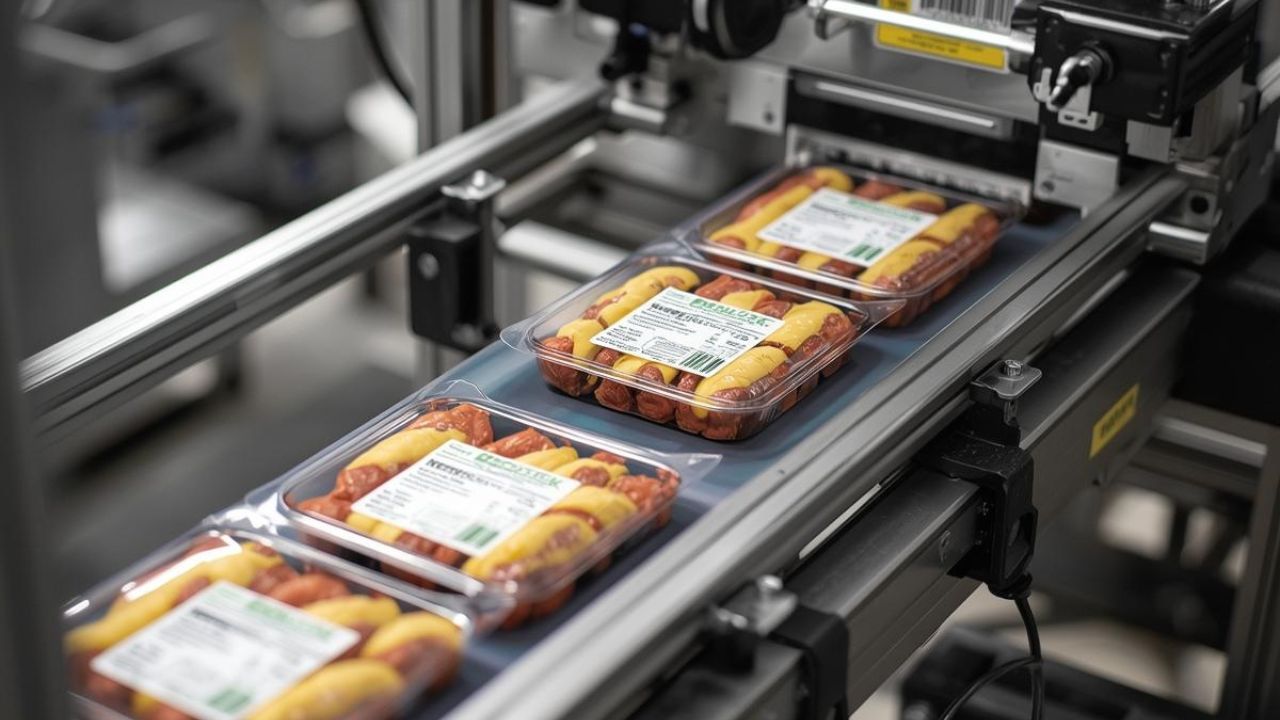
Inspection systems catch placement errors before defective products reach consumers. Vision-based inspection system technology provides real-time verification, comparing applied labels against programmed specifications to identify misalignment, missing labels, or damaged applications.
Accuracy scales with investment. Basic camera systems deliver 98.5% accuracy for $15K-$30K, while 2D vision systems reach 99.0% accuracy at $30K-$50K. Advanced 3D vision systems achieve 99.5% accuracy ($50K-$80K), and AI-powered vision hits 99.9% accuracy ($75K-$150K). Hyperspectral imaging tops out at 99.95% accuracy for applications exceeding $150K. KEYENCE LumiTrax™ technology enables stable detection under challenging lighting conditions. These systems ensure regulatory compliance for placement, legibility, and content while reducing waste through early defect detection. Real-time feedback enables immediate correction, preventing downtime and supporting packaging error reduction initiatives.
How Can Integrated Labeling Technology Solutions Prevent Errors?
Integrated labeling technology solutions connect multiple components into unified systems that prevent errors through coordination and monitoring. Programmable Logic Controllers (PLCs) synchronize machine timing from labeling through sealing, eliminating timing-related misplacements. Electric eyes and sensors detect product presence and label gaps, triggering application at precise moments to minimize misalignment.
Real-time feedback systems monitor operations continuously, detecting issues like misalignment, missing labels, or jams. Immediate alerts enable quick correction before defects accumulate. Industry 4.0 features enhance prevention through vision verification, barcode readers, and automatic reject systems that ensure quality and compliance. Predictive maintenance algorithms analyze sensor data to identify potential failures before they occur, scheduling maintenance during planned downtime. These integrated approaches support label alignment best practices while qualifying for packaging equipment depreciation and tax benefits through documented efficiency improvements.
How Can Packaging Automation Help Solve Labor Shortages in Food Manufacturing?
Packaging automation directly addresses labor shortages by reducing operator requirements while increasing throughput. Automatic labeling systems eliminate dependency on manual application skills, allowing manufacturers to maintain production with smaller teams.
How Does Automation Reduce Human Errors and Improve Efficiency in Labeling?
Automation eliminates human variability that causes label placement errors. Semi-automatic systems (Level 2) increase throughput 50-100% while reducing operators 30-40%. Automatic systems (Level 3) deliver 150-250% throughput gains with 50-60% fewer operators. Integrated lines (Level 4) achieve 300-400% throughput improvement and 60-70% operator reduction. Smart factory implementations (Level 5) reach 400-500%+ throughput increases with 70-80% fewer operators.
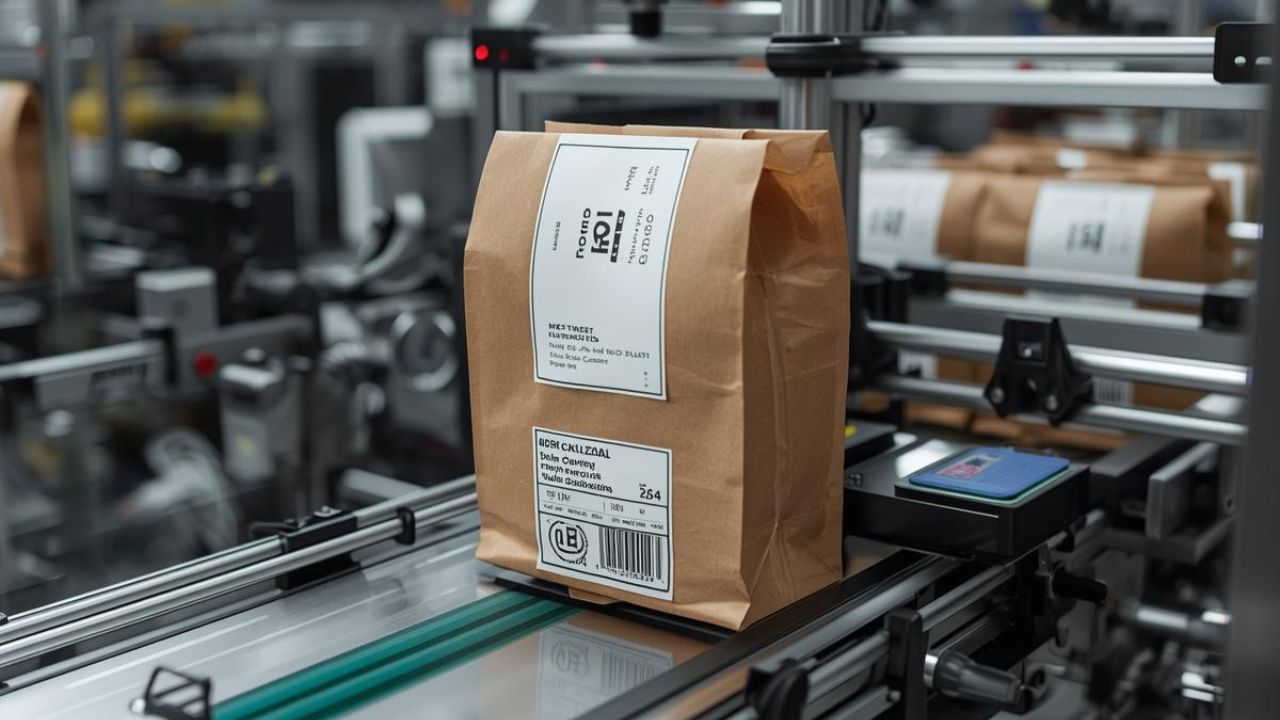
Integrated bag labeling demonstrates measurable impact. Production speed improves 30-50%, operator requirements drop 40-60%, and labeling defects decrease 65%. These systems maintain label alignment best practices through consistent mechanical execution, eliminating the fatigue and distraction factors that affect manual operations.
What Are the Benefits of Integrating Packaging Automation in Production Lines?
Integrated labeling technology solutions deliver benefits beyond labor reduction. Quality control improves through enhanced traceability across production stages. Advanced systems complete changeovers in under 15 minutes versus 20-25 minutes for manual processes, maximizing productive runtime. Predictive maintenance capabilities schedule service during planned downtime rather than forcing emergency stops.
Automated monitoring and adjustment reduce manual intervention requirements. Systems self-correct minor variations, calling operators only for exceptions. This enables existing staff to oversee multiple lines simultaneously, further supporting efforts to solve labor shortages in food manufacturing with automation.
How Do Automatic Labeling Systems Help Address Labor Shortages?
Automatic labeling systems scale labor requirements to production needs. Manual systems require 1-2 dedicated operators per line. Automatic tabletop systems need only 0.5 operators, allowing one person to manage multiple machines. High-speed inline systems run fully automated without dedicated operators.
This staffing flexibility addresses both the shortage and cost challenges. Manufacturers maintain production targets with available workforce while qualifying for packaging equipment depreciation and tax benefits. Reduced operator dependency also minimizes training requirements and turnover impact, creating more resilient operations.
How Can Businesses Benefit from Packaging Equipment Depreciation and Tax Benefits?
Investing in automatic labeling systems generates financial returns beyond operational improvements. Equipment depreciation and demonstrated cost reductions create compelling business cases that improve cash flow and profitability.
What Are the Financial Benefits of Investing in Automatic Labeling Systems?
Automatic labeling systems deliver rapid ROI through labor savings and packaging error reduction. Small batch and semi-automatic systems recoup investment in 6-12 months. Automatic tabletop systems achieve ROI in 8-15 months. Wrap-around labeling systems pay back in 12-18 months, while front-back systems require 15-20 months. High-speed inline systems, despite higher initial costs, achieve ROI within 18-30 months.
These payback periods reflect tangible savings from reduced labor requirements, lower defect rates, and decreased material waste. Systems qualify as capital investments eligible for depreciation schedules that reduce taxable income throughout equipment lifespan.
How Can Packaging Equipment Depreciation Reduce Costs for Manufacturers?
Total cost of ownership analysis reveals significant long-term savings. Over five years processing 10 million labels at $30/hour labor rates, manual systems cost $818,500 ($16.37 per 1,000 labels). Semi-automatic systems reduce TCO to $525,500 ($10.51 per 1,000 labels). Automatic systems drop costs to $390,000 ($7.80 per 1,000 labels). Integrated systems achieve lowest TCO at $349,500 ($6.99 per 1,000 labels).
Annual cost reductions demonstrate where savings accumulate. Materials waste drops from $15,000 to $1,500 (90% reduction). Defect costs fall from $25,000 to $2,000 (92% reduction). Labor costs decrease from $120,000 to $30,000 (75% reduction). These documented savings support depreciation claims while improving label alignment best practices through consistent automated execution.
What Tax Advantages Can Businesses Gain by Upgrading Their Labeling Technology?
Packaging equipment investments qualify for capital depreciation deductions that reduce taxable income. Section 179 deductions and bonus depreciation provisions may allow accelerated write-offs in the first year, improving cash flow. Equipment upgrades that demonstrably improve efficiency or reduce errors may qualify for additional incentives.
Consult with tax professionals to identify applicable deductions and structure investments for maximum benefit. Documentation of improved accuracy, reduced waste, and labor savings supports depreciation claims and demonstrates business purpose for equipment purchases.
What Are the Best Practices for Label Alignment in Packaging?
Consistent label alignment requires systematic calibration, regular maintenance, and proper integration. Following established label alignment best practices prevents label placement errors and ensures long-term accuracy.
Why Is Proper Machine Calibration Crucial for Precise Label Alignment?
Calibration establishes baseline accuracy that all subsequent operations depend on. The process follows six critical steps: pre-calibration preparation (inspecting, cleaning, gathering tools and production materials), setting labeling speed based on product type and precision requirements, positioning the labeling head centered above the product, adjusting sensor settings for sensitivity and angle, testing label application with iterative adjustments, and fine-tuning during production runs to verify consistency.
Operator training directly impacts calibration effectiveness. Comprehensive instruction on calibration procedures enhances both accuracy and efficiency. Trained operators recognize subtle adjustment needs and maintain systems within specification, reducing drift that causes placement errors over time.
How Can Regular Inspection and Maintenance Reduce Label Placement Errors?
Preventive maintenance preserves calibration accuracy and extends equipment life. Regular upkeep prevents inconsistencies from wear and tear on high-quality components. Scheduled calibration and consumable replacement maintain optimal performance. Modern automatic labeling systems incorporate automated monitoring that identifies potential issues proactively before failures occur.
Quality control processes catch errors before they compound. Establish continuous monitoring of labeling processes—whether using a labeler machine for bags or bottle applicators—with inspection system verification throughout production runs. Document error patterns to identify root causes—whether mechanical drift, material variation, or process changes. Analyze trends to implement corrective actions that prevent recurrence, supporting ongoing packaging error reduction initiatives.
What Are the Top Label Alignment Best Practices for Minimizing Errors?
Installation determines long-term performance potential. Position equipment to align with packaging workflows without creating bottlenecks. Proper mounting ensures stability during high-speed operations, preventing vibration-induced misalignment. Maintain accessibility for service and maintenance to enable quick adjustments when needed.
System integration extends accuracy across the production line. Connect labeling equipment to PLCs for synchronized operation from labeling through sealing. Configure software to control printing parameters—font size, message content, print speed—and accommodate variable data like lot codes, expiration dates, and batch numbers. Execute comprehensive testing protocols covering alignment verification, print quality assessment, and speed synchronization. Validate integration with existing control systems before full production. Define clear timelines and success metrics to measure implementation effectiveness and justify investments in labeling technology solutions.
How Does Packaging Error Reduction Impact Overall Business Efficiency?
Packaging error reduction delivers measurable improvements to production efficiency, cost structure, and market position. Minimizing label placement errors through labeling technology solutions creates compounding benefits across operations.
How Does Reducing Labeling Errors Improve Production Line Efficiency?
Error reduction scales with technology investment. From a manual baseline of 5.0% error rate, basic sensors achieve 50% reduction (2.5% error rate, 97.5% accuracy). Electric eye sensors deliver 76% reduction (1.2% error rate, 98.8% accuracy). Vision systems reach 90% reduction (0.5% error rate, 99.5% accuracy). AI vision combined with sensors achieves 98% reduction (0.1% error rate, 99.9% accuracy). Integrated smart systems top 99% reduction (0.05% error rate, 99.95% accuracy).
Each accuracy tier eliminates rework cycles that consume production time. Fewer defects mean fewer line stops, reduced material handling for rejects, and higher effective throughput. These efficiency gains complement efforts to solve labor shortages in food manufacturing with automation by maximizing output per operator.
What Cost Savings Can Businesses Expect from Minimizing Labeling Mistakes?
Cost savings from packaging error reduction are quantifiable and substantial. Processing 100,000 labels monthly at $0.50 per defect, upgrading from manual inspection (5% error rate) to AI vision systems (0.1% error rate) saves approximately $2,450 monthly. This typically achieves ROI within 6-18 months for inspection system investments.
High-precision automatic labeling systems reduce scrap and rework by 90%+ in pharmaceutical and cosmetics applications where product value magnifies defect costs. Systems often pay for themselves within months through defect reduction alone, before accounting for labor savings or packaging equipment depreciation and tax benefits. Documented cost savings strengthen capital investment justifications and support continuous improvement initiatives.
How Does Accurate Labeling Enhance Product Consistency and Consumer Trust?
Consistent labeling builds consumer trust through reliable product presentation and information accuracy. Vision systems ensure labels meet regulatory standards for placement, legibility, and content across food, pharmaceutical, and consumer goods industries. Compliance prevents enforcement actions, fines, and mandatory corrections that disrupt production.
Brand protection depends on quality consistency. Label placement errors signal quality control failures that damage consumer confidence. Preventing costly recalls and rework associated with mislabeled products preserves both revenue and reputation. Brand damage from labeling errors creates long-term market impact beyond immediate correction costs. Maintaining label alignment best practices through proven labeling technology solutions protects market position while ensuring regulatory compliance.
Advancing Packaging Efficiency with Technology and Best Practices
Packaging efficiency advances through strategic investment in labeling technology solutions combined with disciplined operational practices. Continuous improvement in label placement accuracy, system integration, and performance monitoring creates sustainable competitive advantages.
How Can Continuous Improvements in Labeling Technology and Best Practices Drive Long-Term Efficiency?
Long-term efficiency gains require tracking performance against industry benchmarks and adopting emerging technologies. Key performance indicators define the gap between standard and best-in-class operations:
Metric
Industry Standard
Best-in-Class
Overall Equipment Effectiveness (OEE)
75-85%
90%+
Uptime
85-90%
95%+
Mean Time Between Failures (MTBF)
500-1,000 hours
2,000+ hours
Mean Time To Repair (MTTR)
2-4 hours
<1 hour
First Pass Yield
95-98%
99.5%+
Reaching best-in-class performance requires combining proven label alignment best practices with next-generation automatic labeling systems. AI and machine learning now enable intelligent defect detection, predictive maintenance, and adaptive label placement that self-optimizes over time. 3D vision systems provide comprehensive inspection for irregularly shaped items and complex surfaces that challenge traditional systems. Vision-guided robotics improve precision and flexibility in pick-and-place operations, handling variable products without manual changeovers.
IoT and cloud connectivity enable remote monitoring, diagnostics, and data analysis that support proactive maintenance and performance optimization. These technologies help solve labor shortages in food manufacturing with automation while qualifying for packaging equipment depreciation and tax benefits. Manufacturers who systematically reduce label placement errors through technology adoption and operational discipline achieve sustained packaging error reduction, protecting margins and market position in increasingly competitive environments.
Ready to Eliminate Label Placement Errors and Maximize ROI?
Wolf-Packing Machine Company delivers proven labeling technology solutions that reduce errors, lower costs, and drive measurable efficiency gains. Our automatic labeling systems achieve best-in-class accuracy while addressing labor shortages through intelligent automation. Whether you need high-precision small container labeling, integrated bag labeling lines, or vision-guided inspection systems, our experts design solutions tailored to your production requirements. Take advantage of packaging equipment depreciation and tax benefits while eliminating costly label placement errors. Contact Wolf-Packing Machine Company today for a complimentary production assessment and discover how the right packaging machines for your business—including advanced labeling technology—can transform your operations and deliver rapid ROI.
At Wolf-Packing Machine Company, we believe that the key to success is a commitment to excellence in everything we do. That’s why we use only the highest quality materials and the most advanced technology to create packaging machines that are efficient, reliable, and cost-effective.
What’s new at Wolf Packing?
// <#?php
// /**
// * Exclude Current Posts from the query
// */
// add_action( 'pre_get_posts', function ( $query ) {
// // not an admin page and not the main query
// if ( ! is_admin() && ! $query->is_main_query() ) {
// $query->set( 'post__not_in', array( get_the_ID() ) );
// }
// } );
// ?>
Key Takeaways Integrating bag labeling machines into existing bagging line machinery transforms packaging operations through improved speed, accuracy,…
From design through testing, installation and beyond, we work tirelessly to ensure your equipment is running at peak performance and maximizing your application. To learn more about our machines, reach out to set up a free consultation with our in-house experts.
From weigh filling, bagging, wrapping and conveying to capping, labeling, cartoning, case/tray forming, packing and palletizing, we offer packaging solutions for a diverse array of applications.