Key Takeaways
- Machine types scale with production needs: Manual/semi-auto systems handle 200-500 labels/hour ($2,000-$8,000), automatic tabletop machines process 800-1,500 labels/hour ($15,000-$35,000), and high-speed inline systems deliver 3,000-5,000+ labels/hour ($40,000-$80,000).
- Automation delivers rapid ROI: Manual/semi-auto systems pay for themselves in 3-6 months, automatic tabletop machines in 8-15 months. Five-year total cost of ownership drops from $818,500 (manual) to $349,500 (integrated)—a 57% reduction.
- Precision eliminates costly defects: Vision-equipped systems achieve 99.9% accuracy with ±0.3mm placement tolerances, reducing scrap by 90%+ and cutting annual defect costs from $25,000 to $2,000.
- Specialized handling solves small container challenges: Trunnion roller systems and star-wheel indexing with vacuum suction stabilize unstable containers, while closed-loop servo motors compensate for diameter variance in real-time.
- AI and IoT drive next-generation capabilities: Smart systems with AI vision achieve 99.95% accuracy, deliver 400-500%+ throughput increases, and enable predictive maintenance through cloud connectivity and real-time monitoring.
Small container labeling demands precision, speed, and consistency that manual operations cannot reliably meet. A labeler machine automates label application on vials, bottles, jars, and tubes as small as 1mL, delivering placement accuracy within ±0.3mm at speeds exceeding 5,000 labels per hour. These systems reduce labor costs by 70%, cut material waste by 90%, and achieve 99.9% accuracy rates that manual methods cannot match.
From pharmaceutical vials requiring serialized data to cosmetic containers needing aesthetic perfection, automated labeling solutions serve every industry and production scale. This guide examines machine types, selection criteria, integration strategies, and emerging technologies shaping small container labeling. Whether you're processing 1,000 or 1,000,000 units monthly, understanding these systems helps optimize packaging operations while controlling costs and maintaining quality standards.
What are Sticker Labeling Machines for Small Containers?
Sticker labeling machines for small containers automate precise label application on vials, bottles, jars, and tubes. These systems deliver consistent accuracy while handling containers as small as 1mL, making them essential for pharmaceutical, cosmetic, and food production lines.
Definition of Sticker Labeling Machines
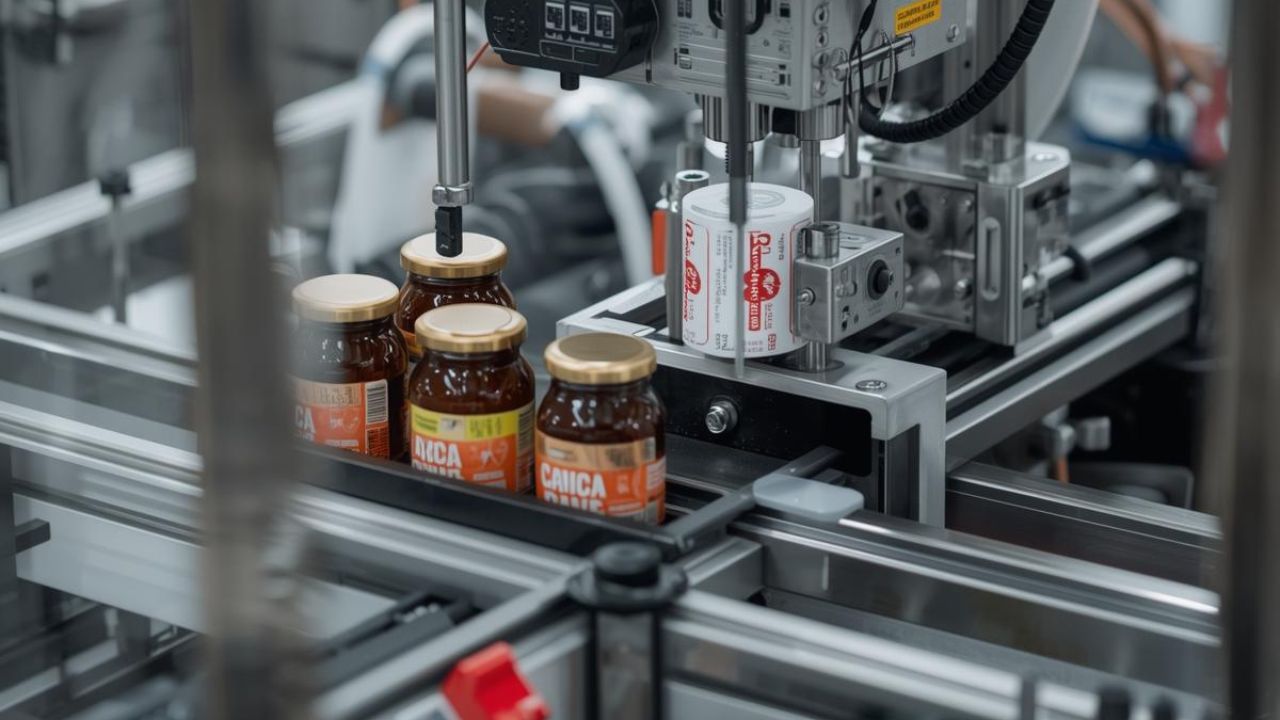
Automatic sticker labeling machines coordinate product movement with label feed through synchronized motion. Core components include a label dispenser, conveyor system, product sensors, and Programmable Logic Controllers (PLCs) that manage timing and placement. The machines employ optical, ultrasonic, and capacitive sensors to detect container presence and exact position, triggering label application at the precise moment.
Role in Small Container Packaging
Small container labeling serves critical compliance and branding functions across regulated industries. Pharmaceutical manufacturers rely on these systems for high-precision labeling of vials and ampules (1mL to 10mL) with drug facts, dosages, and expiration dates. Food and beverage producers use them to apply nutritional information, ingredients, and branding to bottles, cans, and jars. Cosmetics companies depend on precise placement for shelf appeal on creams, lotions, and makeup containers. Chemical manufacturers require GHS Rev. 7 compliant labels with product identifiers, pictograms, and safety warnings on hazardous materials.
What Should I Consider When Choosing a Sticker Labeling Machine for Small Containers?
Selecting the right labeling machine for small containers requires balancing container specifications, production volume, budget constraints, and maintenance capabilities. Match machine capabilities to your specific container types and throughput requirements for optimal performance.
Container Type Compatibility
Container size determines machine selection. Manual/semi-auto systems handle 5mm-100mm diameter containers, automatic tabletop systems accommodate 10mm-80mm, and high-speed inline machines work with 15mm-70mm diameters. The Primera AP380 accepts containers up to 9.4 inches wide and 6.7 inches tall, while the AP360 specializes in cylindrical and tapered shapes. For flat or tapered surfaces like square bottles and pouches, the AP550 handles containers up to 12 inches wide and 8 inches tall. Horizontal labeling machines suit unstable or unusually shaped small cylindrical containers, while vertical machines deliver higher speeds for stable, upright products.
Labeling Speed and Efficiency
Production speed scales with automation level. Manual/semi-auto systems apply 200-500 labels per hour, automatic tabletop machines reach 800-1,500 labels per hour, and high-speed inline systems deliver 3,000-5,000+ labels per hour. The Primera AP380 achieves 1,500 labels per hour, the AP360 reaches 1,200 labels per hour, and the AP550 processes 500 labels per hour on flat surfaces. High-precision systems maintain ±0.3mm placement accuracy at speeds up to 450 parts per minute, ensuring consistent quality even at maximum throughput.
Machine Flexibility for Various Label Types
Labeling machines for small containers offer varying flexibility levels. The Primera AP380 applies one or two different labels per container with programmable memory for nine front-to-back label offsets, accommodating complex labeling requirements. Maximum label widths reach 8.375 inches on the AP380 and 4.125 inches on the AP550. Single-sided machines apply labels to one surface, while double-sided systems label front and back simultaneously for faster processing. Manual/semi-auto systems provide very high flexibility for frequent changeovers, automatic tabletop machines offer high flexibility, and high-speed inline systems sacrifice some flexibility for maximum speed.
Cost and Affordability of Packaging Automation
Affordable packaging automation starts at $2,000-$8,000 for manual/semi-auto systems, delivering ROI in 3-6 months. Automatic tabletop machines cost $15,000-$35,000 with 8-15 month ROI periods, while high-speed inline systems require $40,000-$80,000 with 18-30 month payback. Small batch and artisan producers can enter automation at $5,000-$25,000 with 6-12 month ROI. Premium features often pay for themselves within months through scrap and rework labor reduction, making affordable labeling solutions accessible across production scales.
Maintenance Needs and Long-Term Performance
Packaging equipment maintenance directly impacts uptime and total cost of ownership. Industry-standard systems achieve 500-1,000 hours Mean Time Between Failures (MTBF), while best-in-class machines reach 2,000+ hours. Repairs typically take 2-4 hours, though top-performing systems complete fixes in under one hour. Non-stick carbide-coated peel bars minimize adhesive build-up and maintain optimal web tension, ensuring consistent accuracy between maintenance cycles. Regular preventive maintenance maximizes equipment lifespan and minimizes unexpected downtime.
What Types of Sticker Labeling Machines Are Available for Small Containers?
Three primary machine categories serve different production scales and container types. Understanding each system's capabilities helps match equipment to operational requirements and budget constraints.
Automatic Sticker Labeling Machines
High-speed inline systems deliver 3,000-5,000+ labels per hour with ±0.3mm placement accuracy. These fully automated sticker labeling machines require zero labor and complete changeovers in 10-20 minutes. Pharmaceutical and cosmetics manufacturers processing over 100,000 units monthly rely on these systems for consistent, high-precision small container labeling. The premium accuracy and speed justify the investment for operations where quality control and throughput are critical.
Semi-Automatic Sticker Labeling Machines
Automatic tabletop systems process 800-1,500 labels per hour at ±0.5mm accuracy with half an operator's attention. These affordable labeling solutions cost $15,000-$35,000 and complete changeovers in 5-10 minutes. Manufacturers producing 10,000-100,000 units monthly find tabletop machines ideal for balancing automation benefits with capital investment. The systems provide professional-grade accuracy while maintaining operational flexibility for product variations.
Labeling Systems for Different Container Types
Container stability determines optimal machine orientation. Horizontal labeling machines handle unstable or unusually shaped products like small cylindrical containers, while vertical systems deliver higher speeds for stable, upright containers. For flexible packaging, a labeler machine for your bag business applies consistent pressure to conform labels to non-rigid surfaces. Trunnion roller systems represent the gold standard for small cylindrical containers, holding vials horizontally between two rotating rollers for flawless full-wrap applications. Star-wheel indexing suits vertical applications, using precision-machined discs with diameter-matched pockets and integrated vacuum suction to stabilize containers during labeling. These specialized systems ensure consistent placement regardless of container geometry challenges.
How Do Sticker Labeling Machines Improve Efficiency in Packaging Small Containers?
Automated labeling systems transform production economics through increased speed, precision, and cost reduction. The efficiency gains compound over time, delivering measurable ROI across labor, materials, and defect reduction.
Speed and Automation in Production
Automatic sticker labeling machines dramatically increase throughput versus manual operations. Semi-automatic systems boost output 50-100%, automatic systems deliver 150-250% gains, integrated lines achieve 300-400% improvements, and smart factory configurations exceed 400-500% increases. High-precision systems enhance Overall Equipment Effectiveness (OEE) by minimizing rejects and line stoppages, accelerating production cycles and maximizing facility throughput. Each automation level eliminates bottlenecks and reduces cycle times.
Accuracy and Consistency of Labels
Vision systems deliver 99.9%+ accuracy rates through advanced monitoring. Closed-loop servo motors and high-resolution encoders adjust placement thousands of times per second, achieving ±0.3mm tolerances for vials and ampules. Industry-standard first pass yield reaches 95-98%, while best-in-class labeling machines for small containers achieve 99.5%+ success rates. These systems automatically compensate for container diameter variance, including the ±0.1mm tolerance in USP Type I glass, ensuring consistent placement regardless of minor manufacturing variations.
Cost Reduction through Streamlined Processes
Five-year total cost of ownership reveals significant savings through automation. Manual systems cost $818,500 versus $349,500 for integrated lines—a 57% reduction. Cost per 1,000 labels drops from $16.37 (manual) to $6.99 (integrated). Annual labor costs decrease from $120,000 to $30,000, materials waste falls from $15,000 to $1,500, and defect costs plummet from $25,000 to $2,000. Affordable packaging automation pays for itself through reduced labor, eliminated waste, and fewer quality failures across the production lifecycle.
What Are the Key Benefits of Sticker Labeling Machines for Small Containers?
Sticker labeling machines deliver measurable advantages across productivity, cost-efficiency, and operational flexibility. These benefits scale with automation level while remaining accessible to operations of all sizes.
Enhanced Productivity
Automatic sticker labeling enables rapid label application at high speeds, handling large product volumes with minimal human intervention. Operator reduction scales with automation: semi-automatic systems cut labor 30-40%, automatic machines reduce staff 50-60%, integrated lines eliminate 60-70%, and smart factories decrease workforce needs 70-80%. The unparalleled precision and consistency in label placement maintains brand image and ensures regulatory compliance, critical for pharmaceutical and food applications where labeling errors trigger costly recalls.
Affordability for Small Businesses
Manual/semi-auto systems provide affordable labeling solutions for small businesses, R&D operations, and prototype development. Low production volumes under 10,000 units monthly are best served by these entry-level machines. Initial investment of $2,000-$8,000 delivers rapid ROI in 3-6 months through labor savings and reduced waste. Scalability allows businesses to accommodate increased production demands without replacing equipment, making affordable packaging automation accessible to growing operations.
Customization for Various Product Needs
Advanced labeling machines for small containers offer extensive customization capabilities. The Primera AP380 stores memory for up to nine front-to-back label offsets, accommodating complex jar packaging system requirements. Built-in label-liner rewinders and LED displays provide operational flexibility for quick adjustments. Systems support one or two different labels per container with single-sided or double-sided application options, enabling manufacturers to adapt to diverse product portfolios without purchasing multiple machines.
How Do Sticker Labeling Machines Integrate with Other Packaging Systems?
Sticker labeling machines function as modular components within complete packaging lines. Proper integration with upstream and downstream equipment maximizes throughput and maintains quality standards.
Integration with Jar Packaging Systems
Advanced sensor technology ensures seamless jar packaging system integration. Optical, ultrasonic, and capacitive sensors provide precise label placement while minimizing misalignment across varying container specifications. High-precision stepper and servo motors deliver exact control over label movement, adapting to different jar sizes and shapes without manual adjustment. Automated Control Systems with PLC integration coordinate machine timing and sequencing from labeling through sealing, creating synchronized operation that eliminates bottlenecks and maintains consistent product flow.
Improving Overall Production Efficiency
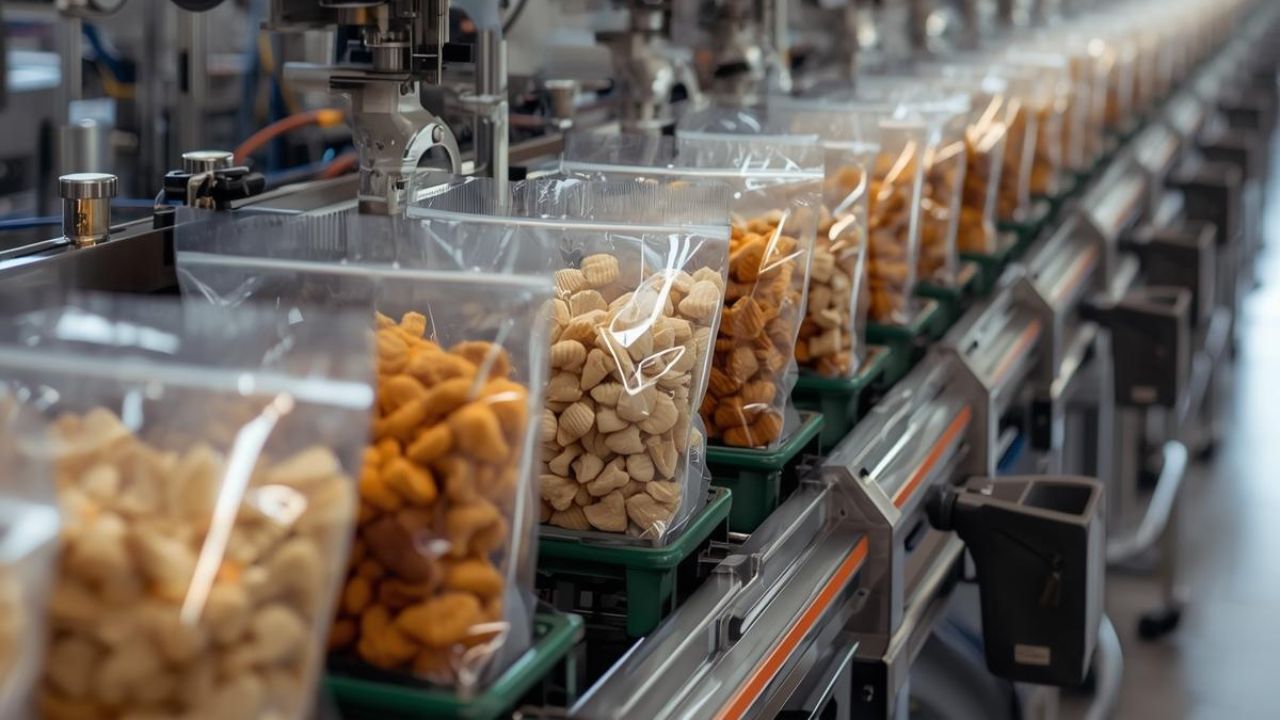
Integrated labeling machines for small containers dramatically improve Overall Equipment Effectiveness (OEE). Industry-standard systems achieve 75-85% OEE, while best-in-class operations exceed 90%. System uptime ranges from 85-90% in standard installations to 95%+ in optimized facilities. Integrated bagging/labeling lines deliver 30-50% throughput increases over standalone equipment. Seamless integration reduces manual intervention and enhances accuracy, eliminating transfer delays and operator-induced errors while maintaining consistent production velocity across the entire packaging line.
What Challenges Should You Prepare for with Sticker Labeling Machines for Small Containers?
Small container labeling presents unique technical challenges that require specialized equipment and careful setup. Understanding these obstacles helps operations select appropriate systems and establish effective maintenance protocols.
Technical Challenges in Labeling Systems
Container instability creates the primary challenge in small container labeling. High-speed transport causes even minor deviations to produce spiral label application, ruining product appearance. Tip-over force from standard applicators destabilizes thin, tall containers—friction between adhesive and glass creates torque that topples containers during application. Limited surface area demands perfect initial tack and precise velocity matching between conveyor and applicator to prevent label flagging or wrinkling. Center of gravity shifts as vials are filled and capped, requiring robust mechanical handling to maintain alignment throughout the production process.
Labeling Irregular Container Shapes
Container diameter variance necessitates closed-loop control systems. USP Type I glass vials carry ±0.1mm tolerance—open-loop systems cannot compensate for these variations, making them unsuitable for precise small container applications. Front-back labeling systems excel at irregular surface handling through tamp-blow technology that conforms labels to challenging contours. Specialized handling technologies like trunnion rollers stabilize cylindrical containers during application, preventing rotation and ensuring consistent placement on curved surfaces.
Maintenance and Calibration Needs
Packaging equipment maintenance begins with proper calibration. The process involves setting labeling speed based on product type and precision requirements, positioning and aligning the labeling head, and adjusting sensor settings for sensitivity, position, and angle. Test label application with iterative adjustments refines placement before fine-tuning for optimal accuracy. Vibration management is critical—just 0.1mm vibration at 400 PPM causes visible label defects. Heavy-wall 316L stainless steel monocoque frames dampen vibrations and maintain consistent placement, reducing defects from mechanical resonance during high-speed operation.
What Are the Sustainability Considerations for Sticker Labeling Machines?
Modern labeling machines for small containers reduce environmental impact through precision placement and consumable reduction. Sustainability improvements deliver both ecological benefits and measurable cost savings.
Reducing Packaging Waste with Efficient Labeling
Vision systems minimize material waste and rework costs by identifying and rejecting faulty labels before they reach finished products. Annual materials waste drops dramatically with automation: manual operations waste $15,000, semi-automatic systems reduce this to $8,000, automatic machines cut waste to $3,000, and integrated lines achieve just $1,500 in annual waste. Precision placement systems deliver 90%+ scrap reduction compared to manual application, eliminating the material and labor costs associated with rejected products and rework cycles.
Eco-friendly Practices in Packaging Equipment
Sustainable packaging equipment incorporates multiple waste-reduction technologies. Laser marking systems eliminate consumable requirements entirely, minimizing environmental impact while lowering operational costs through zero ink or ribbon usage. Eco-friendly and recyclable label materials work across all sticker labeling machine types, supporting circular economy initiatives. Non-stick carbide-coated peel bars reduce material waste from adhesive build-up, extending component life and maintaining consistent performance. Thermal Transfer Overprinting (TTO) technology offers solvent-free printing options, eliminating hazardous chemical usage while delivering high-quality, durable labels for small container labeling applications.
What Trends Are Shaping the Future of Sticker Labeling Machines for Small Containers?
Emerging technologies in automatic sticker labeling focus on artificial intelligence, connectivity, and predictive capabilities. These advancements improve accuracy while reducing operational complexity and maintenance requirements.
Technological Advancements in Labeling
Vision Synchronization and Optical Character Verification (OCV) use high-speed cameras for precise label orientation ("spotting") and verification of serialized lot and expiry data, dramatically reducing rejects. 3D vision systems provide comprehensive product and label inspection for irregularly shaped items and complex surfaces, solving challenges traditional 2D systems cannot address. IoT and cloud connectivity enable remote monitoring, diagnostics, and data analysis for proactive packaging equipment maintenance and performance optimization. Heavy-wall machine frames with advanced vibration dampening technology maintain consistent placement at high speeds, ensuring quality remains stable as throughput increases.
The Role of Automation and AI in Future Systems
AI-powered vision systems combined with advanced sensors achieve 0.1% error rates (99.9% accuracy)—a 98% error reduction versus manual inspection. Integrated smart systems push accuracy to 0.05% error rates (99.95% accuracy), representing 99% error reduction compared to manual operations. Machine learning enables intelligent defect detection, predictive maintenance scheduling, and adaptive label placement that adjusts to container variations in real-time. Smart factory automation delivers 400-500%+ throughput increases and 70-80% operator reduction, though the $200,000+ investment requires 24-36 month ROI periods. Real-time monitoring and adjustment capabilities compensate for container variance dynamically, making labeling machines for small containers more reliable and autonomous than ever before.
Ready to Optimize Your Small Container Labeling Process?
Sticker labeling machines for small containers deliver measurable ROI through increased throughput, reduced labor costs, and eliminated waste. Whether you're processing 1,000 or 100,000 units monthly, affordable labeling solutions exist for every production scale. Manual operations waste $15,000+ annually in materials alone—automatic systems cut this to $1,500 while improving accuracy to 99.9%. Entry-level systems start at $2,000 with 3-6 month payback periods, making affordable packaging automation accessible to businesses of all sizes. Evaluate your current labeling costs, production volumes, and quality requirements. Contact packaging equipment specialists to identify the optimal system for your specific container types and throughput needs. The investment pays for itself through labor savings, reduced defects, and increased capacity.