Multihead weighers achieve 99.5% to 99.9% accuracy through combination weighing algorithms that calculate millions of possible weight combinations in milliseconds, selecting the optimal match to minimize giveaway while preventing underfills.
Giveaway reduction delivers rapid ROI, with manufacturers achieving 20% to 80% reduction in product overfill compared to manual or volumetric methods, often paying back the capital investment within 12 to 18 months through material savings alone.
High-speed precision maintains throughput of 60 to 300+ packs per minute while reducing changeover downtime by 40% and sanitation time by 28%, enabling manufacturers to handle peak demand surges without sacrificing accuracy.
Environmental controls and rigorous maintenance are critical to sustaining accuracy, requiring mechanical isolation from vibration sources, windshields for airflow management, and scheduled calibration after product changes and monthly to quarterly intervals.
Technology selection depends on product and volume, with multihead weighers ideal for high-value irregular solids, while auger fillers excel at powder applications, volumetric fillers suit speed-prioritized operations, and linear weighers serve low-speed lines with modest accuracy requirements.
Product giveaway costs food manufacturers millions annually, a hidden profit drain that compounds with every overfilled package. The difference between 98% and 99.5% accuracy translates to thousands of dollars monthly for high-volume operations, making precision weighing technology a strategic imperative rather than an operational preference. Multihead weighers address this challenge through combination weighing, a statistical approach that selects optimal weight combinations from multiple hoppers to hit target weights with minimal deviation.
This comprehensive analysis examines why multihead weighers deliver 99.5% accuracy for food manufacturers, exploring the technical principles, financial benefits, operational challenges, and implementation best practices that determine success.
From the algorithmic selection process that evaluates millions of combinations in milliseconds to the maintenance protocols that sustain precision over years of service, we'll uncover how this technology transforms packaging economics while ensuring regulatory compliance and consumer satisfaction.
What Are Multihead Weighers And How Do They Work?
Multihead weighers (MHWs) are precision packaging machines that use combination weighing to achieve accuracy levels of 99.5% to 99.9%. Unlike single-head systems that dispense one batch at a time, MHWs operate multiple weigh heads simultaneously to find the optimal weight combination. This parallel processing approach transforms filling from a simple dispensing operation into a calculated selection process.
What Is The Core Technology Behind Multihead Weighers?
Multihead weighers use combination weighing, a statistical method that selects the best combination of individual partial weights to hit target weight with minimal deviation.
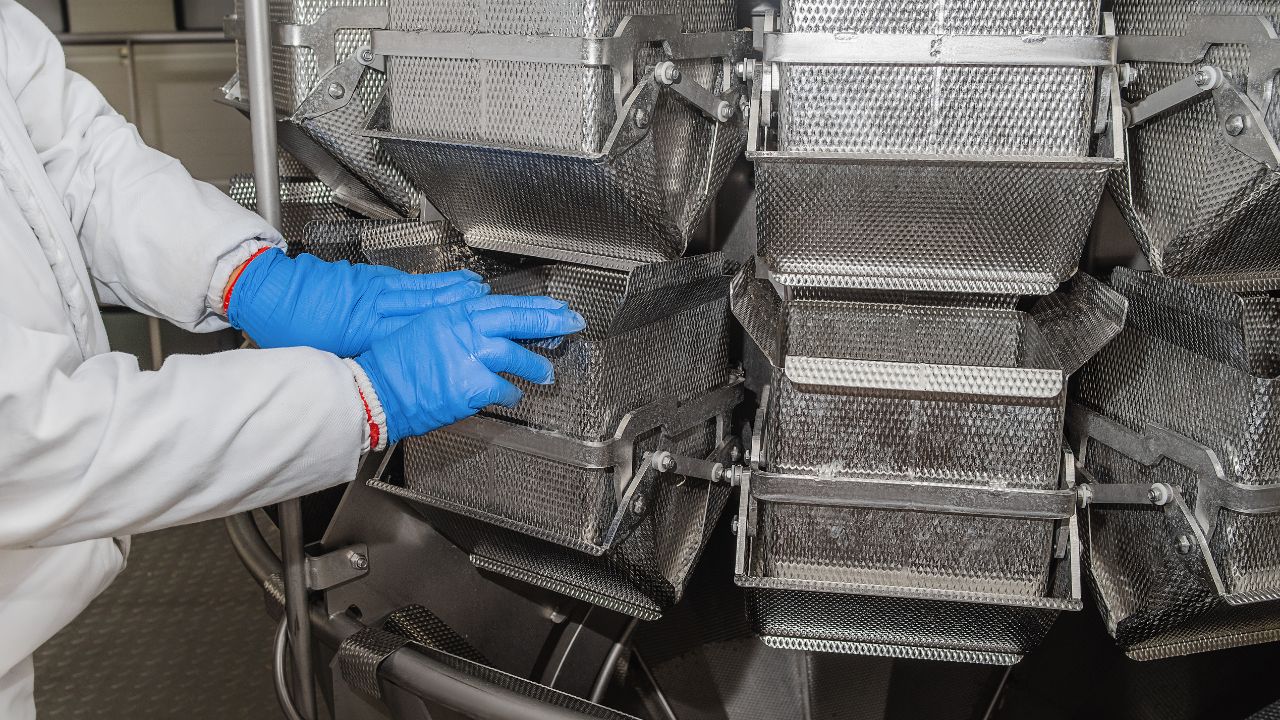
Product flows from a central dispersion table onto radial feed pans, then drops into 10 to 32 weigh hoppers arranged in a ring. Each hopper has its own load cell measuring partial weight. The CPU calculates all possible combinations of these partial weights in milliseconds, searching for the combination closest to target without going under. This prevents underfills while minimizing giveaway.
How Do Multihead Weighers Integrate Multiple Weigh Heads For Precision?
The system calculates 2^n - 1 possible combinations, where n equals the number of hoppers, making it statistically probable to find a near-perfect weight match.
Advanced algorithms based on bit-wise operations or knapsack problem approaches perform these calculations in milliseconds. A 24-head weigher generates over 16 million possible combinations per cycle. The algorithm selects the combination that meets or exceeds target weight with the smallest overage. More hoppers mean more options, which directly translates to tighter accuracy and less giveaway.
Why Is 99.5% Accuracy Crucial In Food Manufacturing?
High-precision weighing directly impacts profitability and regulatory compliance. Every gram of overfill (giveaway) represents lost revenue, while underfills trigger fines and damage consumer trust. At production volumes measured in millions of packages annually, small inaccuracies compound into substantial financial losses and operational risks. Effective fill weight control becomes the difference between profitable operations and margin erosion.
How Does Accuracy Impact The Quality Of Packaged Food?
Precision weighing minimizes product giveaway, excess product beyond declared weight, while ensuring regulatory compliance and maximizing profitability.
Accurate weighing prevents two critical failures: overfilling wastes product and erodes margins, while underfilling violates net weight regulations and risks penalties. MHWs achieve this balance by hitting target weights within fractions of a gram. The technology eliminates the variability inherent in volumetric or manual filling methods, delivering consistent pack weights that protect both profit and brand reputation.
What Are The Consequences Of Inaccuracies In Food Weighing?
Financial & Operational Consequences of Weighing Inaccuracies
Consequence Type
Impact
Quantified Data
Food Wastage (Giveaway/Overfill)
Most significant source of financial loss
$64,800 per month loss from 5% overfill on single shift for high-volume product
MHWs combine mechanical precision with computational power to achieve consistent multihead weigher accuracy. The system integrates sensitive load cells, controlled vibration, synchronized timing, and millisecond algorithmic calculations. Each component contributes to the final precision, creating a system where accuracy is not luck but statistical certainty.
What Features Of Multihead Weighers Ensure High Precision?
Key Features Contributing to 99.5% Accuracy
Feature
Function
Technical Specification
Multiple Weigh Heads
Increases combination possibilities
Typically 10-24 heads, up to 32+ heads
Advanced Algorithms
Optimizes weight distribution selection
Bit-wise operations, knapsack problem approach
Real-Time Data Processing
Calculates combinations instantly
CPU performs calculations in milliseconds
High-Speed Operation
Maintains accuracy at high throughput
60 to 300+ packs per minute (ppm)
Precision Load Cells
Measures partial weights accurately
Individual load cell per weigh hopper
Radial Dispersion System
Ensures even product distribution
Controlled vibration spreads product evenly
Hopper Timing Synchronization
Coordinates feed and weigh hoppers
Maximizes speed, ensures hoppers ready
How Does The Software Control System Contribute To Accuracy?
The CPU calculates all possible combinations in milliseconds and selects the combination closest to target without going under, preventing underfills while minimizing giveaway.
Software control is the brain of the operation. Advanced algorithms evaluate 2^n - 1 combinations where n equals hopper count, searching for the optimal match. A 16-head system evaluates over 65,000 combinations per weighment. The algorithm applies a hard floor, combinations below target weight are rejected, while selecting the smallest acceptable overage. This dual constraint prevents regulatory violations while protecting profit margins.
What Role Does The Configuration Of Weigh Heads Play In Ensuring Precision?
More weigh heads create exponentially more combinations, increasing the statistical probability of finding a near-perfect weight match.
Head count directly determines accuracy potential. A 32-head MHW achieved 80 packs per minute for 470g chocolate packs at Valor. A 24-head system delivered 20% giveaway reduction for Ritter Sport. The mathematics are clear: doubling heads from 16 to 32 doesn't double combinations, it increases them from 65,535 to over 4.2 billion. This exponential growth in options allows the algorithm to find tighter matches, reducing giveaway to fractions of a gram while maintaining production speed.
What Are The Key Benefits Of 99.5% Accuracy In Food Packaging?
High-precision weighing and filling equipment transforms packaging economics. Every percentage point of improved accuracy translates directly to reduced material costs, faster ROI, and stronger regulatory compliance. The benefits extend beyond the balance sheet, accurate weighing protects brand reputation, enables demand surge capacity, and eliminates costly recalls.
How Does This Level Of Accuracy Reduce Food Waste And Costs?
99.5% accuracy reduces giveaway by 20% to 80% compared to manual or volumetric filling, often delivering ROI within 12 to 18 months.
Waste Reduction & Cost Savings from 99.5% Accuracy
Benefit
Impact
Quantified Data
Reduced Overpackaging (Giveaway Reduction)
Direct material cost savings
20% to 80% reduction compared to manual/volumetric filling
Minimizing Underfilling Penalties
Avoids regulatory fines
Virtually eliminates underfills through algorithm design
Lower Product Loss Rates
Reduces cumulative waste
Average giveaway reduced by 0.6% of product weight (snack manufacturer case study)
Improved Product Consistency
Enhances brand reputation
Coefficient of Variation (CV) of fill weight improved by 25% (confectionery case study)
Rapid Return on Investment (ROI)
Financial justification
ROI often within 12 to 18 months due to giveaway reduction
High-Value Product Savings
Particularly impactful for premium items
Material savings alone paid for machine's capital cost in under 18 months (case study)
In What Ways Does Accuracy In Weighing Improve Production Efficiency?
High-accuracy weighing maintains throughput of 60 to 300+ packs per minute while reducing downtime by 40% and sanitation time by 28%.
Production Efficiency Gains from 99.5% Accuracy
Efficiency Metric
Improvement
Quantified Data
Faster Packaging Times
High-speed operation maintains accuracy
60 to 300+ packs per minute (ppm) throughput
Peak Demand Capacity
Handles volume surges
Throughput increase: Up 35% during peak demand (snack manufacturer case study)
How Does Accurate Weighing Affect Consumer Satisfaction And Product Consistency?
Consistent fill weights build consumer trust and brand equity by delivering uniform portions and eliminating underfills that damage reputation.
MHWs reduce the Coefficient of Variation (CV) by up to 25%, creating predictable pack weights that enhance perceived quality. Consumers receive the declared weight or better in every package, maintaining confidence and preventing complaints. This consistency protects brand image while ensuring regulatory compliance, a dual benefit that manual and volumetric systems cannot reliably deliver.
What Are The Main Challenges In Achieving 99.5% Accuracy With Multihead Weighers?
Even precision-engineered systems face operational challenges. Environmental factors, product characteristics, and equipment wear can compromise accuracy if not properly managed. Understanding these obstacles enables manufacturers to implement preventive measures that sustain 99.5% performance over years of operation.
What Technical Issues Can Hinder The Performance Of Multihead Weighers?
Environmental factors, airflow and vibration, are the primary accuracy threats, along with product characteristics that challenge mechanical handling.
Not suitable for extremely fine powders, liquids, or very large bulky items
Software Malfunctions
Algorithm or processing errors
Rare but requires monitoring and updates
How Can Manufacturers Address Common Obstacles To Achieving 99.5% Accuracy?
Deploy environmental controls, product-specific equipment configurations, and rigorous maintenance programs to counter accuracy threats.
Control airflow with windshields or climate-controlled zones. Mechanically isolate all upstream equipment to prevent vibration transmission. For sticky products, specify MHWs with non-stick coatings, steeper hopper angles, or boosted vibration that ensures clean discharge. Install scraper gates where needed.
Establish calibration schedules tied to product changeovers and monthly intervals. Monitor for early wear indicators and replace components before accuracy degrades. Following a comprehensive packaging equipment maintenance checklist helps prevent costly accuracy loss.
How Can Food Manufacturers Maximize The Accuracy Of Multihead Weighers?
Sustained accuracy requires disciplined maintenance, strategic calibration, and proper setup protocols. These practices transform the MHW from a precision instrument into a reliable profit center that maintains 99.5% performance across millions of weighments and years of service.
What Regular Maintenance Practices Ensure Optimal Performance?
Daily cleaning, scheduled calibration, and IP69-compliant hygienic design maintain accuracy while meeting food safety standards.
Essential Maintenance Practices for 99.5% Accuracy
Maintenance Practice
Purpose
Frequency/Details
Regular Calibration Schedule
Maintains load cell accuracy
After mechanical service, product changes, monthly/quarterly
Daily Cleaning Protocols
Prevents product buildup
Hygienic design facilitates disassembly and washing with warm water
Machine Warm-Up
Ensures stable operating temperature
Before each production run
Safety Check Routine
Identifies potential issues
Implemented as part of startup procedure
Component Replacement Schedules
Prevents wear-related inaccuracies
Based on manufacturer recommendations
Non-Stick Coating Application
Prevents product buildup on contact parts
Particularly important for sticky products
Software Updates and Troubleshooting
Maintains algorithm performance
As released by manufacturer
IP69 Protection Verification
Ensures food safety compliance
Modern MHWs feature IP69 protection
Tool-Less Disassembly
Reduces sanitation time
Can reduce cleaning time by 28%
How Often Should Multihead Weighers Be Calibrated To Maintain Accuracy?
Calibrate after mechanical service, product changes, and monthly to quarterly based on usage intensity.
Execute zero checks on empty hoppers. Verify load cell performance using certified test weights applied to individual hoppers and combination outputs. Compare displayed mass against reference weights. Adjust software compensation factors when deviations appear. Mandatory calibration follows any mechanical service or product changeover. Scheduled calibration runs monthly for high-intensity operations, quarterly for standard use. Trigger unscheduled calibration when routine quality checks detect accuracy drift.
What Are Best Practices For Setting Up Multihead Weighers To Avoid Inaccuracies?
Mechanical isolation, consistent product flow, and optimized vibration settings are critical setup factors that determine baseline accuracy.
Setup Best Practices For Maximum Accuracy
Best Practice
Implementation
Critical Factor
Correct Head Placement
Ensure proper radial arrangement
Even distribution of product to all heads
Optimal Machine Configuration
Configure for specific product characteristics
Match settings to product type (size, density, flow characteristics)
Avoid both starving (too little product) and flooding (too much product)
Mechanical Isolation
Isolate all feed equipment from MHW structure
Minimize external vibrations that disrupt sensitive load cells
Central Product Delivery
Feed equipment delivers to most central point of top cone
Ensures even distribution to all linear feed pans
Monitoring Environmental Conditions
Control airflow, temperature, humidity
Windshields for airflow; stable temperature for consistent operation
Proper Vibration Settings
Fine-tune vibration control
Prevents clumping (sticky products) or uneven distribution
Are Multihead Weighers The Best Solution For Food Manufacturers?
Multihead weighers dominate high-accuracy applications but aren't universal solutions. Technology selection depends on product characteristics, production volume, budget constraints, and accuracy requirements. Understanding where MHWs excel, and where alternatives perform better, ensures optimal investment decisions aligned with operational needs.
How Do Multihead Weighers Compare To Other Weighing Technologies In Food Manufacturing?
Multihead weighers deliver industry-leading accuracy (99.5%-99.9%) at high speeds, but at a higher capital cost than volumetric or linear alternatives.
Multihead Weighers vs. Alternative Weighing Technologies
Technology
Accuracy
Speed/Throughput
Cost
Best Suited For
Multihead Weigher
99.5% to 99.9%; Up to 99.7% in practice
60 to 300+ packs per minute (ppm)
High initial capital investment; ROI in 12-18 months
High-value, irregular solids (snacks, confectionery, frozen foods); wide range of free-flowing or irregular products
Linear Weigher
Significantly lower; typically ±2 to 4 grams deviation
Over 99% but inherently lower than MHW; weight fluctuates with density changes
Fast and high-speed
Low-cost
Applications where speed is prioritized over precision; density-stable products
Auger Filler
±0.5% to ±1% (density-dependent)
Very high speed (King of speed for powders)
Relatively inexpensive
Powders, granules, some pastes; density-stable powdered products
Manual Weighing
Highly variable (75%-99%); Error rate 1-3% typical, up to 25%
Human-limited (very slow)
Low equipment cost but high labor cost
Small-scale, low-volume operations (not recommended for high-volume)
MHWs achieve unmatched accuracy through combination weighing, making them ideal for high-value products where giveaway directly impacts profitability. Linear weighers offer simpler, lower-cost solutions for less demanding applications. Volumetric fillers prioritize speed over precision for density-stable products. Auger fillers dominate powder applications with high-speed volumetric metering.
In Which Situations Might Alternative Technologies Be A Better Option For Manufacturers?
Choose alternatives when product characteristics, budget constraints, or speed requirements don't justify MHW investment.
Linear weighers suit low-speed lines handling large or non-uniform items where ±2 to 4 grams deviation is acceptable. Volumetric fillers work for density-stable products where speed matters more than absolute precision. Auger fillers excel with powders, milk powder, spices, coffee grounds, requiring very high throughput. MHWs aren't suitable for extremely fine powders, liquids, or very large bulky items.
For low-volume or low-value products, the high capital investment cannot be justified by giveaway savings. Small-scale manufacturers with limited budgets may find simpler technologies more economically viable when integrated with vertical form fill seal systems or pre-made pouch bagging machines.
Why Multihead Weighers Are Essential For Precision In Food Manufacturing
Multihead weighers represent the apex of packaging precision, delivering 99.5% to 99.9% accuracy that transforms giveaway reduction from aspiration to operational reality. The technology's combination weighing principle, calculating millions of weight combinations in milliseconds, eliminates the guesswork inherent in volumetric and manual systems. As food safety regulations tighten and consumers demand consistent quality, the competitive advantage belongs to manufacturers who embrace precision automation.
For operations processing irregular solids, confectionery, snacks, or frozen foods at volume, multihead weighers deliver unmatched accuracy that protects profit margins while ensuring regulatory compliance. The initial investment challenge dissolves when measured against cumulative giveaway costs and operational efficiencies gained. In an industry where fractions of a gram multiply into significant losses across millions of packages, 99.5% accuracy isn't a luxury, it's a financial imperative.
Ready to eliminate giveaway and maximize packaging precision? Contact Wolf Packing to discuss how multihead weighers can transform your production line economics.
At Wolf-Packing Machine Company, we believe that the key to success is a commitment to excellence in everything we do. That’s why we use only the highest quality materials and the most advanced technology to create packaging machines that are efficient, reliable, and cost-effective.
What’s new at Wolf Packing?
// <#?php
// /**
// * Exclude Current Posts from the query
// */
// add_action( 'pre_get_posts', function ( $query ) {
// // not an admin page and not the main query
// if ( ! is_admin() && ! $query->is_main_query() ) {
// $query->set( 'post__not_in', array( get_the_ID() ) );
// }
// } );
// ?>
Key Takeaways Packaging machinery investments shape production efficiency and profitability for years. While imported equipment advertises lower initial…
From design through testing, installation and beyond, we work tirelessly to ensure your equipment is running at peak performance and maximizing your application. To learn more about our machines, reach out to set up a free consultation with our in-house experts.
From weigh filling, bagging, wrapping and conveying to capping, labeling, cartoning, case/tray forming, packing and palletizing, we offer packaging solutions for a diverse array of applications.