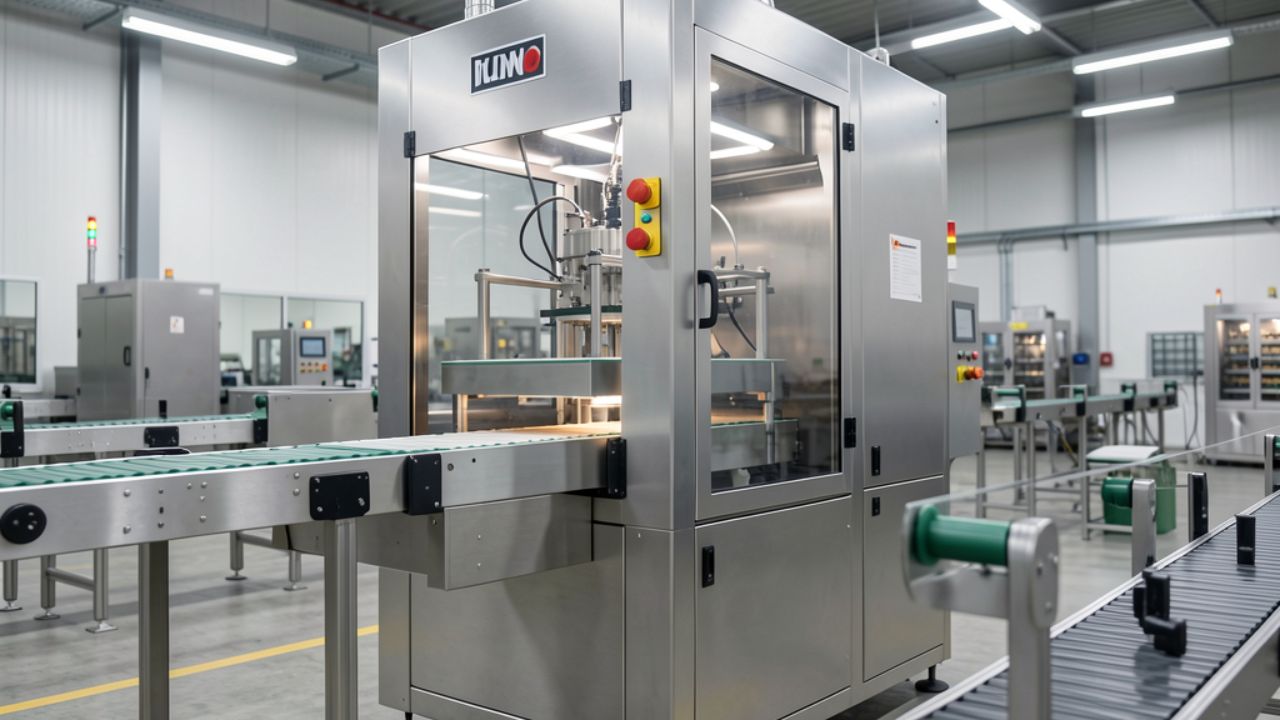
A single loose cap can trigger a product recall, a failed audit, or a lost customer. On high-speed capping lines, consistency isn't optional. It's the baseline for protecting product integrity, meeting regulatory standards, and maintaining consumer trust. This guide covers the core components of cap application quality control, from torque control technologies and automatic capping system design to vision-based inspection systems and HACCP-compliant packaging equipment for food safety. Every section focuses on what manufacturers need to achieve reliable, repeatable cap placement at production scale.
Key Takeaways
- Cap application quality control depends on precise torque regulation, not operator skill. Mechanical clutches, servo-driven systems, and feedback sensors form the foundation of consistent sealing across every capping machine type.
- Cross-threading is a systemic engineering problem. Proper cap delivery systems, bottle stabilization, floating spindles, and servo-regulated torque eliminate root causes rather than masking symptoms.
- AI-powered vision inspection systems detect missing caps at 99.9%, skewed caps at 99.5%, and cross-threading at 99.0%, catching defects at line speed before they reach consumers.
- Inline torque testers combined with SPC integration create closed-loop quality systems that monitor every capping event in real time and trigger corrective action before defects compound.
- HACCP-compliant automatic capping systems with stainless steel construction, closed-loop torque monitoring at ±5% accuracy, and integrated data logging provide the traceability and documentation food safety regulations demand.
Why is Quality Control Crucial for Cap Application in Packaging?
Cap application quality control is the difference between a sealed product and a recalled one. Every bottle capping machine, jar sealing machine, and automatic capping system on your production line depends on precise torque regulation to deliver consistent results. Without it, defects multiply, complaints rise, and revenue suffers.
The Role of Cap Application in Packaging
Torque control is the foundation of reliable cap application. It measures and regulates the exact twisting force that secures screw caps, continuous thread closures, and trigger pumps onto containers. Too little torque causes leaks. Too much damages caps and closures or strips threads. Either way, improperly sealed primary packaging leads to product spoilage, contamination, and consumer dissatisfaction.
The stakes vary by industry, but the consequences are universal. Pharmaceutical packaging equipment must prevent contamination and meet strict regulatory standards. Food and beverage capping lines protect freshness and preserve carbonation. Cosmetics sealing machines balance secure closure with consumer-friendly opening. Chemical production environments demand leak-proof containment of hazardous materials. Across all sectors, cap application quality control is non-negotiable.
The Impact of Quality Control on Packaging Consistency
Modern inspection systems have transformed what's possible on high-speed capping lines. AI-powered packaging vision solutions now achieve 99% accuracy in plastic cap defect detection, driving final production defect rates down to just 0.2%. These systems catch flaws as small as 3mm and inspect up to 180 parts per minute, giving automatic capping machine operators real-time confidence in output quality.
Without this level of capping line inspection, problems like cross-threading go undetected. Cross-threading occurs when cap and container threads fail to align before torque is applied. It's rarely an isolated event. It's a systematic line issue rooted in cap delivery systems, container handling, or capping heads alignment that compounds across every unit produced.
How Can a Manufacturer Maintain 99% Cap Placement Consistency on High-Speed Lines?
Most cap placement failures aren't people problems. They're engineering problems. Manufacturers who chase operator accountability instead of machine capability waste time and money while defect rates stay flat. Reaching 99% consistency on high-speed capping lines requires addressing the mechanical root causes that create misalignment in the first place.
Key Factors Affecting Cap Placement Consistency
The packaging industry runs on assumptions that don't hold up under engineering scrutiny. When cross-threading spikes, the first instinct is to blame the caps, but caps are usually within spec and misalignment happens during application. Telling operators to be more careful ignores that the automatic capping machine lacks proper mechanical guides and stabilization. Increasing torque only damages threads once misalignment has already occurred. Slowing the production line down masks instability without fixing it.
Effective defect prevention starts with recognizing that cross-threading is a systemic issue across the entire capping line. It's rarely one component. Container handling, cap delivery systems, bottle conveyors, and capping heads all contribute. Fixing one without addressing the others just moves the failure point.
Best Practices to Achieve 99% Accuracy in Cap Application
The engineering features that eliminate cross-threading are well established. Cap orientation and delivery control ensures screw caps and continuous thread closures approach threads at the correct angle. Side-grip or top-hold stabilization on bottle conveyors prevents container movement during engagement. Floating or spring-loaded spindles on chuck cappers allow caps to self-center before torque is applied. Servo or clutch-regulated systems apply force only after proper thread engagement, preventing extreme torque applications that strip or deform closures. Adjustable capping components accommodate different closure geometries without manual rework.
These aren't theoretical improvements. The Bellatrx Secure Chuck Capper, an automatic chuck capping machine built with these features, achieves a reject rate of 0.5% or less at speeds up to 60 containers per minute.
What Are the Key Components of a Capping Machine?
Every capping machine, from a basic bottle capping machine to a fully automated industrial capping machine, relies on three functional layers: torque application, container handling, and quality feedback. Understanding how these components interact determines whether your packaging equipment delivers consistent seals or chronic rejects.
Overview of Capping Machines and Their Functionality
Torque control is the defining technology in any automatic capping system. Mechanical clutches, the most common solution in spindle and chuck cappers, provide adjustable torque settings that prevent over-tightening of screw caps and continuous thread closures. Servo-driven torque systems offer a higher level of precision, using servo motors for electronic torque control with real-time adjustments and monitoring through touchscreen interfaces. Feedback sensors add a third layer by detecting and recording each capping event, giving operators the data to track performance and catch irregularities before they become line-wide problems.
Real-world specifications illustrate the range these systems cover. The Bellatrx Secure Chuck Capper handles a closure range of 15 to 63mm from the bowl sorter and 15 to 130mm from the elevator, accommodates containers from 0.5 to 8 inches in diameter by 12 inches high, and applies torque from 5 to 80 inch-pounds. That flexibility makes a single automatic chuck capping machine viable across multiple caps and closures formats without retooling.
Types of Capping Machines Used in High-Speed Packaging Lines
Different production environments demand different capping models. Spindle cappers operate in the 5 to 50 inch-pound range and excel at high-speed continuous motion for lightweight closures. Chuck cappers cover 5 to 80 inch-pounds, handling extreme torque applications for larger containers. Snap cappers apply 2 to 15 inch-pounds for press-on closures. ROPP cappers deliver 5 to 60 inch-pounds for roll-on pilfer-proof aluminum closures common in liquid packaging solutions.
Choose a spindle capper when your production line runs lightweight closures at high continuous speeds. Choose a chuck capper if you need the widest torque range (5–80 in-lbs) for larger containers or extreme torque applications. Choose a snap capper for press-on closures that don’t require threaded engagement. Choose an ROPP capper when packaging with roll-on pilfer-proof aluminum closures for tamper evidence.
How Do Automatic Capping Systems Improve Quality Control?
Manual capping line inspection catches problems after they've already cost you product. Automatic capping systems with integrated inspection systems flip that equation, identifying and rejecting defective caps at line speed before they reach the customer.
The Role of Automatic Capping Systems in Packaging Efficiency
Modern packaging vision technology detects cap defects with remarkable precision across every failure mode. Missing caps are caught at a 99.9% detection rate. Skewed caps hit 99.5%. Cross-threading detection reaches 99.0%. Other defects, including cosmetic flaws and seal irregularities, are identified at 98.5%. These aren't theoretical benchmarks. SureKap's SK-CIS Cap Inspection Station, for example, actively detects and rejects bottles with missing or cocked caps inline, keeping defective units off bottle conveyors before they reach secondary packaging or multipacked products.
That level of automated capping accuracy testing eliminates the lag between defect occurrence and detection that plagues manual inspection. On high-speed capping lines running hundreds of containers per minute, even a few seconds of undetected misalignment produces significant waste.
Advantages of Automation for Consistent Cap Application
The real competitive advantage of automated solutions comes from statistical process control integration. SPC connects every capping event to a continuous data stream, monitoring torque consistency against defined control limits. A typical SPC configuration sets an upper control limit of 28.6 inch-pounds, a lower control limit of 21.4 inch-pounds, and a center line target of 25.0 inch-pounds. Any drift toward those boundaries triggers corrective action before rejects occur.
This combination of automatic capping machine precision and SPC monitoring creates a closed-loop quality system. Manufacturers maintain high product quality, meet regulatory compliance requirements for HACCP-compliant packaging equipment for food safety, and reduce costs by minimizing rework and product waste across filling operations and capping lines simultaneously.
How Can Capping Accuracy Be Tested and Ensured?
Capping accuracy testing isn't a single checkpoint. It's a layered approach where offline torque verification and real-time inline monitoring work together to ensure every cap on your production line meets spec before it ships.
Capping Accuracy Testing Methods for High-Speed Lines
Four types of cap torque testers serve different points in the quality control workflow. Manual testers are affordable, portable, and simple to operate, but they depend on operator consistency and are subject to human error. Digital testers deliver high precision with real-time feedback and data storage for trend tracking, though they cost more and require a power source. Motorized testers eliminate operator fatigue with consistent, repeatable results ideal for high-speed capping lines, at the expense of higher equipment cost and compressed air or electrical requirements.
Inline testers are the standard for serious production environments. They monitor every capping event in real time at full line speed with no manual sampling required. The setup is more complex and the investment is higher, but for any automatic capping machine running high volumes, inline capping accuracy testing is the only method that catches drift before it becomes a batch-wide problem.
Choose manual testers when you need a portable, low-cost option for spot-checking offline samples. Choose digital testers when you need precision data logging and trend tracking for quality audits. Choose motorized testers when high-volume offline testing requires repeatable results without operator fatigue. Choose inline testers when your automatic capping machine runs at production speeds that make manual sampling impractical.
Implementing Capping Line Inspections for Real-Time Quality Control
Inline torque testing covers the mechanical side. Vision-based capping line inspection covers everything else. AI-powered inspection systems using machine vision detect multiple defect types simultaneously, including cross-threading, skewed caps, and missing closures, all in a single pass across the packaging line.
The real value emerges when these inspection systems feed into SPC integration. Torque data and visual defect data are continuously tracked against control limits, creating a closed-loop quality system. When readings trend toward a boundary, the system triggers corrective action on capping heads, cap delivery systems, or bottle conveyors before defective products ever reach the consumer.
How Do HACCP-Compliant Packaging Systems Contribute to Food Safety?
For food and beverage manufacturers, capping isn't just about seal quality. It's a critical control point in your HACCP plan. Every cap that fails to seal properly represents a contamination risk, a regulatory exposure, and a potential recall. HACCP-compliant packaging equipment for food safety builds compliance directly into the capping process rather than relying on downstream verification.
Ensuring Compliance with HACCP Guidelines in Packaging
Proper cap sealing prevents contamination, maintains product freshness, and preserves carbonation. In HACCP terms, these are hazards that must be controlled, monitored, and documented at the point of application. That requirement shapes how packaging equipment is designed from the ground up.
FDA-compliant, GMP-certified capping machines and sealing machines must feature stainless steel construction for sanitary contact surfaces, hygienic design principles that eliminate harborage points for bacteria, and built-in data logging that captures every capping event for regulatory audits. These aren't optional upgrades. They're baseline requirements for any automatic capping system operating in food, beverage, or pharmaceutical production environments.
Integrating HACCP-Compliant Systems for Safe and Reliable Packaging
Modern customized packaging systems close the gap between capping performance and HACCP documentation. Closed-loop torque monitoring holds accuracy within ±5%, cap presence verification sensors confirm every closure is seated, and automated reject mechanisms remove nonconforming containers from bottle conveyors without stopping the production line. Each of these functions generates the timestamped, traceable records that HACCP compliance demands.
The strongest configurations integrate vision-based inspection systems with SPC data logging to create full traceability across every capping event. Torque values, defect detections, and reject actions are all captured in a continuous data stream that supports HACCP record-keeping requirements and audit readiness. For manufacturers running container jar packaging systems at scale, this integration ensures consistent product safety across every production run without adding manual documentation overhead.
What Makes Wolf Packing Different
Wolf Packing Machine Company is a veteran-owned, American-based manufacturer that designs, builds, and supports packaging equipment under one roof. Unlike vendors who import equipment and resell it, we engineer customized packaging systems tailored to your specific products, containers, and production goals. Every capping machine ships with on-site installation, hands-on operator training, and lifetime technical support from the engineers who built it. Parts ship from US warehouses in days, not weeks.
Choose Wolf Packing when you need a packaging partner who engineers complete capping and container jar packaging systems for your facility, not a catalog vendor shipping generic equipment. Choose Wolf Packing when US-based support, stainless steel construction, and HACCP-compliant design are requirements, not preferences. If you’re looking for the lowest upfront price on commodity equipment without customization or long-term support, we’re probably not the right fit.
Partner with Wolf Packing Machine Company for Reliable Capping Solutions
Wolf Packing Machine Company engineers automated packaging solutions built for precision, consistency, and long-term reliability. As a veteran-owned American manufacturer, we design every automatic capping system, jar sealing machine, high-speed vertical form fill seal machine, and container jar packaging system to meet the exact demands of your production line. From custom machine design through lifetime technical support, our team is ready to help you eliminate capping defects and protect your brand. Contact Wolf Packing Machine Company today for a free consultation.