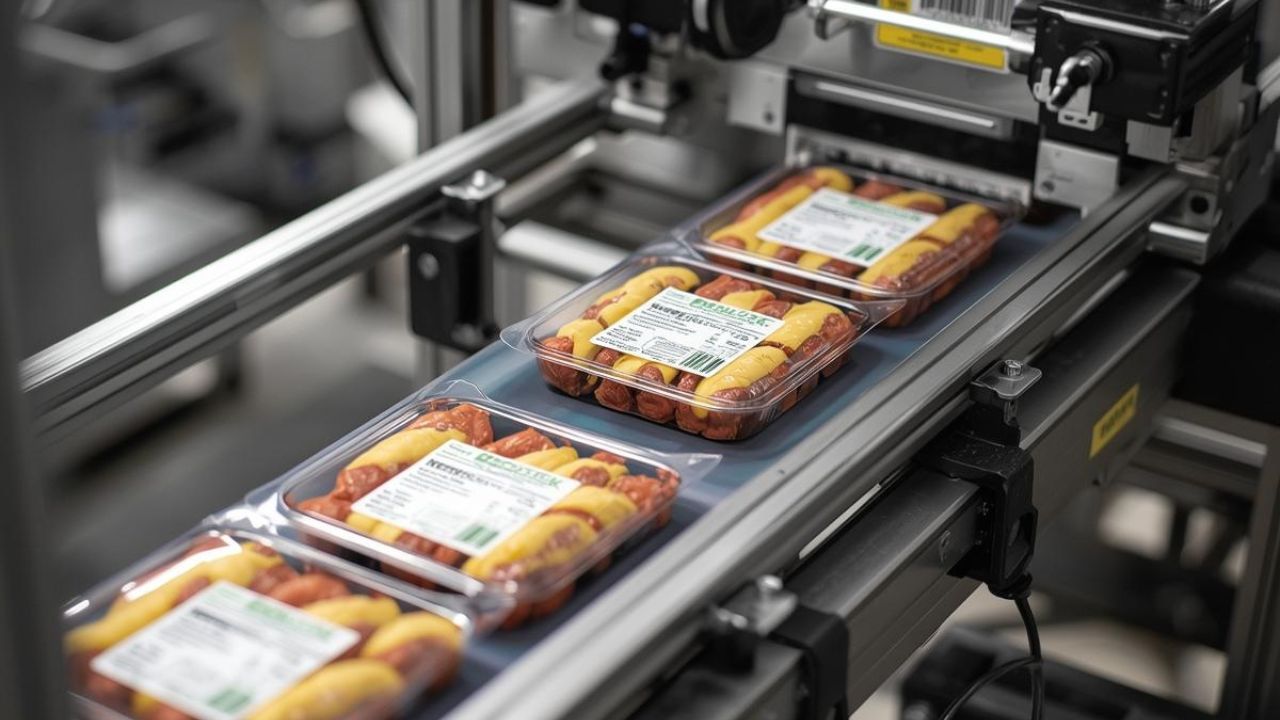
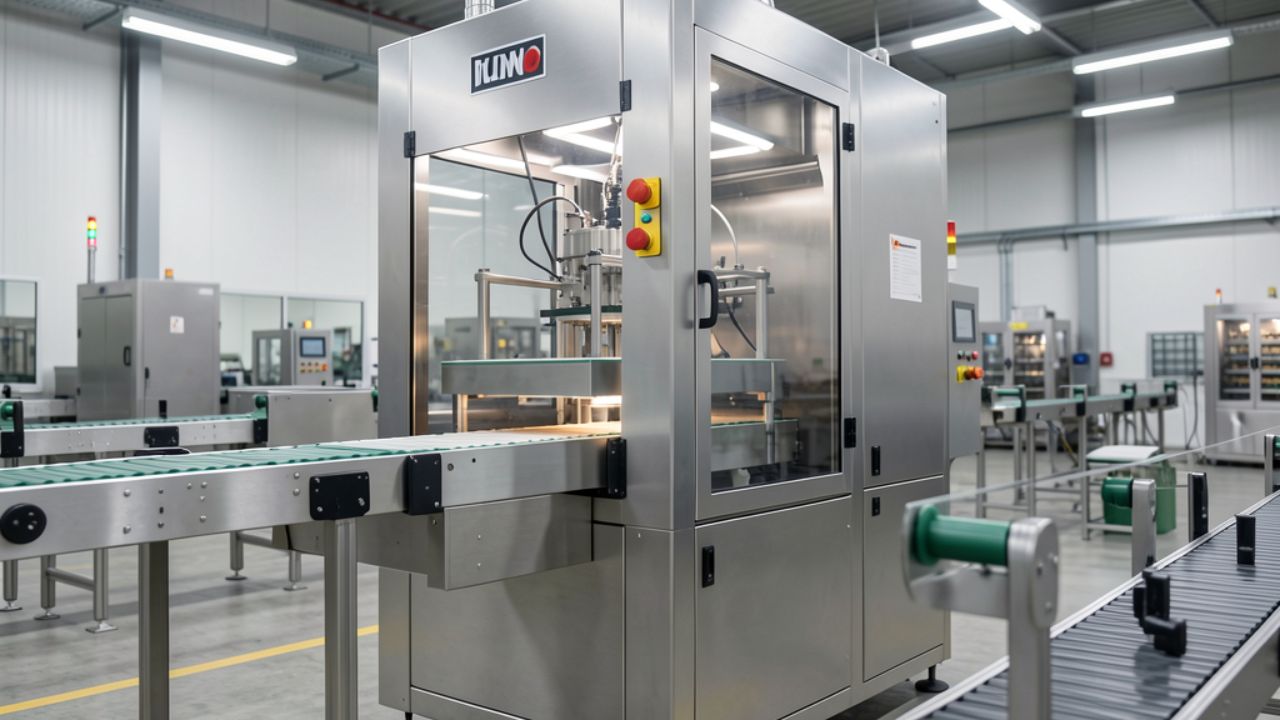
Faster labeling means nothing if every third label lands crooked. Manufacturers running everything from case packers to pre-made pouch bagging machines face constant pressure to increase packaging line speed, but pushing labeling machines harder without the right engineering creates more rejects, more downtime, and more cost. The good news: modern servo technology, smart sensors, and adaptive automation now make it possible to run significantly faster while improving label placement accuracy. This guide breaks down the specific technologies, maintenance strategies, and investment approaches that deliver higher labeling machine throughput without compromising quality.
Key Takeaways
- Servo-driven label applicators deliver ±0.01mm positioning accuracy with sub-1ms response times, enabling higher machine speeds without sacrificing label placement precision.
- Multi-lane configurations multiply throughput up to 8× baseline, while synchronized conveyor systems with encoder feedback eliminate the positional uncertainty that causes labeling errors at speed.
- Closed-loop vision systems running 100–1,000+ frames per second detect and correct placement errors in real time without stopping the line.
- Industry case studies report 210–300% ROI on labeling system upgrades, with phased investment roadmaps delivering payback starting at 12 months.
- A structured preventive maintenance program targeting daily, weekly, monthly, quarterly, and annual intervals keeps downtime below 10% and prevents the gradual accuracy degradation that erodes throughput gains.
What Engineering Tweaks Allow a Labeling Machine to Run Faster Without Compromising Accuracy?
Running a labeling machine at higher speeds without sacrificing label placement accuracy comes down to two things: better motion control and smarter automation. Modern engineering solves both.
Optimized Label Placement Precision Directly Increases Throughput
Servo-driven label applicators are the single biggest upgrade for improving labeling machine throughput without compromising accuracy. Modern servo motors deliver positioning accuracy of ±0.01mm, a massive leap over older pneumatic systems that manage only ±0.1–0.5mm. Response times under 1ms enable real-time correction at full machine speeds, and repeatability holds at ±0.005mm across millions of cycles.
Motion profile optimization matters just as much as raw speed. S-curve acceleration profiles reduce mechanical shock compared to trapezoidal profiles, allowing higher peak speeds without label placement precision degradation. Jerk limitation minimizes vibration in mechanical components, preventing crooked labels at speed. Predictive positioning takes it further. A servo-driven labeler machine pre-positions the applicator based on upstream product detection signals before the product arrives, eliminating reaction time delays entirely.
Automation Efficiency Balances Speed and Accuracy Across the Entire Line
Accurate labeling at high speeds requires every component working in sync. Fully synchronized conveyor systems with encoder feedback track product position precisely, eliminating the positional uncertainty that causes label placement errors as packaging line speed increases. Advanced product detection using optical sensors, photoelectric sensors, or vision systems identifies products earlier in the conveyor path, giving the labeling system more preparation time. Gap detection prevents wasted label application to empty spaces.
For operations that need maximum throughput, multi-lane configurations multiply output dramatically. Dual-lane systems double baseline capacity, quad-lane quadruples it, and multi-lane matrix setups deliver up to 8× throughput. These automated labeling machines require careful product handling design to maintain consistent spacing and orientation across all lanes.
How Does Labeling Machine Throughput Impact Packaging Line Speed?
Your labeling machine is only one station on the line, but its throughput directly dictates overall packaging line speed. When labeling slows down, everything downstream stops.
Higher Labeling Throughput Drives Overall Packaging Efficiency Up
Labeling performance is best measured through the OEE framework: Availability (≥90% world-class), Performance (≥95%), and Quality (≥99%). Common losses include breakdowns and changeovers cutting into availability, reduced machine speeds and micro-stops dragging down performance, and mislabeled products or rejects eroding quality.
Labeling doesn't operate in isolation. Upstream weigher accuracy directly affects labeling requirements because weight declarations on labels must match actual fill weights for regulatory compliance. Downstream seal integrity failures may force relabeling, cutting effective labeling throughput. Conveyor systems, control networks, and inspection systems are shared infrastructure. Investing in synchronized systems improves every station on the line simultaneously.
Maintaining Product Quality at High Speeds Presents Real Operational Challenges
Several factors work against accurate labeling as speed increases. Inconsistent conveyor speed is the most common cause of label misplacement. Product size variations in height, width, or position on the conveyor challenge label placement accuracy with every cycle. Label materials matter more than most operators realize. Face stock stiffness, liner release force, and adhesive tack all affect consistency. Labels that are too stiff won't conform to curved labels on bottles. Insufficient tack causes labels to fail at high speeds.
Environmental conditions add another variable. Cold environments reduce adhesive tack. High humidity causes label curl, leading to crooked labels and misfeeds from label rolls. Understanding where your operation falls in accuracy tiers helps set realistic targets: Standard systems achieve ±2–3mm placement with 99.0–99.5% barcode read rates, High-Precision hits ±1–1.5mm at 99.5–99.9%, and Ultra-Precision reaches ±0.5–1mm with greater than 99.9% read rates.
What Technologies Are Enhancing Labeler Machine Performance?
The biggest gains in labeling machine throughput now come from intelligent technologies that monitor, verify, and self-correct in real time.
Smart Sensors Deliver Perfect Placement at Speeds That Used to Guarantee Errors
High-speed vision systems are the backbone of modern label placement precision. Cameras running 5–20 megapixel resolution at 100–1,000+ frames per second capture every label as it's applied. Structured LED lighting with precise intensity control eliminates shadows and reflections that degrade label sensor performance. Vision processors analyze each image in under 1ms, fast enough for real-time feedback at full machine speeds.
Inline barcode verifiers compliant with ISO/IEC 15415 and 15416 grade every code on decode success, contrast, modulation, and print growth. Labels that fail thresholds trigger automatic rejection without stopping the line. These inspection systems verify label presence, position, orientation, and print quality simultaneously. The critical advantage is closed-loop feedback. Vision systems feed correction data directly to applicator servo drives, adjusting label placement in real time as line conditions change. No operator intervention required.
Adaptive Automation Optimizes Throughput by Learning and Predicting
Modern labeling systems use layered control strategies. PID controllers continuously correct measured placement errors. Model predictive control anticipates future system states and applies corrections proactively, staying ahead of drift rather than reacting to it. Machine learning algorithms analyze historical performance data and optimize settings for specific products and conditions automatically.
Industry 4.0 integration extends these capabilities further. IoT sensors collect real-time data on speed, temperature, pressure, and label count, enabling predictive maintenance before failures occur. Digital twins simulate performance and test configurations without disrupting production. Cloud connectivity allows remote monitoring and rapid response to deviations. Augmented Reality supports operator training and remote technical assistance, reducing the skill gap on the production floor.
How Do Different Industries Benefit from High-Speed Labeling Machines?
Labeling requirements vary dramatically by sector. The right labeling system depends on what you're packaging, how fast you need to move, and what regulations govern your product.
High-Speed Labeling Keeps Food and Beverage Lines Competitive
Food and beverage manufacturers choose label applicators based on product type and packaging line speed. Wipe-on applicators handle 20–60 cases per minute at ±2–3mm accuracy. Tamp-blow systems reach 30–80 cases per minute at ±1.5–2mm. Air-blow systems push 40–100+ cases per minute at ±2–3mm, ideal for lines with varying product heights or fragile surfaces since no mechanical contact is required. Print-and-apply systems run 15–50 cases per minute at ±1–2mm for variable data labeling.
The stakes are high. Automated sorting requires a minimum 99.5% barcode first-read rate. Miss that threshold, and you face manual intervention, line stoppages, and retailer chargebacks. Label presence verification through optical sensors or vision systems catches missing labels before unlabeled products reach customers. For operations running bottle labeler machines, pre-made pouch bagging machines, or case packing lines, accurate labeling at speed is non-negotiable.
Pharmaceutical Labeling Demands the Tightest Tolerances Across Any Industry
Pharma operates under far stricter labeling requirements. Print-and-apply systems are essential for serialization and traceability, integrating thermal transfer printers with label applicators to print variable data like date codes, serial numbers, and barcodes in-line. Multi-panel label registration requires ±1mm label placement accuracy, achieved through servo-driven systems with encoder feedback.
Quality targets reflect the difference. Seal failure defect rates in pharma must stay below 0.01%, ten times more stringent than food's 0.1% threshold. Validation methods match that intensity. Vacuum decay testing is FDA-accepted for pharmaceutical packaging. For the highest-sensitivity applications, helium leak detection reaches 10⁻⁹ to 10⁻¹² mbar·L/s, the most precise seal integrity method available.
Which Labeling System Is Right for Your Operation?
Choose air-blow label applicators if your food or beverage line runs fragile products at 40–100+ cases per minute and needs contactless application. Choose tamp-blow systems if you label recessed surfaces at medium speeds requiring ±1.5–2mm accuracy. Choose print-and-apply systems if your products require serialization, traceability, or compliance labeling with variable data like date codes and barcodes. Choose servo-driven applicators with closed-loop vision if you need ±1mm or better label placement accuracy at high speeds across any industry. Choose a phased investment approach if capital budget is limited but throughput gains are urgent—start with the upgrade that delivers the fastest payback and scale from there.
How Can Businesses Finance Packaging Equipment for High-Volume Labeling?
Understanding how to finance packaging equipment starts with knowing which upgrades deliver returns fastest and building a business case around measurable outcomes.
Phased Investment Delivers the Fastest Payback on Labeling Equipment
Not every upgrade needs to happen at once. A prioritized investment roadmap lets businesses capture quick wins while building toward full automation efficiency. The sequence ranked by payback speed: weigher head count upgrades pay back in 6–18 months. Inline seal integrity monitoring returns investment in 12–24 months. Servo-driven label applicators with vision systems take 12–36 months. Multi-lane labeling configurations require 18–36 months. Industry 4.0 integration with IoT and analytics has a 24–48 month horizon.
This phased approach keeps capital requirements manageable while each stage funds the next. For businesses exploring how to finance packaging equipment, many manufacturers like Wolf Packing offer flexible financing options and trade-in programs that offset upfront costs and simplify procurement approval.
Maximizing ROI Requires Measuring the Full Benefit Picture
The ROI formula is straightforward: total annual benefits minus total annual costs, divided by total investment cost. But most companies undercount the benefits. The full picture includes increased revenue from higher labeling machine throughput, labor cost savings from automation, reduced waste and rework from improved label placement accuracy, avoided chargebacks and recalls from regulatory non-compliance, and extended equipment lifespan from reduced mechanical stress.
Industry case studies report ROI of 210–300% for labeling system upgrades, with payback in 12–36 months depending on volume and product value. Typical results show overall throughput gains of 20–30%, labor cost reduction of 15–25%, and error rate reduction of 80–90%. World-class operations push further: 50–100% throughput increases, 30–40% labor savings, 95–99% error reduction, 20–35 percentage point OEE improvement, and 60–80% changeover time reduction.
What Are the Key Maintenance Considerations for High-Speed Labeling Machines?
High-speed labeling machines are precision instruments. Without disciplined maintenance, accuracy degrades gradually until it becomes a production crisis.
Regular Maintenance on a Set Schedule Extends Equipment Life and Preserves Accuracy
Every labeler machine needs a tiered maintenance routine. Daily: clean the label path to prevent misfeeds and jams from label rolls. Weekly: calibrate label sensors and inspect applicator pads and rollers to prevent placement drift. Monthly: check drive belt tension to maintain consistent machine speeds. Quarterly: perform full mechanical inspection to catch wear before it causes failure. Annually: calibrate servo drives to maintain the positioning accuracy that keeps labels where they belong.
Skipping any tier compounds problems. A missed weekly sensor calibration leads to gradual drift in label detection. Neglected pad inspection causes crooked labels that worsen until rejection rates spike. The schedule exists because each interval targets a specific failure mode at its typical onset frequency.
Preventive Measures Keep Throughput High by Eliminating the Most Common Failure Modes
The most frequent labeling system failures are predictable and preventable. Label jams happen daily without proper cleaning and label stock selection. Applicator pad wear develops weekly to monthly, requiring scheduled replacement and correct pressure settings. Sensor drift occurs monthly, caught by routine calibration. Adhesive buildup on components needs daily to weekly cleaning. Print head wear on print-and-apply systems follows manufacturer-specific schedules.
The downtime target for world-class operations is less than 10% of planned production time. Achieving that requires real-time data integration from label applicators, inspection systems, weighers, and seal inspection into a unified monitoring platform. This enables holistic OEE analysis and rapid identification of cross-domain issues. Statistical tracking of rejection rates provides continuous process performance data, turning reactive maintenance into proactive improvement.
Why Manufacturers Choose Wolf-Packing Machine Company
Wolf-Packing is the right fit if you need American-made packaging equipment backed by lifetime technical support from the engineers who designed it. Choose Wolf-Packing when you want a single partner for custom machine design, installation, operator training, and ongoing service—not a vendor who disappears after the sale. Our veteran-engineered systems are built for manufacturers processing food, supplements, pharmaceuticals, and chemicals who need servo-driven precision, fast changeovers, and FDA/GMP-compliant designs. Wolf-Packing may not be the right fit if you need the absolute lowest upfront price regardless of long-term cost, or if your operation requires equipment outside the weighing, filling, and bagging automation space.
Ready to Increase Labeling Throughput Without Sacrificing Accuracy?
Wolf-Packing Machine Company engineers automated packaging solutions that deliver the speed, precision, and reliability growing manufacturers need. As a veteran-owned, American-made equipment provider, Wolf-Packing offers servo-driven labeling systems, multi-head weighers, high-performance vffs machine systems, and complete packaging line integration backed by lifetime technical support from the engineers who built your equipment. Flexible financing and trade-in programs make upgrading achievable. Contact Wolf-Packing today for a free consultation and discover how the right equipment pays for itself.