A box label applicator is only as valuable as its speed and accuracy under real production conditions. Mislabeled products trigger chargebacks, failed audits, and costly rework. Unlabeled products stop the line entirely. For operations teams evaluating labeling machines, understanding realistic performance benchmarks, maintenance requirements, and optimization strategies is essential before making a capital investment. This guide covers what to expect from modern labeling automation across different industries, including application speeds, placement precision, OEE impact, and integration with broader packaging line systems.
Key Takeaways
- High-speed box label applicators deliver 40–100+ cases per minute with ±1–2mm placement precision, and world-class systems achieve ≥99.9% barcode first-read rates.
- Structured preventive maintenance, including daily label path cleaning, weekly sensor calibration, and annual servo drive calibration, is essential for consistent label speed accuracy across 24-hour operations.
- Automated labeling solutions improve overall throughput 20–100%, reduce labor costs 15–40%, and cut error rates by up to 99%, depending on implementation level.
- Servo motors, multi-lane configurations, and adaptive control algorithms deliver the largest performance gains, with industry case studies reporting 210–300% ROI and 12–36 month payback periods.
- Environmental conditions, label material properties, and upstream processes like weighing and sealing directly affect labeling accuracy, making integrated quality monitoring across the full packaging line critical.
What Is a Box Label Applicator and How Does It Function?
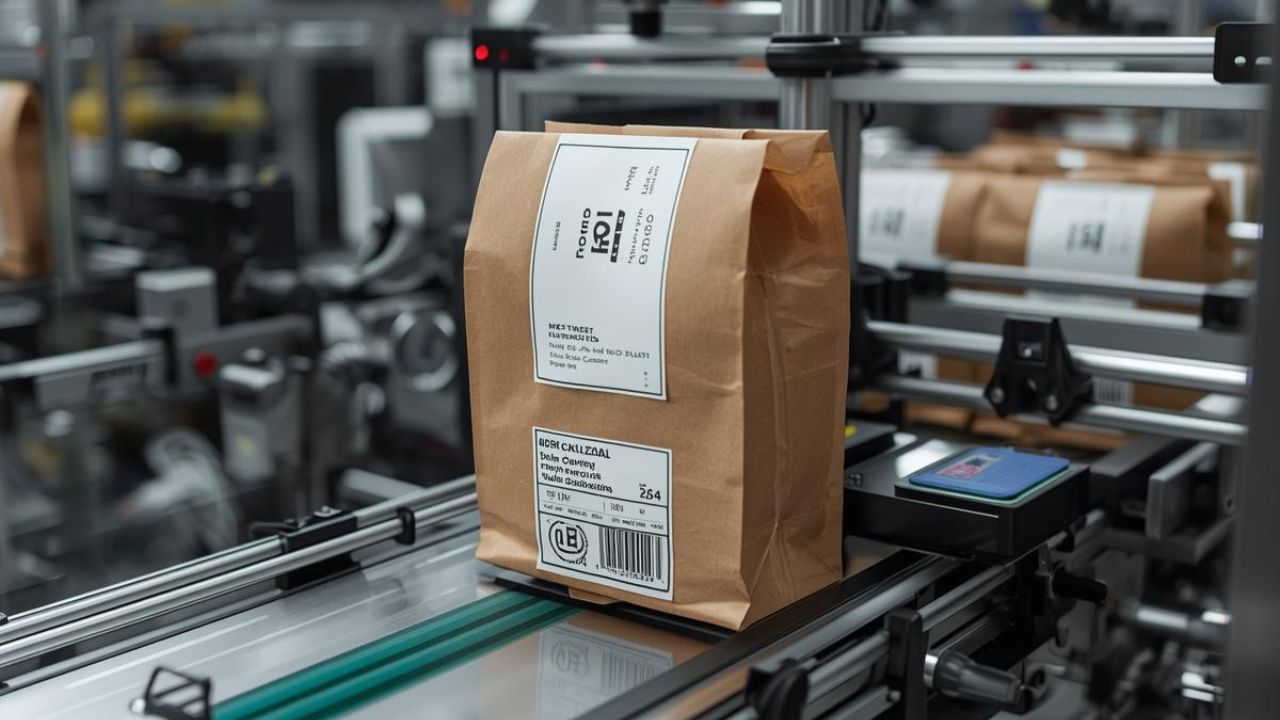
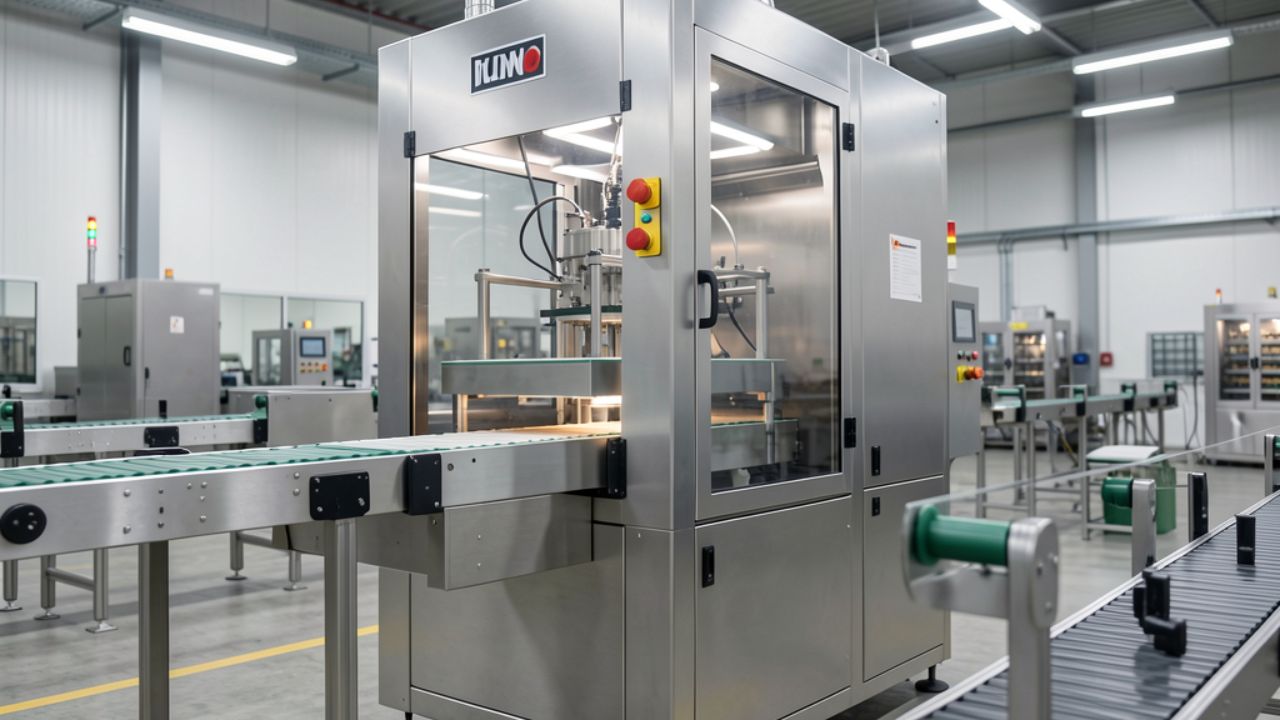
A box label applicator places pressure-sensitive labels onto cases, cartons, and packages moving through production lines. The labeler machine matches application speed to conveyor speed, ensuring accurate placement without stopping the line.
Every Labeler Machine Relies on an Applicator Head, Detection Sensors, and a Control System
Four primary applicator technologies serve different packaging line labeling needs. Wipe-on systems press labels onto flat surfaces using a pad or brush. Tamp-blow applicators use a pneumatic cylinder paired with an air blast to reach recessed surfaces. Air-blow systems apply labels without mechanical contact, handling fragile products and varying heights across primary, secondary, and tertiary packaging formats. Print-and-apply systems add variable data like serial numbers, batch numbers, and barcodes immediately before application, making them essential for digital printing methods in industrial labeling.
Beyond the applicator head, label presence verification uses photosensors to detect missing labels and trigger rejection. Servo-driven systems with encoder feedback achieve ±1mm precision for multi-panel label applications, which is critical for custom labeling systems handling diverse packaging materials.
Which Box Label Applicator Type Is Right for Your Packaging Line?
Choose wipe-on applicators if you run flat, consistent surfaces at low-to-medium speeds with minimal maintenance budget. Choose tamp-blow systems when your packaging line requires label placement on recessed or irregular surfaces. Choose air-blow applicators if you need the highest speeds and handle products with varying heights or fragile surfaces across primary, secondary, and tertiary packaging. Choose print-and-apply systems when serialization, traceability, or compliance labeling with variable data like serial numbers and batch numbers is required.
Labeling Automation Increases Throughput and Reduces Manual Intervention Across Production Lines
Automated labeling solutions do more than stick labels. They directly impact line throughput, barcode scan rates, and downstream automated sorting for product identification across different industries. Inline barcode verifiers graded to ISO/IEC 15415 and 15416 standards check decode success, contrast, and print growth. Labels that fail trigger automatic rejection.
Visual inspection systems verify label presence, position, orientation, and print quality simultaneously without stopping the line. Closed-loop feedback between vision systems and servo drives corrects placement errors in real time. Rejection mechanisms like air blasts and divert conveyors remove defective products without interrupting flow, keeping labeling systems running and packaging solutions on schedule.
What Are the Performance Benchmarks for a High-Speed Box Label Applicator in a 24-Hour Operation?
Performance benchmarks for a box label applicator vary by technology type and application method. Understanding these baselines helps operations teams set realistic expectations for 24-hour labeling automation across production lines.
Continuous Operation Yields 99.5%+ Barcode Read Rates at Standard Speeds
Speed and placement precision depend on applicator type. Wipe-on systems run 20–60 cases/minute at ±2–3mm. Tamp-blow applicators reach 30–80 cases/minute at ±1.5–2mm. Air-blow labeling systems hit 40–100+ cases/minute at ±2–3mm. Print-and-apply systems handle 15–50 cases/minute at ±1–2mm while printing serial numbers, batch numbers, and variable data inline.
Label speed accuracy breaks into three tiers. Standard pneumatic applicators achieve ±2–3mm placement with 99.0–99.5% barcode first-read rates. Servo-driven labeler machines with vision reach ±1–1.5mm at 99.5–99.9%. Advanced servo systems with closed-loop feedback deliver ±0.5–1mm at over 99.9%. Automated sorting systems require a minimum 99.5% first-read rate. Falling below that threshold triggers manual intervention, line stoppages, and retailer chargebacks. World-class packaging line labeling targets ±1mm placement, ≥99.9% read rates, less than 0.1% defect rate, and 100–600+ labels/minute throughput.
Structured Preventive Maintenance Keeps Labeling Machines Accurate Across All Shifts
Consistent label speed accuracy over 24 hours requires disciplined maintenance. Clean label paths daily to prevent misfeeds and jams. Check sensor calibration and inspect applicator pads weekly to catch placement drift early. Verify drive belt tension monthly for speed consistency. Run full mechanical inspections quarterly and calibrate servo drives annually.
The most common failure modes in packaging equipment are label jams from debris or poor label stock selection, adhesive buildup on applicator components, sensor drift, and pad wear. Each is preventable with scheduled cleaning and timely part replacement.
How Does Labeling Speed and Accuracy Impact Packaging Line Efficiency?
Every mislabeled or unlabeled product reduces throughput, triggers rework, and erodes margins. Label speed accuracy is a core variable in packaging line efficiency across different industries.
Faster Labeler Machines Increase Throughput 20–100% While Cutting Labor Costs Up to 40%
OEE measures labeling line performance across three dimensions. Availability targets ≥90% of planned run time. Performance targets ≥95% of theoretical speed. Quality targets ≥99% good units. World-class labeling systems achieve ≥85% combined OEE with less than 10% downtime and changeover times under 15–30 minutes.
Implementing automated labeling solutions delivers measurable gains. Typical throughput improvements range from 20–30%, with world-class installations reaching 50–100%. Labor cost reductions run 15–25% at baseline and 30–40% for top-tier production lines. Error rates drop 80–90% in standard implementations and 95–99% in optimized ones. Changeover time reductions of 30–50% are typical, with world-class packaging equipment achieving 60–80% faster transitions between product runs.
Accurate Product Identification Prevents Chargebacks, Compliance Failures, and Costly Rework
Barcode first-read rate is the critical metric for automated distribution and retail environments. High-precision labeling machines with integrated barcode verification routinely achieve 99.9%+ first-read rates, which is essential for automated sorting and product identification across primary, secondary, and tertiary packaging.
Registration accuracy for multi-panel labels demands precise alignment of label edges and printed elements across multiple package faces. Upstream processes also matter. Weigher accuracy affects weight declarations on labels, directly impacting regulatory compliance. Seal integrity failures can force relabeling, creating rework that reduces effective throughput on the packaging line. Statistical tracking of rejection rates through label and print inspection provides real-time process data, giving operations teams visibility to correct issues before they compound into larger packaging solutions problems.
How Can Businesses Optimize Labeling Automation for Maximum Efficiency?
Optimizing labeling automation requires targeted upgrades that balance speed gains with accuracy preservation. The right investments deliver 210–300% ROI with 12–36 month payback periods.
Servo Drives, Predictive Detection, and Multi-Lane Systems Deliver the Largest Speed and Precision Gains
Replacing pneumatic systems with servo motors transforms labeler machine performance. Positioning accuracy jumps from ±0.1–0.5mm to ±0.01mm. Response times drop below 1ms, enabling real-time correction at high speeds. Repeatability holds at ±0.005mm over millions of cycles with full torque control up to 3,000+ RPM.
Optimized motion profiles using S-curve acceleration reduce mechanical shock, allowing higher peak speeds without accuracy loss. Predictive product detection with photoelectric, ultrasonic, or vision-based sensors identifies products earlier on the conveyor, compensating for spacing variation. Synchronized conveyor systems with encoder feedback eliminate positional uncertainty at speed.
Multi-lane labeling configurations multiply throughput. Dual-lane doubles output. Quad-lane quadruples it. Multi-lane matrix setups reach up to 8× baseline for ultra-high-volume production lines. Enhanced visual inspection systems using 5–20 megapixel cameras at 100–1,000+ fps with sub-1ms processing enable real-time label and print inspection. Adaptive control algorithms, including PID, model predictive control, and machine learning-based optimization, continuously correct placement errors using historical performance data.
Smart Labeling Technologies Enable HACCP-Compliant Packaging Equipment Integration for Food Safety
Industry 4.0 connects labeling machines to broader food safety infrastructure, including HACCP-compliant packaging equipment that demands full traceability and process validation. IoT sensors collect real-time data on speed, temperature, and pressure for predictive maintenance. Cloud connectivity enables remote monitoring across production lines. AI algorithms analyze historical data to predict failures and optimize settings. Digital twins simulate configurations without disrupting production. AR supports operator training and remote technical assistance.
Integrating data from labeling systems, weighers, and seal inspection into a unified platform enables holistic OEE analysis. Servo-driven applicators with vision pay back in 12–36 months. Multi-lane configurations return investment within 18–36 months. Full Industry 4.0 integration delivers 10–20% OEE improvement over 24–48 months.
What Challenges Do Companies Face With Box Label Applicators in Different Industries?
Every industry faces unique obstacles with box label applicator performance. Understanding these challenges helps operations teams select the right labeling solutions and packaging materials for their specific application.
Food and Beverage Labeling Demands Speed Stability, Adhesive Performance, and Seal Validation
Conveyor speed inconsistency is one of the most common causes of label misplacement on food packaging lines. Servo-driven conveyors with encoder feedback provide the stability required for high-precision labeling automation. Product size variation compounds the problem. Differences in height, width, or conveyor position challenge applicator accuracy, requiring product detection sensors and adaptive positioning to compensate.
Environmental conditions directly affect label adhesives. Cold temperatures reduce adhesive tack. High humidity causes label curl. Label material properties matter equally. Face stock that is too stiff will not conform to curved surfaces, while insufficient tack prevents adhesion at high speeds. Beyond labeling, seal integrity validation intersects with product identification requirements. The industry standard targets less than 0.05% seal failures, with 0.1% as the maximum acceptable rate. In-process monitoring every 2–4 hours using destructive sampling detects process drift before non-conformance becomes significant.
Pharmaceutical and Consumer Goods Industries Require Serialization, Tighter Tolerances, and FDA-Accepted Validation
Pharmaceutical labeling demands print-and-apply systems for serialization, traceability, and compliance despite their slower 15–50 cases/minute speed. These are the only labeling machines capable of printing variable data like serial numbers and batch numbers inline. The trade-off is higher maintenance complexity and capital cost compared to wipe-on, tamp-blow, or air-blow alternatives.
Compliance standards are far stricter across these industries. Pharmaceutical and medical device seal defect rate targets run 10× tighter than food at less than 0.01%. Statistical Process Control with ±3 sigma control limits and Cpk ≥1.33 is the minimum acceptable standard. Vacuum decay testing, accepted by FDA for packaging validation, detects leaks as small as 10–50 microns in 5–30 seconds per package.
How Can Pre-Made Pouch Bagging Machines Benefit From Accurate Labeling?
Pre-made pouch bagging machines depend on precise labeling to maintain speed, traceability, and regulatory compliance. When labeling fails, the entire pouch packaging line pays the price.
Precise Labeling Reduces Relabeling Rework and Supports Seal Integrity Validation on Pouch Lines
Seal integrity and labeling accuracy are tightly linked on pouch packaging lines. Peel strength testing for flexible food pouches targets 3–8 lbs (13–36 N), with 2 lbs (9 N) as the minimum acceptable threshold. Burst testing targets 5–20 PSI. Heat seal validation requires seal bar temperature uniformity within ±5°F (±3°C), with dwell times of 0.3–2.0 seconds depending on packaging materials. Induction sealing runs between 250°F and 400°F based on liner composition.
Upstream-downstream dependencies make labeling accuracy critical. Weigher accuracy determines weight declarations on labels, directly affecting compliance. Seal integrity failures force relabeling, cutting effective throughput. Shared infrastructure investments in synchronized conveyors and integrated quality monitoring benefit weighing, sealing, and labeling automation simultaneously.
Integrated High-Speed Labeling Systems Deliver Measurable ROI Across the Entire Pouch Packaging Line
Calculating ROI for labeling system upgrades uses a straightforward formula: total annual benefits minus total annual costs, divided by total investment cost. Benefit categories include increased revenue from higher throughput, labor cost savings, reduced waste from improved label speed accuracy, avoided chargebacks and recalls from regulatory non-compliance, and extended packaging equipment lifespan.
Conveyor systems, control networks, and quality monitoring infrastructure serve all packaging line functions. Integrating quality verification directly into labeling systems enables defect detection and rejection without stopping production. For pouch-specific validation, dye penetration testing detects seal defects as small as 50–75 microns. Ultrasonic seal inspection identifies unbonded areas, channels, and foreign material inclusions down to 1mm using inline sensors integrated directly into sealing machines.
What Makes Wolf-Packing Machine Company Different, and When Should You Choose Us?
Wolf-Packing Machine Company is a veteran-owned, American-made packaging equipment manufacturer with decades of hands-on experience in food, pharmaceutical, supplement, and chemical packaging. Our labeling systems are engineered for precision, backed by lifetime technical support from engineers who built the equipment, and supported by U.S.-based parts inventory that ships in days, not months.
When Should You Choose Wolf-Packing for Your Labeling Automation?
Choose Wolf-Packing when you need a packaging partner, not just a vendor. Choose us when uptime, accuracy, and responsive support matter more than the lowest sticker price. Choose us when your operation demands custom labeling solutions integrated with weighing, filling, and sealing systems on a single packaging line.
When Is Wolf-Packing Not the Right Fit?
We may not be the right fit if you need commodity, off-the-shelf labeling machines with no customization, or if your primary buying criteria is the lowest upfront cost regardless of total cost of ownership.
Wolf-Packing Machine Company Helps You Build a Faster, More Accurate Packaging Line
Ready to upgrade your labeling automation and eliminate costly rework on your production lines? Wolf-Packing Machine Company designs custom packaging solutions built for speed, precision, and reliability. As a veteran-owned, American-made manufacturer, we deliver labeling systems backed by lifetime technical support and engineers who answer the phone. From customizable vffs machine configurations and pre-made pouch bagging machines to complete packaging line integration, our team builds equipment that pays for itself. Contact Wolf-Packing today for a free consultation and see what automation can do for your operation.