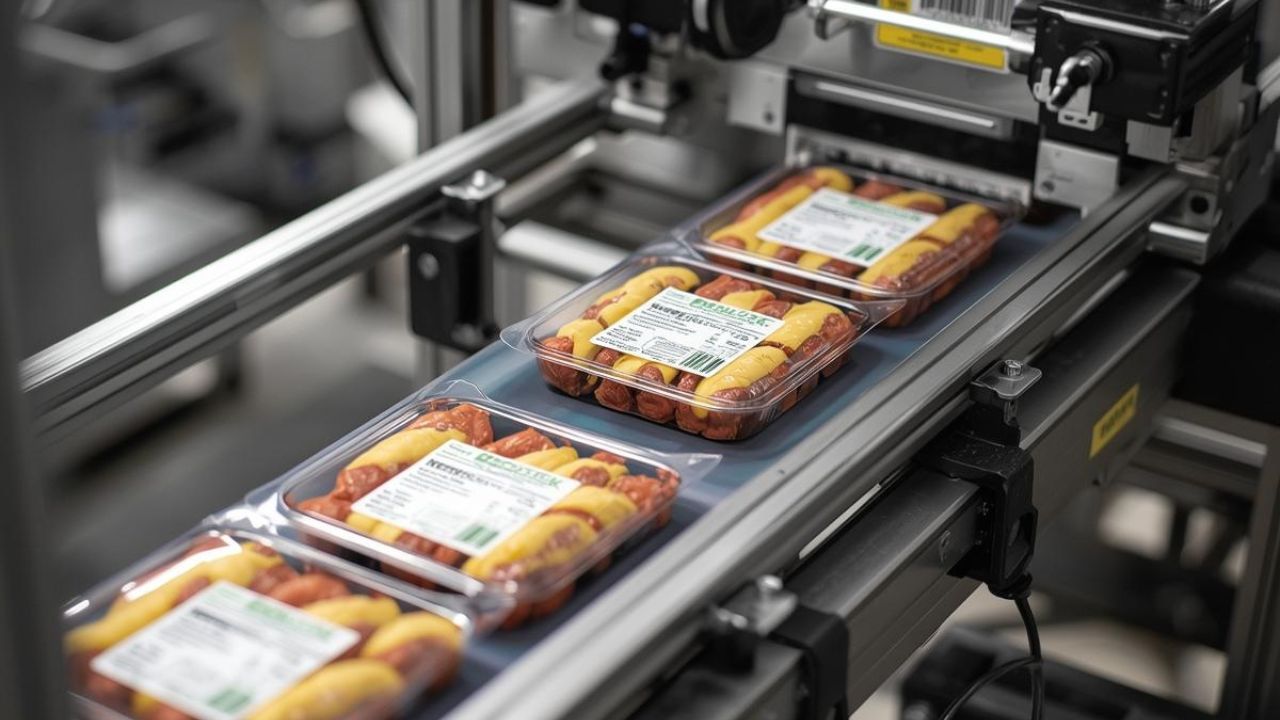
Label placement errors create measurable production costs: rejected products, retailer chargebacks, compliance failures, and packaging line stoppages. In beverage manufacturing alone, label-related defects account for 15-20% of all line stoppages.
Modern bottle labeling systems combine machine vision cameras, optical sensors, and servo-controlled applicators to achieve sub-millimeter placement accuracy on lines running 200 to over 1,000 containers per minute. These integrated systems reduce defect rates by over 90% while eliminating manual inspection labor.
Key Takeaways
Vision systems deliver measurable quality improvements: Advanced AI vision reduces label defect rates by over 90% compared to systems without vision inspection, with placement accuracy improving from ±2-3mm to ±0.2-0.3mm.
Integrated sensor networks enable sub-millimeter precision: Photoelectric sensors, contrast sensors, and rotary encoders work together to trigger label application with microsecond timing accuracy at speeds exceeding 600 containers per minute.
Challenging containers require specialized detection techniques: Transparent bottles need backlighting or structured light, while reflective materials require polarized lighting to eliminate glare and enable accurate vision inspection.
Closed-loop automation maintains accuracy without operator intervention: Modern systems automatically detect label position drift and adjust encoder-based trigger offsets in real time, compensating for thermal expansion and mechanical wear during production runs.
AI-powered vision systems reduce setup complexity: Deep learning models train on 50-200 sample images instead of requiring extensive programming, enabling faster deployment when adding new bottle types or label designs to existing lines.
What Is Precision Label Placement On Bottles?
Precision label placement bottlesrequires systems that apply labels at exact positions and orientations during automated production. Modern bottling lines operate at speeds ranging from 200 to over 1,000 containers per minute, requiring sub-millimeter placement accuracy to maintain quality standards without slowing production.
The system combines machine vision cameras, optical sensors, and servo-controlled applicators to position each label within tight tolerances. This accuracy matters across multiple industries where brand presentation and regulatory compliance depend on consistent labeling.
Key elements of precision placement:
Consistent label alignment and positioning across all containers
Avoiding skewed or wrinkled labels that compromise appearance
Maintaining product branding and regulatory compliance requirements
Supporting high-speed packaging lines without production delays
Why Is Accurate Label Placement Critical In Bottle Manufacturing?
Label defects create measurable operational costs. Label-related defects account for an estimated 15-20% of all packaging line stoppages in the beverage industry. Each stoppage cuts into production time, increases labor costs, and risks missing customer delivery commitments.
Inspection systems verify label quality in real time to prevent defective products from reaching customers.
Accurate label placement impacts:
Brand presentation and shelf appearance that drives purchase decisions
Barcode and regulatory label readability for retail scanning systems
Product traceability and compliance with FDA and GMP standards
Reduction of rejected products and material waste
Which Industries Require High-Precision Bottle Labeling?
Industries with strict quality standards, regulatory requirements, or premium branding depend on precision labeling systems.
What Are Vision Systems In Bottle Labeling Machines?
Vision systems labeling applications automate label inspection and positioning verification in real time during production. Modern vision systems consist of four core subsystems: illumination, image acquisition, image processing, and decision/actuation.
The system captures images of each bottle as it passes the inspection station, analyzes the label placement against programmed tolerances, and signals the line to reject defective containers before they reach the packaging stage.
What Components Make Up A Machine Vision System For Label Placement?
Component
Function in Labeling System
Example Technology
Industrial camera
Captures images of bottles and labels
Cognex In-Sight 9000, Basler line-scan cameras
Lighting system
Enhances contrast and visibility
Keyence LumiTrax™, structured light
Image processing unit
Processes captured images
Deep learning models (Cognex ViDi, Keyence AI Vision)
Vision software
Detects patterns and edges
Classical algorithms + AI defect classification
Trigger sensors
Activate image capture
Photoelectric sensors
How Do Cameras Detect Bottle Position And Orientation?
Cameras capture bottle images using two primary methods. Area-scan cameras capture two-dimensional snapshots triggered by proximity sensors. Line-scan cameras build up full 360-degree "unwrapped" images—particularly valuable for detecting label misalignment on round bottles—by continuously capturing single-line images as bottles rotate past the camera.
Vision software analyzes these images using edge detection algorithms to identify bottle contours, label boundaries, and orientation markers.
How Do Vision Systems Identify Label Alignment Points?
Common label alignment detection techniques:
Edge detection of bottle contours to establish reference points
Detection of molded bottle features (seams, embossing, neck rings)
Label registration marks are printed specifically for machine vision
Shape or pattern recognition of label graphics and text
Fiducial marker detection using high-contrast alignment symbols
What Types Of Sensors Are Used In Bottle Labeling Systems?
Sensor-based labeling systems use multiple sensor types to detect containers, synchronize timing, and verify label application. Similar sensor technologies appear in vertical form fill seal systems, where timing precision determines packaging quality.
Common sensor categories in bottle labeling:
Photoelectric sensors for container presence detection
Optical sensors for label edge and contrast detection
Proximity sensors for non-contact bottle detection
Rotary encoders for position and speed monitoring
What Role Do Sensors Play In Bottle Detection And Label Timing?
Sensor Type
Primary Function
Key Performance Feature
Photoelectric sensor
Detect bottle presence
Polarized retro-reflective for transparent containers
Contrast sensor
Detect label edges
Detect contrast differences as small as 5% at web speeds exceeding 3 m/s
Proximity sensor
Detect bottle proximity
Ultrasonic for transparency-immune detection
Rotary encoder
Measures conveyor motion
Microsecond-precision timing
How Do Vision Systems And Sensors Work Together In Bottle Labeling Machines?
Vision systems and sensors form an integrated control loop that automates bottle detection, label application, and quality verification. Sensors provide real-time position data and trigger signals, while vision systems verify label placement and detect defects. The PLC coordinates all components, adjusting label timing based on encoder feedback and vision system analysis.
How Do Sensors Trigger Cameras For Bottle Inspection?
Photoelectric or proximity sensors detect when a bottle enters the inspection zone and send a trigger signal to the vision system. The timing of trigger signals, combined with encoder-derived conveyor speed data, determines precisely where labels will be placed, enabling sub-millimeter accuracy at speeds exceeding 600 containers per minute.
How Does Vision Data Guide Label Placement In Real Time?
The vision system processes each captured image to determine label position, orientation, and quality. Vision systems communicate with line PLCs via industrial Ethernet (EtherNet/IP or PROFINET) to trigger rejection mechanisms that remove non-conforming containers.
When the system detects a label outside acceptable tolerances, it sends a rejection command to the PLC, which activates a pneumatic air jet or diverter gate.
How Do PLC And Control Systems Coordinate Sensors And Vision Systems?
System Component
Function
Integration Protocol
PLC controller
Central system control
EtherNet/IP, PROFINET
Vision processor
Image analysis
Real-time processing at 600+ items/min
Sensor network
Bottle detection
Microsecond response times
Label applicator control
Applies label
Servo-controlled precision
How Does The Precision Bottle Labeling Process Work?
Automated bottle labeling follows a structured sequence of detection, analysis, placement, and inspection. The entire cycle completes in milliseconds, allowing systems to process hundreds of bottles per minute while maintaining sub-millimeter placement accuracy.
The precision labeling workflow:
Bottle detection on the conveyor - Sensors detect bottle presence and generate trigger signals based on container position
Bottle orientation verification - Cameras capture position data while encoders track conveyor motion and bottle location
Image analysis - Vision software processes images in real-time, identifying label placement zones and reference points
Precise label application - Servo-controlled applicators place labels with ±0.2-0.3mm accuracy (advanced AI vision systems)
Post-application inspection - Vision systems verify label quality and trigger rejection for non-conforming units
What Factors Affect Label Placement Accuracy On Bottles?
Label accuracy depends on mechanical precision, environmental conditions, and material properties working together. Even small variations in any factor can shift the label position outside acceptable tolerances.
How Does Conveyor Speed Influence Label Alignment?
Conveyor speed directly affects sensor timing precision and label synchronization. Higher speeds reduce the time window for label application, requiring faster sensor response times and more precise encoder feedback. Modern servo-controlled systems compensate for speed changes by continuously adjusting label timing based on real-time encoder data.
What Bottle Characteristics Can Affect Vision Detection?
Bottle shape (round, square, irregular) influences camera angles and inspection zones
Surface transparency or reflectivity affects image contrast and lighting requirements
Bottle color and material change how light interacts with the container surface
Mold seams or structural features can interfere with edge detection algorithms
Bottle height and diameter variation requires flexible inspection parameters
Solutions for challenging containers: Transparent containers require backlighting or structured light techniques. Reflective materials need polarized lighting and polarized camera filters to eliminate glare.
How Do Lighting Conditions Impact Vision System Performance?
Lighting Type
Purpose
Application
Backlighting
Silhouette detection
Transparent PET and glass containers
Diffuse lighting
Reduces glare
Standard opaque bottles
Structured lighting
Highlights features
Surface geometry inference
Polarized lighting
Eliminates reflections
Metallized/reflective labels
How Do Label Material And Adhesive Properties Influence Placement Precision?
Material factors affecting placement precision:
Label stiffness or flexibility determines conformability to curved bottle surfaces
Adhesive tack strength affects whether labels stay in position during application
Label thickness influences how the material feeds through the applicator mechanism
Surface friction during application can cause labels to shift or drag
What Common Problems Occur In Automated Bottle Labeling Systems?
What Causes Label Misalignment Or Skewing?
Common causes of label misalignment:
Incorrect label applicator timing relative to bottle position
How Can Manufacturers Improve Precision Label Placement?
Labeling accuracy improves through systematic calibration, proper maintenance, and optimized system settings. Manufacturers evaluating equipment upgrades should consider financing options for packaging equipment that make advanced vision systems more accessible.
What Sensor Calibration Practices Improve Detection Accuracy?
Effective sensor calibration practices:
Regular sensor alignment checks to maintain optimal detection angles
Cleaning optical components to remove dust, label adhesive, and product residue
Adjusting detection thresholds based on actual container characteristics
Validating trigger timing against encoder data to verify synchronization
What Vision System Adjustments Improve Label Alignment?
Vision system optimization balances detection sensitivity against false rejection rates. A brewery implementing Cognex In-Sight 9000 series vision system reduced label defect rate from 4.8% to 0.18% and improved OEE by 12 percentage points within three months.
Key vision system optimization adjustments:
Lighting optimization for container material and label characteristics
Camera calibration to maintain accurate measurement references
Adjusting edge detection parameters to match actual label properties
Improving image processing algorithms through machine learning training
How Does Integrating Vision Systems With PLC Automation Improve Performance?
PLC integration creates closed-loop control that automatically adjusts labeling parameters based on real-time vision feedback. The system continuously monitors label quality and corrects timing drift without operator intervention, compensating for thermal expansion of mechanical components and gradual adhesive property changes.
What Are The Benefits Of Using Vision Systems And Sensors For Bottle Labeling?
What Quality Improvements Do Vision-Guided Labeling Systems Provide?
Advanced vision systems reduce defect rates by over 90% compared to manual or basic automated systems.
Metric
Without Vision
With Advanced AI Vision
Improvement
Label Defect Rate (round glass)
3.2%
0.15%
95.3% reduction
Label Defect Rate (transparent)
6.1%
0.42%
93.1% reduction
Placement Accuracy
±2-3 mm
±0.2-0.3 mm
90%+ improvement
False Positive Rejection
N/A
<0.2%
Minimal waste
Primary quality benefits:
Reduced labeling defects through automated real-time inspection
Improved consistency across all container types and production shifts
Reduced manual intervention, freeing operators for other tasks
How Do Automated Labeling Systems Improve Production Efficiency?
Key efficiency improvements:
Higher production throughput (600+ items/min with advanced systems)
Reduced downtime (73% reduction with AI vision implementation)
Faster defect detection, eliminating batch rework
Lower operational costs through reduced waste and labor requirements
How Do Smart Sensors Enable Real-Time Quality Control?
Modern sensors provide continuous monitoring data that enables immediate correction of labeling errors. Advanced systems feature closed-loop control: vision systems detect drift and automatically adjust encoder-based trigger offsets without operator intervention.
This real-time feedback loop prevents small deviations from becoming systematic defects, maintaining accuracy throughout production runs despite thermal expansion of components and normal mechanical wear.
What Future Technologies Will Improve Bottle Label Placement Systems?
How Is Artificial Intelligence Enhancing Vision Inspection?
AI-based image analysis improves detection accuracy by learning to distinguish between acceptable manufacturing variation and actual defects. Deep learning models handle natural variability that causes rule-based systems to generate excessive false positives. AI vision achieves <0.2% false positive rejection rates versus 2% for basic vision systems.
The deployment advantage is equally significant: AI systems require training on 50-200 labeled images versus extensive traditional programming, reducing setup time from weeks to days.
How Will Smart Factory Automation Integrate Vision-Based Labeling Systems?
Industry 4.0 integration connects labeling systems to Manufacturing Execution Systems (MES) and Enterprise Resource Planning (ERP) platforms. Vision systems will upload defect data directly to quality databases, enabling manufacturers to track label quality trends across production runs, shifts, and facilities.
Predictive maintenance algorithms will analyze sensor performance data to schedule component replacement before failures occur, preventing unexpected downtime.
How Do Vision Systems And Sensors Enable Reliable Bottle Label Placement?
Vision systems and sensors transform bottle labeling from manual quality control into fully automated precision operation. Sensors detect bottle position and trigger cameras at exact moments. Vision processors analyze images in real time to verify label placement and quality. Advanced AI vision systems reduce defect rates by over 90% across all container types while achieving ±0.2-0.3mm placement accuracy at speeds exceeding 600 containers per minute.
The integration of these technologies enables real-time quality control and automatic correction without operator intervention. As AI and Industry 4.0 technologies advance, vision-based labeling systems will become more adaptable and easier to integrate into connected production lines.
Why Wolf Packing Machine Company For Automated Labeling Solutions
At Wolf Packing Machine Company, we understand the operational challenges of maintaining label quality at production speeds. Our veteran-engineered packaging systems integrate precision sensors and vision-capable inspection platforms designed for reliability. We provide lifetime technical support from US-based engineers who understand your production environment.
Our approach combines American-made quality with hands-on installation training and responsive parts availability. We don't disappear after installation—we partner with you to optimize system performance throughout your equipment's lifecycle. Whether you're upgrading container packaging systems or implementing new labeling technology, we're here to help.
Ready to upgrade your packaging line with precision labeling technology? Contact our packaging automation specialists to discuss solutions for your production requirements.
At Wolf-Packing Machine Company, we believe that the key to success is a commitment to excellence in everything we do. That’s why we use only the highest quality materials and the most advanced technology to create packaging machines that are efficient, reliable, and cost-effective.
What’s new at Wolf Packing?
// <#?php
// /**
// * Exclude Current Posts from the query
// */
// add_action( 'pre_get_posts', function ( $query ) {
// // not an admin page and not the main query
// if ( ! is_admin() && ! $query->is_main_query() ) {
// $query->set( 'post__not_in', array( get_the_ID() ) );
// }
// } );
// ?>
From design through testing, installation and beyond, we work tirelessly to ensure your equipment is running at peak performance and maximizing your application. To learn more about our machines, reach out to set up a free consultation with our in-house experts.
From weigh filling, bagging, wrapping and conveying to capping, labeling, cartoning, case/tray forming, packing and palletizing, we offer packaging solutions for a diverse array of applications.