Key Takeaways
- True integration means the counter and bagger/bottler operate as one system using shared run/ready/fault signals, not just equipment placed next to each other.
- Counting accuracy depends on controlled infeed and singulation, since poor feeding leads to doubles, jams, and miscounts that worsen at higher speeds.
- Buffering (surge hoppers or conveyor accumulation) prevents starvation and flooding by absorbing cycle-to-cycle speed differences between the counter and packaging machine.
- Syncing requires closed-loop control with sensors and interlocks, plus precise discharge timing so that counted product drops into bags or bottles within the correct fill window.
- Verification checkpoints like checkweighers, vision inspection, and metal detection catch under/over counts and defects before sealing or capping, reducing rework and rejects.
Integrating automatic counting machines with bagging and bottling lines requires more than placing equipment side by side. True bagging integration means the counter and packer communicate, stay synchronized, and reject bad counts before sealing. The level of automation—semi-automatic versus fully automatic—determines how much operator involvement remains. On a bottling line, the same principle applies—counted product must drop into containers at the right moment without overflow or shortfall. This guide covers the equipment, controls, and line synchronization methods that make counting systems reliable at production speeds. Whether you run tablets, gummies, or hardware parts, understanding these fundamentals prevents costly errors and downtime.
What Does It Mean to Integrate an Automatic Counting Machine With Bagging and Bottling Equipment?
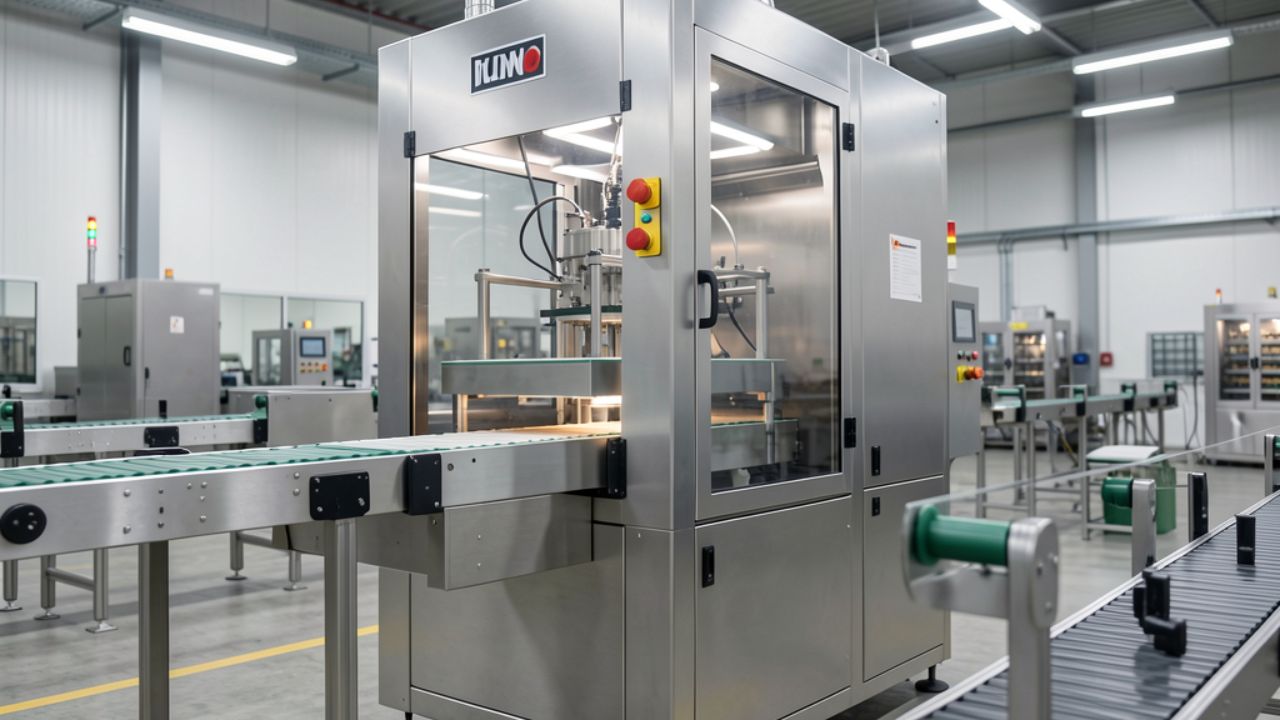
Integration connects the counter to the downstream packaging so both machines operate as one system. The counter delivers a precise quantity. The bagger or bottler receives it, fills the package, and seals—all without manual intervention. When integration works, the line runs continuously. When it fails, you see jams, miscounts, and rejected product stacking up.
What Is an Automatic Counting Machine, and What Products Are Typically Counted?
An automatic counting machine uses sensors to tally discrete items before packaging. Common products include pharmaceutical tablets, nutraceutical gummies, capsules, fasteners, O-rings, and small hardware components. Three primary technologies dominate the market.
Optical sensors shine light across a channel and register each interruption as one piece. These systems achieve accuracy rates often reaching 100% and handle speeds up to 1,800 pieces per minute. Choose optical counting if you run uniform tablets, capsules, or small parts with a consistent shape.
Vision-based systems use cameras and image processing to identify and count items. Accuracy ranges from 99.9% to 100%, with the added benefit of detecting broken or damaged pieces during the counting process. Choose vision-based counting when product quality inspection matters as much as count accuracy, or when items vary in size and shape.
Weighing-based counting calculates quantity by dividing the total weight by the average piece weight. Accuracy depends entirely on weight consistency across units. Choose weighing-based systems for bulk items with uniform unit weights where speed matters more than exact counts.
What Are the Most Common Downstream Systems?
Counting systems feed into several packaging formats. The downstream machine you choose affects integration complexity and line layout. Common options include baggers, bottle fillers, and horizontal flow wrappers for bar-style or wrapped products.
Vertical Form Fill Seal (VFFS) baggers are the most common downstream format. These machines form a bag from roll stock, receive counted product, and seal—all in one motion. High-volume operations typically process 50 or more packages per minute. VFFS pairs well with counters because the machine cycles predictably, making line synchronization straightforward.
Premade pouch machines open prefabricated bags, fill them, and seal. These suit applications where bag aesthetics or structure matter, such as stand-up pouches or zippered bags. Integration requires tighter timing because the machine must open the pouch, wait for the product, and then seal.
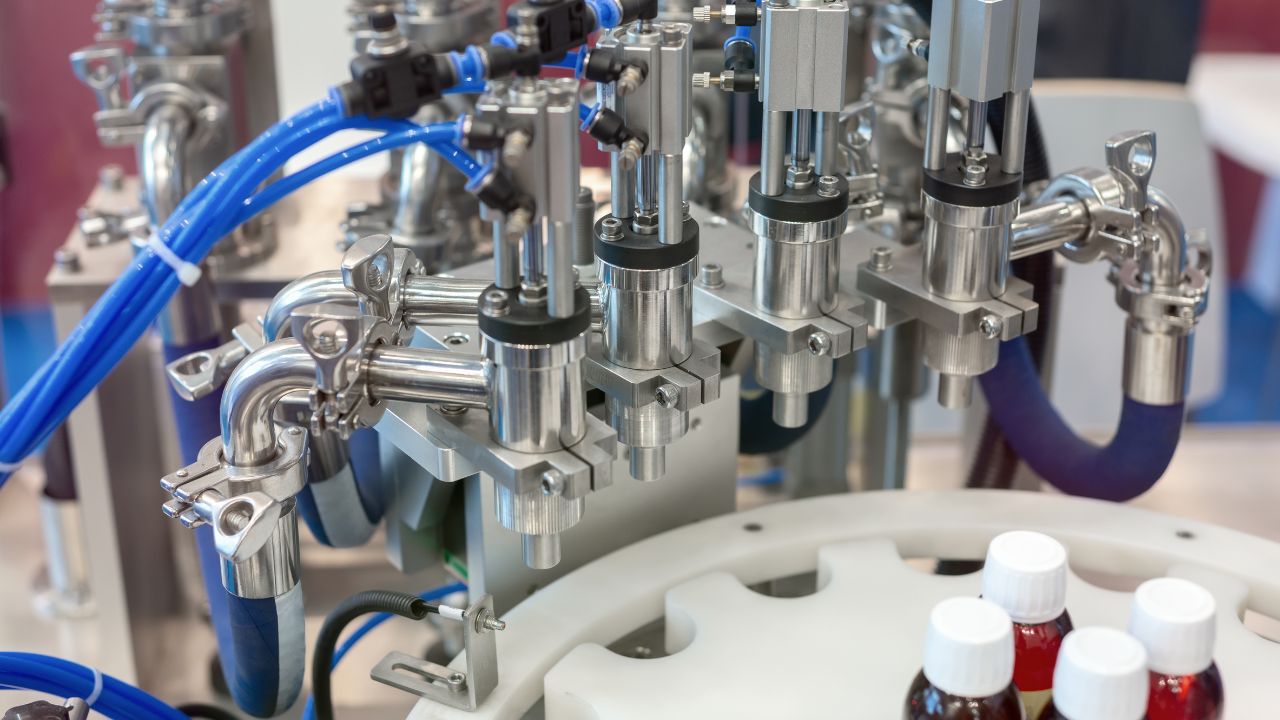
Bottle fillers and cappers receive counted product into rigid containers. The bottling line typically includes a filler station, a capper, and often a labeler. Multi-head weighing systems sometimes work alongside counters for combined count-and-weight verification before the product enters the bottle.
Why Do Counting Errors Increase When Packaging Speed Increases?
Speed exposes timing gaps between the counter and packer. The faster you run, the smaller your margin for error.
Optical sensors can count up to 1,800 pieces per minute. Vision-based systems max out around 100 bags per minute because image processing takes time. When you push equipment toward these limits, the window for transferring product shrinks. A counter running at maximum speed may finish a batch before the bagger is ready to receive it. Product backs up, pieces collide, and miscounts occur.
Line synchronization solves this problem. The counter and packer must share signals—run, stop, ready, fault—so neither outruns the other. Without closed-loop communication, speed mismatches become the primary source of counting errors. Slowing the counter to match the packer cycle time often improves overall throughput by eliminating rejects and rework.
What Equipment and Line Components Are Required for a Reliable Counting-to-Packaging Setup?
A reliable setup requires three things: controlled infeed that prevents miscounts, buffering that absorbs speed variations, and discharge tooling matched to your package format. Each component must work together. Weak links anywhere in the chain cause jams, rejects, and downtime.
What Infeed, Singulation, and Feeding Options Prevent Double Counts and Jams?
Singulation separates the bulk product into single pieces before they pass the counting sensor. Without proper singulation, two pieces pass as one, or pieces collide and jam the channel.
Equipment must feature crevice-free construction that eliminates dead zones where product can accumulate. Dead zones trap pieces, which later dislodge and cause double counts or blockages. Self-draining surface designs prevent liquid or powder accumulation that leads to product sticking and bridging. This matters especially for gummies, coated tablets, or any item with surface moisture.
Tool-free disassembly enables rapid cleaning access. When you change from one product to another, residue from the previous run causes contamination and jamming. Quick-release panels and swing-out feed tracks cut changeover time and reduce cross-contamination risk.
Choose vibratory feeders if your product is dry, uniform, and flows freely. Choose belt or lane feeders when handling fragile items that chip under vibration.
What Accumulation and Buffering Methods Keep the Bagger/Bottler Running Continuously?
Buffers absorb the natural speed variations between counting and packaging. The counter may finish a batch slightly before the bagger cycles. Without a buffer, this mismatch causes either starvation or overflow.
Synchronization between the counter and downstream equipment is essential. The counting machine speed must match the downstream packaging equipment capacity. When speeds align, the buffer stays small—just enough to handle cycle-to-cycle variation. When speeds drift apart, product stacks up, or the packer waits idle.
Systems should include a count verification capability to reject packages that are over or under the target count before they reach downstream equipment. Catching errors at the buffer stage prevents bad product from moving through sealing, capping, or labeling stations, where rework costs more.
Choose a surge hopper when space is limited, and product flows freely. Choose conveyor-based accumulation when handling fragile or irregularly shaped items that cannot drop without damage.
What Discharge Methods Work Best for Bags Versus Bottles?
Discharge tooling moves the counted product from the counter into the package. Bags and bottles require different approaches.
For bags, funnels, and chutes, guide the product into an open pouch or forming tube. Gravity does most of the work. Surface finish specifications require a roughness average (Ra) of 0.8 µm or lower for food contact surfaces. Smoother finishes prevent bacterial adhesion and ensure product releases cleanly without sticking.
For bottles, timing screws, and dividers, position containers under the discharge point, then release product in sync with container movement. Neck diameter and fill depth dictate funnel geometry. Narrow-neck bottles need longer, narrower funnels to prevent spillage.
Material selection depends on your product environment. Choose 304 stainless steel for general food processing—it provides good corrosion resistance at a lower cost. Choose 316L stainless steel (with 2.0–3.0% molybdenum) for high-salt or high-acid product environments where chloride exposure would pit standard grades.
How Do You Choose the Right Integration Approach for Bagging Lines Versus Bottling Lines?
Bags and bottles present different integration challenges. Bags are flexible, open wide, and tolerate timing variation. Bottles are rigid, have narrow necks, and demand precise drop timing. Your integration approach—direct feed versus buffered, single-lane versus multi-lane—depends on package format, throughput targets, and changeover frequency.
What Is Different About Feeding Counted Product Into Bags Compared to Bottles?
Bags accept product through a wide opening and flex to accommodate slight overfill. This forgiveness allows direct feed from the counter in many applications. The counter completes a batch, releases it into the forming tube or open pouch, and the bagger seals immediately.
Bottles require more precision. Narrow necks restrict flow, and overfill causes spillage that fouls capping stations. Direct feed works only when the counter cycle time matches the bottle indexing exactly. Most bottling lines use accumulation between the counter and filler to absorb timing differences.
Reject handling also differs. Bags allow mid-line rejection—a diverter can push a miscounted pouch off the conveyor before sealing without stopping the line. Bottles often require pre-fill rejection because once the product enters the container, removing it wastes both product and packaging. Position your reject station based on where correction costs the least.
Choose direct feed for bagging lines with consistent cycle times. Choose buffered accumulation for bottling lines or any application where package value justifies the extra control.
Which Packaging Formats Affect Integration the Most?
Package geometry determines how the product enters, settles, and seals. Some formats integrate easily. Others require custom tooling and tighter timing.
Pouches and sachets work well with counting systems because they open wide and seal quickly. VFFS baggers running pouches can hit 50+ packages per minute with straightforward integration.
Jars and bottles slow things down. Narrow openings require funnels or fill tubes sized to the container. Timing screws index containers under the fill point, and the counter must release product within a precise window.
Clamshells present unique challenges. The container lies flat, so the product must be distributed evenly across the cavity rather than stacking vertically. Vision-based counting at up to 100 bags per minute often pairs with clamshell lines because it detects broken pieces that would be visible through clear packaging.
Optical sensors counting up to 1,800 pieces per minute suit high-speed tablet and capsule lines. Weighing-based systems work for bulk items with consistent unit weight where exact counts matter less than speed.
When Should You Use One Counter for One Lane Versus Multi-Lane Counting Into Multiple Fillers?
Lane configuration depends on throughput requirements and operational flexibility.
Single-counter configurations offer simplicity and fast changeovers. One counter feeds one packer. When you switch products or bag sizes, you adjust one machine. Operations requiring quick changeovers between various bag sizes and packaging formats benefit from this flexibility. Smaller operations with 10–50 employees often start here before scaling to more complex configurations. Downtime stays short, and operators need training on fewer systems.
Multi-lane configurations multiply throughput. Two or more counters feed parallel packaging lines, or one high-speed counter diverts output to multiple fillers. Multi-shift or 24/7 manufacturing operations processing 1,000+ units per hour often require multi-lane setups to meet demand. Mid-to-large food and beverage companies typically fall into this category.
Choose single-lane when product mix changes frequently, or batch sizes vary. Choose multi-lane when throughput targets exceed single-counter capacity, and your operation runs consistent products across extended shifts.
What Are the Best Practices for Syncing a Counting Machine With Bagging and Bottling Equipment?
Line synchronization keeps the counter and packer operating as one system. Without it, the counter either outpaces the packer (flooding) or falls behind (starvation). Both cause rejects, jams, and lost throughput. Proper syncing requires shared signals, appropriate sensors, and buffering matched to your product.
How Should You Coordinate Line Speed So the Counter Never Starves or Floods the Packer?
Closed-loop communication prevents speed mismatches. The counter and packer exchange signals continuously—each machine knows the other's status and adjusts accordingly.
PLC communication protocols such as Ethernet/IP and Profinet are standard for integrating counters with packaging line controls. Ethernet/IP is the Allen-Bradley/Rockwell standard. Profinet is the Siemens standard. Modbus works for simpler applications. Choose based on your existing control platform to minimize programming complexity.
What Sensors and Interlocks Create Closed-Loop Control?
Sensors monitor product flow and trigger corrective action when problems occur. Photoeyes detect product presence at transfer points. Level sensors in hoppers signal when buffers are full or empty. Jam detection stops the line before blockages cause damage.
Vision inspection systems using high-resolution cameras inspect for packaging defects, verify correct counts, and identify visible contaminants. Metal detection systems reject products containing metal fragments. Both integrate into the control loop to stop packaging before a defective product moves downstream.
How Can You Use Buffering to Absorb Speed Changes Without Sacrificing Count Accuracy?
When Should You Use a Small Surge Hopper Versus a Conveyor-Based Accumulation Table?
Buffers decouple the counter from the packer, allowing each to handle brief speed variations independently.
Choose surge hoppers for discrete, free-flowing items like tablets or capsules. Self-draining designs prevent accumulation that causes sticking. Hoppers require minimal floor space and respond quickly to demand changes.
Choose conveyor-based accumulation for fragile or irregularly shaped products that cannot drop without damage. Conveyors handle items gently and allow visual inspection during transit.
What PLC/HMI Signals Should Be Shared Between the Counter and Packaging Machine?
Four critical signals enable coordinated operation: run/stop commands synchronize starting and stopping; ready status confirms each machine can accept the next cycle; fault conditions halt the line when errors occur; cycle complete confirmations trigger the next batch release.
Without these signals, machines operate blindly. The counter may release product into a packer that is not ready, or the packer may cycle empty because the counter has not finished.
How Do You Time the Discharge Window for Accurate Drops Into Bags or Bottles?
The discharge window is the brief moment when the package is positioned and ready to receive the product. Miss the window, and the product lands outside the container or on the seal area.
Count verification systems reject packages over or under target before sealing. Timing synchronization with downstream sealing or capping operations prevents partial fills from being completed and shipped.
What Validation Checks Catch Misses Before Sealing or Capping?
Multiple inspection points catch errors that slip past the counter.
Checkweighers provide secondary verification by confirming total package weight matches the expected count. A package with the wrong count weighs differently and gets rejected.
X-ray inspection detects dense foreign objects that metal detectors may miss, including glass, stone, and bone. Vision inspection confirms package integrity, correct labeling, and identifies visible contaminants before final sealing.
Position these checks after filling but before sealing or capping. Catching errors here costs less than recalls.
What Are the Most Common Integration Problems, and How Can You Troubleshoot Them Quickly?
Integration problems fall into predictable categories: product behavior issues, timing failures, environmental interference, and sensor drift. Knowing the symptoms helps you diagnose fast and get the line running again.
Why Do Products Bounce, Bridge, or Stick During Transfer, and How Do You Fix It?
Bouncing occurs when the product drops too far or hits a hard surface. Shorten drop distances and add dampening surfaces at impact points.
Bridging happens when product accumulates at narrow points and forms an arch that blocks flow. Crevice-free construction eliminates harborage points where product can accumulate. Smooth surfaces with rounded corners—as specified by 3-A Sanitary Standards and EHEDG guidelines—reduce sticking.
Surface finish matters. Finishes below Ra 0.8 µm prevent bacterial harboring and reduce product adhesion. If the product sticks, check the surface condition first. Worn or scratched surfaces need polishing or replacement.
What Causes Double Drops, Partial Drops, or Late Drops, and How Can You Prevent Them?
Double drops result from poor singulation or sensor miscounts. Two pieces pass together and register as one, then drop as two. Slow the infeed or widen singulation channels.
Partial drops occur when the discharge gate closes before all pieces clear. Extend gate timing or reduce batch size.
Late drops miss the packaging window entirely. Tighten synchronization between counter cycle complete and packer ready signals.
Weighing-based systems have accuracy limitations dependent on unit weight consistency. Weight variation causes false counts that lead to incorrect drops. Vision-based systems detect broken items before they reach packaging, preventing count discrepancies caused by fragments.
How Do Static, Dust, and Product Variability Impact Counting Accuracy and Filling Consistency?
Static causes pieces to cling together or stick to chutes. Install ionizing bars at key transfer points to neutralize charge.
Dust coats sensors and obscures detection. HEPA filtration systems are essential in powder handling environments. Air filtration prevents contamination of optical sensors and vision systems that would otherwise miscount.
Product variability—size, weight, or shape differences—challenges every counting technology. Environmental controls must maintain consistent temperature and humidity for accurate counting. Variations that seem minor compound at high speeds.
When Do Rejects Spike, and What Does That Indicate About Timing, Vibration, or Sensor Placement?
Reject spikes point to systemic issues, not random failures.
Timing drift shows as rejects clustered at specific line positions. The counter and packer have fallen out of sync. Check communication signals and re-establish handshake timing.
Vibration from nearby equipment can trigger false counts or false rejects. Isolate sensitive components or relocate vibration sources.
Sensor placement errors show as consistent miscounts on specific channels. Realign sensors or adjust detection thresholds.
False positive rates from metal detection and vision systems should be monitored continuously. Spikes indicate calibration drift or environmental interference. Reject handling systems must be validated to ensure proper segregation—if rejects mix with good product, the system fails its purpose.
Take the Next Step Toward Seamless Counting and Packaging Integration
Successful integration comes down to matching the right counting technology to your product, synchronizing speeds between counter and packer, and building in verification checkpoints that catch errors before they ship. Whether you run tablets into bottles or hardware into pouches, the fundamentals stay the same: proper singulation, closed-loop communication, and buffering that absorbs speed variations.
At Wolf Packing, we design and build integrated counting-to-packaging systems tailored to your throughput targets and product requirements. Our team handles everything from equipment selection to PLC programming and line commissioning.
Contact us today to discuss your counting and packaging integration project.