Selecting the wrong flow wrap machine creates years of operational problems, slow changeovers that kill productivity, film compatibility issues that lock you into expensive suppliers, and speed limitations that prevent growth. Understanding how product dimensions, production speed, and packaging film characteristics interact determines whether your flow wrapper becomes a competitive advantage or an expensive bottleneck.
Key Takeaways
Product size dictates forming box configuration, film web width, and seal jaw spacing
Production speed requirements determine servo versus mechanical drive selection
Film properties (COF, sealing window, thickness) directly constrain throughput
Integration with upstream and downstream equipment affects overall line performance
Future product changes and sustainable packaging requirements influence long-term value
What Is A Flow Wrap Machine In Packaging Lines?
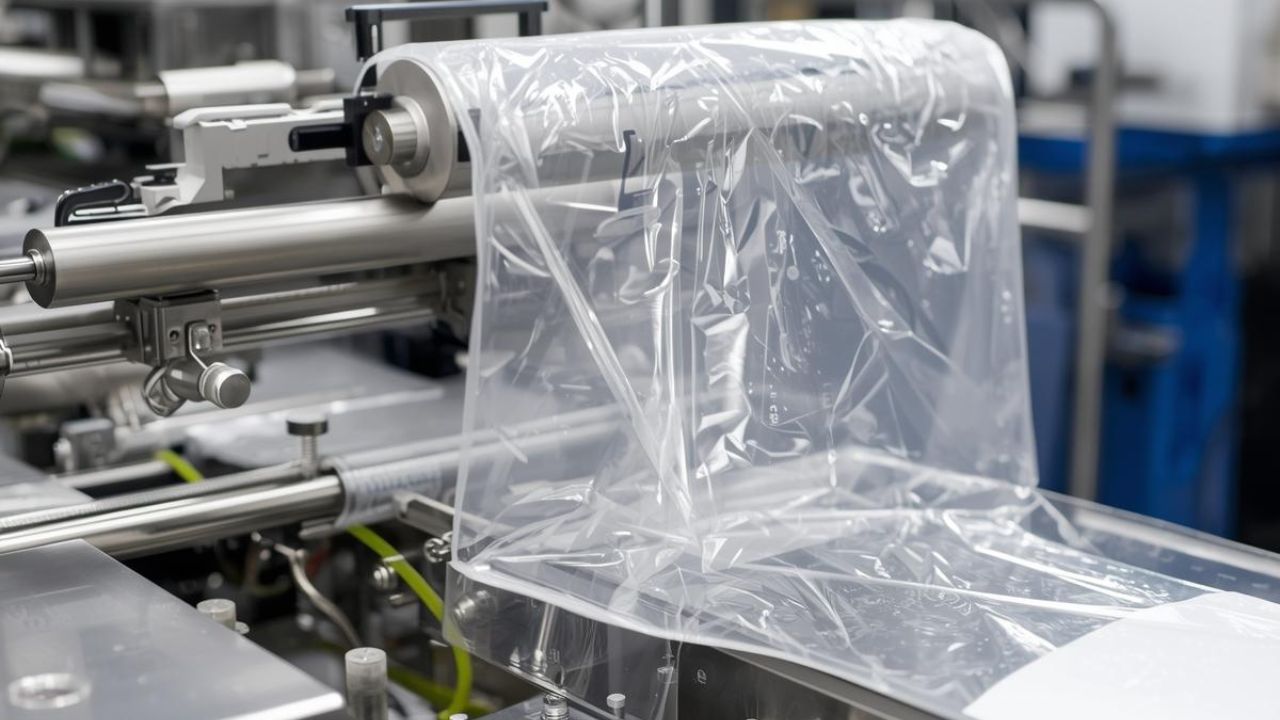
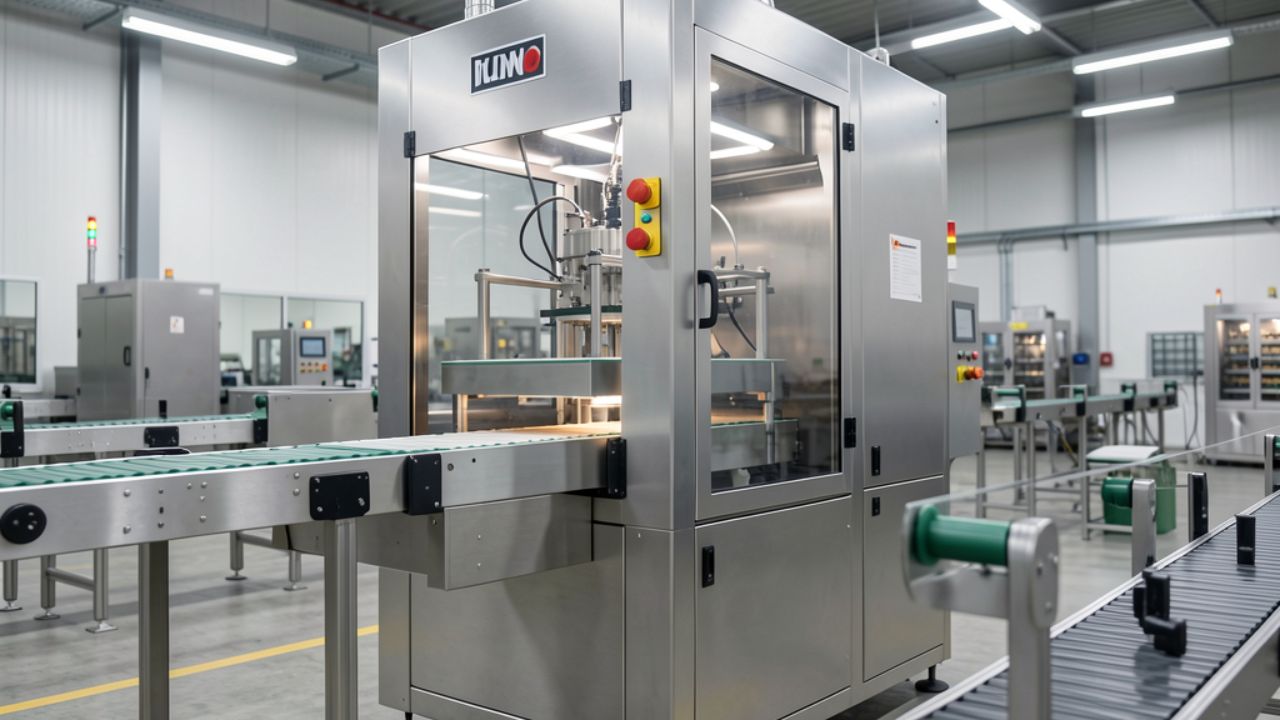
Flow wrap machines (also called horizontal form-fill-seal or HFFS systems) create sealed packages by wrapping products in continuous film and forming individual packages through heat sealing. These machines automate the entire packaging process from film feeding through final discharge.
The basic flow wrapping process:
Product feeding onto the infeed conveyor: Products enter at controlled intervals
Film unwinding and forming around the product: Film wraps around a forming box
Longitudinal sealing of the film tube: Heated jaws seal overlapping film edges
End sealing and cutting: Cross-seal jaws seal both ends and cut between products
Discharge of finished packages: Completed packages exit onto the takeaway conveyor
Common products packaged with flow wrapping:
Snack foods and baked goods
Chocolate bars and confectionery
Medical and pharmaceutical items
Personal care products
Hardware and small consumer goods
Industries using flow wrapping machines:
Food manufacturing
Medical device packaging
Personal care manufacturing
Consumer goods production
Flow wrapping dominates high-volume packaging because it combines speed, consistency, and material efficiency. A single operator can monitor machines producing 200+ packages per minute, replacing 10-15 manual workers while delivering uniform seal quality.
Why Are Product Size, Speed, And Film The Most Important Factors In Flow Wrap Machine Selection?
Machine compatibility depends primarily on product dimensions, production speed requirements, and packaging film characteristics. These three factors determine whether a flow wrapper can physically handle your product, maintain required throughput, and create reliable seals. Effective flow wrap machine selection requires evaluating all three dimensions simultaneously.
Selection Factor
What It Controls
Example Problems if Mismatched
Product Size
Film web width, forming box dimensions, seal jaw spacing
Oversized products jam; irregular shapes cause film wrinkles
Production Speed
Servo timing, seal dwell time, film pull speed
Insufficient dwell time creates weak seals; excessive speed causes misalignment
Film Type
Heat-seal temperature, jaw pressure, film tension
Thick films don't seal at standard temperatures; high COF films jam
Film thickness dictates tension settings and heat penetration time. The coefficient of Friction (COF) affects how smoothly film travels; too high a COF causes jamming, too low creates misalignment. Static buildup requires anti-static additives or ionizers. Product weight influences required film tensile strength and discharge system design.
These factors interact throughout the packaging cycle. A machine configured for small products at 300 PPM using thin LDPE film cannot simply switch to large products at the same speed using thick laminated film; every component requires reconfiguration.
How Does Product Size Influence Flow Wrap Machine Selection?
Product dimensions directly determine machine configuration and tooling requirements. Understanding product size flow wrap compatibility prevents costly mismatches between your products and machine capabilities.
Product Dimension
Machine Component Affected
Why It Matters
Length
Sealing jaw spacing, film pull distance
Jaws must clear product; film advances exact length plus seal allowance
Width
Film web width, forming box width
Film must wrap completely with overlap for seal
Height
Forming box size, seal jaw opening
Product must fit without crushing during sealing
Shape
Product guides, infeed adjustments
Irregular shapes require custom guides and positioning
Standard flow wrappers handle products up to 100mm high. Specialized machines are required for taller items. Uniform, rigid products (chocolate bars, soap) use standard push-feed conveyors. Irregular or soft products (fresh produce, textiles) require specialized infeed systems.
Adjustable or custom machines are required for:
Multiple product sizes on the same line
Frequent product changeovers
Unusual shapes requiring custom forming boxes
Future product expansions
Special handling for fragile or irregular products:
Gentle feeding systems with reduced acceleration
Servo-driven timing control for precise positioning
Modified forming boxes with padded surfaces
Protective film materials with cushioning
How Does Production Speed Affect The Choice Of A Flow Wrap Machine?
Production speed measured in packages per minute (PPM) determines the machine drive system and sealing technology. Effective wrap speed optimization requires matching machine capabilities to actual production requirements plus headroom for growth.
National confectionery brands, high-speed bakery lines
Automated bagging systems achieve 42–132 bags per minute with PE films. High-speed HFFS machines for pharmaceuticals reach 400 packages per minute. Real-world results show 30-65% labor cost reductions and 50-100% production speed increases.
Factors limiting maximum speed:
Product stability during feeding
Film sealing characteristics (thicker films need longer dwell time)
Seal quality challenges from insufficient dwell time
Product misalignment during high-speed film pull
Film tracking issues are causing a seal offset
Increased maintenance requirements
Servo-driven systems offer superior flexibility, faster changeovers, and better long-term ROI despite higher initial cost. Manufacturers should select machines rated 20-30% above normal production targets for headroom.
How Does Packaging Film Type Affect Flow Wrap Machine Compatibility?
Film material properties influence sealing method, machine temperature settings, and packaging durability. Critical film considerations packaging professionals must evaluate include sealing window width, COF behavior, and static management.
Film Type
Applications
Key Advantages
Heat-Seal Temperature
Polyethylene (LDPE/LLDPE)
Snack foods, frozen products
Wide sealing window (40°C), flexibility, low cost
120–160°C
Polypropylene (OPP/BOPP)
Confectionery, dry goods
Superior clarity, moisture resistance
120–123°C (narrow 3°C window)
Laminated films (PET/PE, Nylon/PE)
Coffee, pharmaceuticals
Excellent barrier properties, puncture resistance
130–180°C (varies)
Paper-based (Paper/PE)
Bakery products, sustainable packaging
Recyclable, natural appearance
90–220°C
Compostable (PLA, PBAT)
Organic foods, eco-conscious brands
Biodegradable, meets regulations
PLA: 5–10°C window
Polyethylene dominates 80% of auto-bagging applications due to balanced properties. PE film thickness ranges 1–6 mil with heat-seal temperature 120–160°C, providing a wide window that forgives operator errors. PLA has a narrow 5–10°C window compared to PE's 40°C range, severely limiting production speeds.
Sustainable films affect machine setup through:
Different sealing temperature requirements (precise control within narrow windows)
Changes in film tension settings (different elastic properties)
Adjustments to machine speed (narrow windows force slower rates)
Compatibility with sealing jaws (modified surfaces prevent sticking)
Film testing is essential before purchase. Never assume compatibility based solely on datasheets; conduct trials under production conditions to evaluate COF, static buildup, and actual sealing windows.
How Do Product Size, Speed, And Film Work Together When Selecting A Flow Wrap Machine?
The three factors interact continuously and must be optimized together. A machine configured for one combination will fail with another even though each individual factor appears compatible.
Factor Combination
Packaging Impact
Solution
Large product + high speed
Requires wider film, more powerful sealing
Servo-driven HFFS with heavy-duty jaws; consider dual-lane
Thin film + high speed
Film tracking issues, weak seals
Precision tension control, reduce speed 15-20%, use co-extruded film
Fragile product + rigid film
Product crushing, poor conformance
Switch to soft-touch PE, modify forming box, reduce seal pressure
Film COF affects smooth operation, too high causes dragging and misfeeds, too low creates telescoping. Thicker films require longer heat penetration times and higher jaw pressure. Heavy products need thicker films or co-extruded structures, impacting tension control and sealing capability.
Film thickness ranges 1-6 mil for PE. PE's wide sealing window (120-160°C) is forgiving, while PLA's narrow 5-10°C window limits speeds. Static eliminators prevent film clinging that becomes catastrophic at high speeds.
How Do You Match Flow Wrap Machine Specifications To Your Product Requirements?
Accurate product data is required before selecting a machine. Consider equipment depreciation and tax benefits when evaluating financial impact.
Key product measurements:
Product length, width, height, weight, shape, and rigidity
Estimating required speed:
Current production output (actual units per shift)
Future growth projections (3-5 year volume increases)
Line integration with upstream equipment
Downtime and maintenance allowances (20-30% headroom)
You run multiple SKUs requiring frequent changeovers
Production flexibility matters more than lowest initial cost
Products demand precise positioning and gentle handling
Choose mechanical systems if:
You package a single product in dedicated runs
Initial capital budget is the primary constraint
Production requirements are stable with no changes anticipated
What Are The Common Mistakes When Selecting A Flow Wrap Machine?
Choosing a machine based solely on maximum speed ignores that sustained speed depends on product characteristics and film behavior. A machine rated for 400 PPM may only achieve 250 PPM with your specific combination.
Ignoring packaging film compatibility creates ongoing headaches. Film costs accumulate over the machine's lifetime, a seemingly minor incompatibility forcing 25% more expensive film erases savings from buying a cheaper machine.
Overlooking product variability or future changes is costly in growing businesses. Machines with rigid mechanical systems cannot adapt, forcing premature replacement. One manufacturer reduced staffing from 14 to 7 employees with automation, but only because they specified a servo system handling their expanding catalog.
Not considering the total cost of ownership (TCO), including film costs and maintenance, is expensive. A frozen food producer achieved 65% labor cost reduction with properly selected automation running commodity PE film. Servo technology provides better long-term ROI in multi-SKU environments despite higher initial cost.
Future-proof for sustainable materials, even if currently running traditional PE/PP. Regulatory pressures are forcing a transition to compostable packaging. Evaluate machines as nodes in integrated systems, not standalone units. Upstream product handling and downstream case packing influence what the flow wrapper can accomplish.
What Key Questions Should You Ask Before Purchasing A Flow Wrap Machine?
Specific questions force suppliers to demonstrate actual machine performance against your requirements.
Critical evaluation factors:
Can the machine handle future product size changes?
Is the machine compatible with multiple film types (PE, PP, laminates, and sustainable materials)?
Does the machine meet the required speeds at your actual product-film combination?
How easy is the machine to adjust or maintain?
Can the machine integrate with existing packaging equipment?
Does it support both heat-seal and cold-seal films?
What is the sealing window tolerance for your planned films?
Can it handle sustainable/compostable films for future needs?
What is the changeover time between different SKUs?
Is the machine servo-driven or mechanical?
Servo versus mechanical drive systems represent different approaches; servo provides faster changeovers and better ROI for multi-SKU environments, and mechanical offers lower initial cost for single-product lines. Film compatibility is critical: PE's wide 40°C window forgives variation, while PLA's narrow 5-10°C window demands precision control, limiting speeds.
Sealing technology options include rotary for high speed, long-dwell for thick films, and ultrasonic for heat-sensitive products. Infeed options range from push-flight for rigid products to smart belt for irregular shapes. Environmental considerations matter, washdown environments require stainless construction, cleanroom requires specialized enclosures.
What Is The Best Approach To Selecting The Right Flow Wrap Machine For Your Packaging Line?
Selecting the right flow wrap machine requires systematic evaluation: product size compatibility, production speed requirements, packaging film properties, and machine testing under actual conditions.
Product size evaluation starts with precise measurements, length, width, height, weight, shape. Standard flow wrappers accommodate products up to 100mm high; taller items require specialized machines. Product variability matters as much as current dimensions, servo-driven systems with tool-free changeovers adapt to new SKUs in minutes versus hours.
Production speed ranges from 42–132 bags per minute for standard applications to 400 packages per minute for high-speed pharmaceutical operations. Target machine speed 20-30% above normal rates to maintain seal quality during variations. Film thickness variations (1-6 mil PE, 30-100 microns OPP) must match protection needs, heavier products and longer shelf life demand thicker films, constraining speeds.
Matching film properties to machine capabilities prevents operational headaches. Approximately 80% of auto-bagging uses PE films due to versatility and wide sealing window (120-160°C). Temperature control varies: PE tolerates 40°C range, PP requires precision within 120-123°C, PLA's narrow 5-10°C window limits flexibility.
Testing machine compatibility under actual production conditions is critical. Successful implementations show 30-65% labor cost reductions and 50-100% production speed increases. Request trial runs with actual products and films at target speeds. Evaluate seal strength, film tracking, and changeover procedures during extended operation. Inspection systems integrated with your flow wrapper catch quality issues before they reach customers.
Machine selection requires system integration, design for compatibility with upstream processing and downstream inspection systems. Establish preventive maintenance schedules focused on sealing jaw alignment, knife sharpness, and sensor calibration. Conduct material trials under production conditions with ambient variations, not just laboratory testing.
Why Wolf Packing Delivers Superior Flow Wrap Solutions
Wolf Packing Machine Company brings veteran-engineered precision to flow wrap machine selection. Our team understands that product size, flow wrap compatibility, wrap speed optimization, and film considerations packaging professionals face are interconnected variables determining production success.
What makes Wolf Packing different:
US-based engineering support responding in hours, not days
Comprehensive machine testing with your actual products and films before you commit
Flexible configurations accommodating current needs and future expansions
Lifetime technical support from engineers who designed your equipment
Integration expertise connecting flow wrap systems with VFFS machines and inspection equipment
We've helped manufacturers across the food, pharmaceutical, and consumer goods industries solve complex packaging challenges. Our focus on American-made quality and veteran-owned accountability means you're investing in a partnership, not just purchasing a machine.
Need expert guidance matching flow wrap machines to your specific requirements? Contact Wolf Packing's engineering team for equipment selection and film compatibility testing.
At Wolf-Packing Machine Company, we believe that the key to success is a commitment to excellence in everything we do. That’s why we use only the highest quality materials and the most advanced technology to create packaging machines that are efficient, reliable, and cost-effective.
What’s new at Wolf Packing?
// <#?php
// /**
// * Exclude Current Posts from the query
// */
// add_action( 'pre_get_posts', function ( $query ) {
// // not an admin page and not the main query
// if ( ! is_admin() && ! $query->is_main_query() ) {
// $query->set( 'post__not_in', array( get_the_ID() ) );
// }
// } );
// ?>
From design through testing, installation and beyond, we work tirelessly to ensure your equipment is running at peak performance and maximizing your application. To learn more about our machines, reach out to set up a free consultation with our in-house experts.
From weigh filling, bagging, wrapping and conveying to capping, labeling, cartoning, case/tray forming, packing and palletizing, we offer packaging solutions for a diverse array of applications.