Selecting the wrong capping machine creates immediate production problems. Leaking containers waste product and generate customer complaints. Improperly sealed packages fail regulatory inspections. Over-tightened caps damage container threads. Under-tightened closures create liability exposure on pharmaceutical lines requiring documented torque compliance. Production lines running at 100-400 containers per minute cannot tolerate capping failures without triggering costly downtime and reject rates.
Four primary capping machine types dominate industrial packaging. Spindle cappers apply rotational torque through spinning discs for high-speed beverage bottling. Chuck cappers grip and torque caps with precision control for pharmaceutical applications. Snap-on cappers apply downward pressure for click-fit engagement on dairy containers. Press-on cappers seat closures through controlled force for hermetic foil seals.
Each technology is engineered for specific closure designs, container materials, production speeds, and regulatory requirements. Matching the right capping technology to your specific closure design and production requirements prevents quality failures and maximizes line efficiency.
Key Takeaways
Closure design determines capper type: Screw caps use spindle or chuck systems, snap-fit closures require snap cappers, press-fit lids need press-on machines, and child-resistant caps mandate chuck cappers with documented torque control.
Spindle cappers dominate high-speed production: With speeds exceeding 400 containers per minute in continuous motion, spindle systems are the industry standard for beverage bottling, including water, juice, and carbonated soft drinks.
Chuck cappers provide precision for regulated industries: Servo-driven chuck systems achieve ±0.5 inch-pound torque accuracy with electronic data logging, meeting FDA 21 CFR Part 11 compliance requirements for pharmaceutical packaging.
Production speed requirements dictate automation level: Lines under 60 containers per minute can use semi-automatic systems, while lines exceeding 150 containers per minute require automatic rotary configurations.
Maintenance directly impacts capping performance: Weekly torque calibration, daily alignment checks, and monthly wear component inspection prevent common failures, including loose caps, cross-threading, and inconsistent torque application.
What Is A Capping Machine And What Role Does It Play In Packaging Lines?
How Does A Capping Machine Apply And Secure Caps On Containers?
Capping machines ensure complete seal integrity immediately after filling. The machine receives filled containers from upstream conveyors and positions them into the capping station. A vibratory bowl feeder sorts and orients caps. The capping head applies torque (for screw caps) or pressure (for snap-fit closures) to secure the seal. Inline sensors verify cap presence and proper seating. Vision inspection systems detect cross-threaded or tilted caps.
Torque verification sensors measure closure tightness on pharmaceutical lines requiring documented compliance. Properly capped containers advance to labeling. Rejected containers are diverted to quality control.
Which Industries Commonly Use Capping Machines?
Food and beverage packaging dominates capping applications. Beverage bottling lines run spindle cappers at 300-400 containers per minute for water, juice, and soft drinks. Dairy processors use snap cappers for milk jugs and yogurt tubs. Pharmaceutical manufacturing requires chuck cappers with servo-driven torque control for child-resistant caps and tamper-evident closures, logging torque data for FDA 21 CFR Part 11 compliance.
Cosmetic lines cap shampoo bottles and lotion dispensers. Chemical packaging applies trigger sprayers to household cleaners using chuck cappers for precise torque on spray mechanisms. Different industries have unique capping requirements based on product characteristics and regulatory standards.
What Types Of Caps And Closures Are Used With Capping Machines?
Screw caps are the most common closure type, compatible with both spindle and chuck systems. These threaded closures require rotational torque of 8-30 inch-pounds, depending on container size. Snap-on caps click into a groove on the container neck through downward pressure, common on dairy containers and cosmetic compacts.
Press-on lids require a controlled downward force of 10-300 Newtons, often combined with induction sealing for hermetic food packaging. Pump dispensers and trigger sprayers require precise rotational torque to prevent leaks while maintaining functionality.
What Are The Main Types Of Capping Machines Used In Packaging?
What Is A Spindle Capping Machine?
Spindle capping machines tighten screw caps in continuous motion without stopping container flow. Containers move through 3-4 sets of rotating spindle discs mounted above the conveyor. Side-gripper belts stabilize bottles. The first disc set spins the cap down rapidly. Progressive disc sets apply increasing torque. The final set delivers precise closing torque controlled by magnetic clutches or servo drives.
Production speeds range from 50 containers per minute on inline systems to over 400 on rotary configurations. This continuous-motion design dominates beverage bottling, where line stoppages create production bottlenecks.
What Is A Chuck Capping Machine?
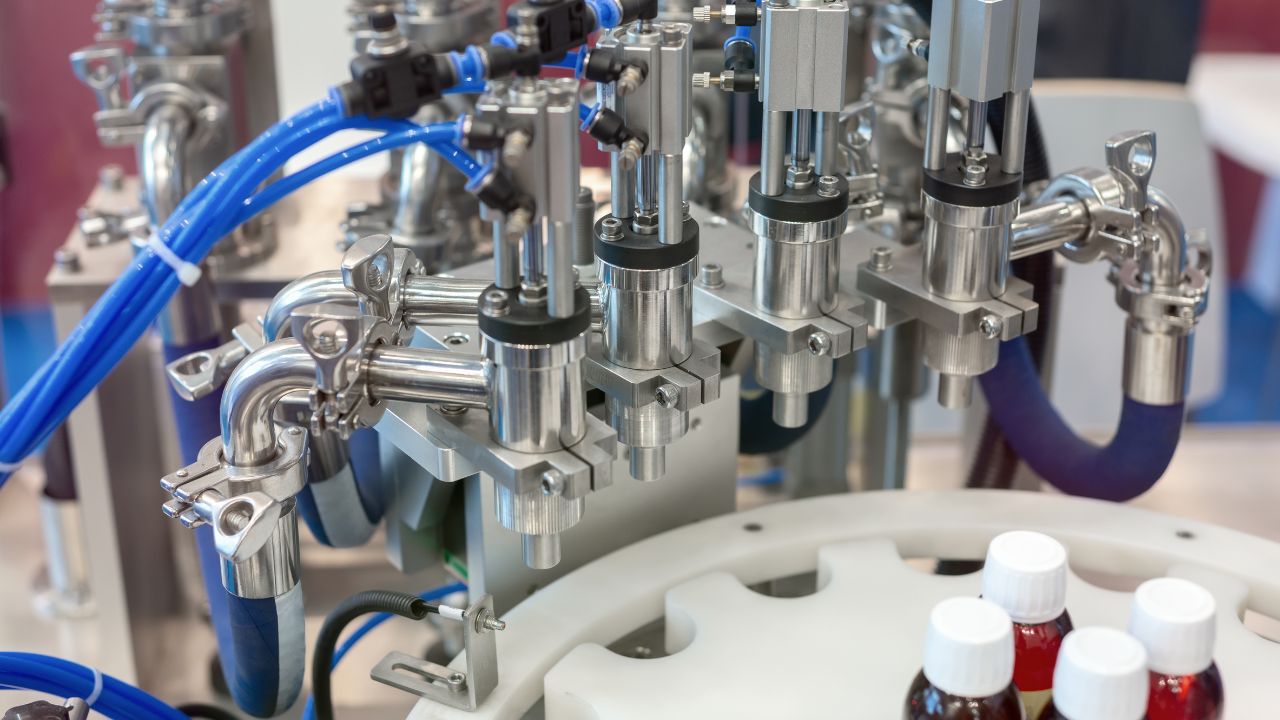
Chuck capping machines use a chuck head that descends over the cap, grips it firmly using rubber or urethane inserts matched to the cap profile, and applies rotational torque. Intermittent-motion systems stop the container under the chuck head at 20-60 containers per minute. Rotary chuck cappers use a carousel of chuck heads rotating continuously with containers, achieving 80-200 containers per minute.
Modern systems use servo motors providing ±0.5 inch-pound accuracy, logging applied torque for every single container to meet pharmaceutical 21 CFR Part 11 compliance. Chuck cappers are preferred for child-resistant caps, pharmaceutical packaging, food jars with metal lug caps, and ROPP aluminum closures.
What Is A Snap Capping Machine?
Snap capping machines apply downward pressure to snap-fit closures without rotation. The closure design incorporates a groove or bead engagement that clicks into place under pressure. Belt-type snap cappers pass containers under a continuous overhead pressure belt at 100-300 containers per minute. Intermittent press designs use a single downward pneumatic stroke at 30-80 containers per minute for applications requiring higher force.
Snap cappers are widely used in dairy packaging for milk jugs and yogurt tubs, cosmetic packaging for compact lids, and beverage packaging for sports drink overcaps.
What Is A Press-On Capping Machine?
Press-on capping machines apply controlled downward force to seat closures without rotation or click-fit engagement. A pneumatic or servo-driven press head descends with precise force ranging from 10 to 300 Newtons. Production speeds range from 30 containers per minute on intermittent pharmaceutical systems to 350 on continuous belt systems. These machines handle foil seals, press-fit plugs, and pharmaceutical vial stoppers.
Many press-on systems integrate induction sealing, where the container passes through an electromagnetic induction coil that bonds a foil liner to the container mouth, creating a hermetic seal for pharmaceutical applications requiring tamper evidence.
How Does A Spindle Capping Machine Work?
How Do Spindle Wheels Tighten Caps On Containers?
The spindle wheel system uses multiple sets of rotating discs arranged in sequence above the conveyor. The first spindle set spins the cap down rapidly with minimal torque. Progressive spindle sets apply increasing torque as the cap engages deeper. The final spindle set delivers precise closing torque. Magnetic clutches automatically disengage when preset torque is reached. Premium systems use servo-driven spindles providing electronically adjustable torque with data logging.
The process: bottles enter the capping zone, caps are placed loosely onto containers, multiple spindle wheels progressively rotate the cap while side belts stabilize the bottle, torque gradually increases until specification is reached, and sealed containers exit to the next stage.
What Cap Types Are Best Suited For Spindle Capping Machines?
Spindle capping machines handle plastic screw caps used on beverage bottles. Continuous thread caps are the ideal match because the thread design allows progressive engagement through multiple spindle sets without cross-threading. Sports caps with flip-top drinking spouts thread onto bottles and seal through spindle rotation.
Standard beverage bottle closures including 28mm, 38mm, and 48mm thread finishes all work effectively. High-volume lines running 300-400 containers per minute require the continuous-motion advantage that spindle systems provide.
What Are The Advantages And Limitations Of Spindle Capping Machines?
Advantages
Limitations
Highest speeds (up to 400+ CPM)
Limited to screw-type closures only
Continuous motion minimizes line interruptions
Less torque precision than servo systems
Simple operation and maintenance
Not suitable for snap-fit or press-on caps
Ideal for high-volume beverage bottling
Cap orientation must be consistent
How Does A Chuck Capping Machine Work?
How Does A Chuck Apply Controlled Torque To Caps?
The chuck mechanism uses rubber or urethane inserts custom-matched to the cap profile. These inserts grip the cap firmly while the chuck head rotates, applying precise rotational torque. Servo-driven systems achieve ±0.5 inch-pound accuracy. The sequence: containers are indexed into position or enter a rotating carousel, the chuck head descends over the cap and grips the profile, torque is applied while the container remains stabilized, the chuck retracts after reaching preset torque, and the container advances.
Servo motor systems log applied torque value, timestamp, and container serial number for every container, meeting FDA 21 CFR Part 11 requirements for pharmaceutical packaging.
Which Cap Designs Work Best With Chuck Capping Machines?
Chuck capping machines excel at closures requiring precise, verifiable torque. Screw caps requiring exact tightness run on chuck systems where torque must be controlled within ±1 inch-pound. Pharmaceutical closures, including child-resistant caps with tamper-evident bands, demand chuck cappers because these complex closures require precise torque to engage the mechanism without over-tightening.
Metal caps, including lug caps on food jars and ROPP aluminum closures on wine bottles, require controlled force to prevent deformation. FDA regulations require documented torque application for pharmaceutical packaging. Chuck systems provide the documented precision these applications demand.
What Are The Advantages And Limitations Of Chuck Capping Machines?
Advantages
Limitations
Precise torque control (±0.5 in-lb with servo)
Lower maximum speed (80-200 CPM typical)
Electronic data logging for compliance
Higher cost than spindle cappers
Handles CRC, lug caps, ROPP closures
Intermittent systems create line pauses
Ideal for regulated industries
Chuck inserts must be changed per cap type
How Do Snap Capping Machines Work?
What Are Snap-On Caps And How Are They Applied?
Snap-fit closures use a mechanical engagement design where the cap clicks into a groove or over a bead molded onto the container neck. No threading exists. The closure relies purely on the interference fit created by downward pressure. Belt-type snap cappers apply progressive pressure as containers move continuously through an overhead pressure belt at 100-300 containers per minute.
Intermittent press systems use a single downward pneumatic stroke at 30-80 containers per minute. The process: the cap is positioned on the container, downward pressure is applied through a continuous belt contact or pneumatic press, snap engagement occurs with an audible click, and the sealed container exits.
Which Packaging Applications Use Snap Capping Machines?
Beverage containers use snap cappers for sports drink overcaps, providing tamper evidence and reclosability. Dairy packaging relies on snap systems for milk jug closures and yogurt tub lids, where high-speed production and sanitary snap-fit designs are standard.
Cosmetic containers, including compact lids for pressed powder products, use snap application. Pharmaceutical bottles use snap caps for non-threaded closures on liquid medications where child-resistance is not required, but tamper evidence is needed.
What Are The Advantages And Limitations Of Snap Capping Machines?
Advantages
Limitations
Fast speeds (100-300 CPM belt-type)
Limited to snap-fit closures only
Simple operation, no torque control needed
Cannot apply or verify torque
Lower cost than rotational systems
Less secure than threaded closures
Easy integration into existing lines
Cap placement accuracy critical
How Do Press-On Capping Machines Work?
How Do Press-On Systems Apply Caps Without Threading?
Press-on capping systems use a pneumatic or servo-driven press head that descends with a controlled downward force of 10-300 Newtons, depending on application. The sequence: cap positioned on container, container indexed to press station, press head descends, downward force applied without rotation, cap fully seated.
Many systems integrate induction sealing, where the container immediately passes through an electromagnetic coil. The induction field heats a foil liner bonded to the cap, fusing it to the container rim and creating a hermetic seal for food safety and compliance.
Which Products Commonly Use Press-On Caps?
Cosmetic jars use press-on systems for pressed powder compact lids that seat with controlled force to avoid damaging the product inside. Food containers rely on press-fit foil seals on jars for products like peanut butter and jam where foil provides tamper evidence. Dairy packaging uses press-on cappers for foil-sealed yogurt cups. Pharmaceutical applications use press-on systems for vial stoppers that must be seated with precise force before crimp caps are applied.
What Are The Advantages And Limitations Of Press-On Capping Machines?
Advantages
Limitations
Simple operation
Limited cap compatibility (press-fit only)
Fast application (100-350 CPM rotary)
Cannot apply rotational torque
Lower mechanical complexity
Less secure for some closures
Ideal for hermetic sealing with induction
Requires precise cap alignment
What Are The Key Differences Between Spindle, Chuck, Snap, And Press-On Capping Machines?
How Do These Capping Machines Compare Across Key Performance Factors?
Machine Type
Capping Method
Cap Types
Speed (CPM)
Torque Precision
Best Applications
Spindle
Rotating wheels
Screw caps
50-400+
Moderate
Beverage, consumer goods
Chuck
Torque chuck
Screw caps, CRC, lug caps
20-300
High (±0.5 in-lb)
Pharma, regulated industries
Snap
Press-fit
Snap caps
30-300
None
Dairy, beverages, cosmetics
Press-On
Downward pressure
Press lids, foil seals
30-350
None
Cosmetics, food containers, pharma vials
How Do You Choose The Right Capping Machine Type For Your Packaging Operation?
What Factors Should You Consider When Selecting A Capping Machine?
Cap design and closure type is the primary selection criteria. Screw caps work with spindle or chuck systems, depending on torque precision requirements. Snap-fit closures require snap cappers exclusively. Press-fit lids and foil seals require press-on systems. Child-resistant caps and pharmaceutical closures mandate chuck cappers for documented torque compliance.
Production line speed requirements determine machine configuration. Lines under 60 containers per minute can use any capping technology in intermittent motion. Lines at 60-150 containers per minute require a continuous-motion spindle, rotary chuck, or belt-type snap systems. Lines exceeding 150 containers per minute demand high-speed spindle cappers. Regulatory compliance requirements drive technology in the pharmaceutical and food industries.
FDA 21 CFR Part 11 compliance requires chuck cappers with electronic data logging. Whether you're integrating cappers with vertical form fill seal systems or container jar packaging lines, matching capper speed to upstream filling equipment prevents bottlenecks.
When Should You Use Semi-Automatic vs Automatic Capping Machines?
Machine Type
Production Volume
Operator Involvement
Typical Use
Semi-automatic
Low-medium (<60 CPM)
Manual loading
Small production runs, R&D lines
Automatic
Medium-high (60+ CPM)
Minimal input
Large manufacturing, high-volume bottling
Semi-automatic systems are sufficient for production lines running under 20 containers per minute. Automatic capping becomes necessary at 60 containers per minute and above where manual loading creates bottlenecks. Lines exceeding 150 containers per minute require automatic rotary systems.
What Are the Common Challenges With Capping Machines And How Can You Address Them?
What Problems Can Occur During The Capping Process?
Loose caps result from insufficient torque application. Solution involves torque calibration using a torque tester to verify that actual applied values match programmed settings. Cross-threading occurs when caps are misaligned during placement. Vision inspection systems detect tilted caps before the capping station. Overtightening applies excessive torque that damages container threads or deforms metal caps.
Servo control systems maintain precise torque limits. Cap misalignment originates from poor cap feeding, where vibratory bowls fail to orient caps consistently. Automatic rejection systems with vision sensors divert improperly oriented caps. Inconsistent torque results from mechanical wear in clutches, spindles, or chuck inserts. Electronic servo control maintains ±0.5 inch-pound accuracy regardless of component wear.
How Can Maintenance And Adjustments Improve Capping Performance?
Routine torque calibration should occur weekly for high-volume production lines. Daily alignment checks prevent cross-threading by detecting worn guides or damaged starwheels. Cleaning cap feeding systems daily is mandatory for food and pharmaceutical applications where product residue accumulates on vibratory bowls and chutes. Monthly inspection includes checking spindle disc condition, replacing worn chuck inserts, and verifying gripper belt tension.
What Should You Know Before Investing In A Spindle, Chuck, Snap, Or Press-On Capping Machine?
Which Capping Machine Type Is Best For High-Speed Production Lines?
Spindle cappers dominate high-speed production at 400+ containers per minute. The continuous motion design maximizes throughput because containers never stop moving through the capping zone. Spindle systems are the industry standard in beverage bottling for water, juice, and soft drinks. Press-on cappers reach 350 containers per minute on rotary configurations for foil-sealed containers.
Snap cappers achieve 300 containers per minute using belt-type pressure application. Chuck cappers reach 300 containers per minute on rotary systems but trade maximum speed for highest precision at ±0.5 inch-pound torque accuracy.
Which Capping Machine Works Best For Specialized Closures?
Child-resistant caps require chuck cappers exclusively because precise torque engages the child-resistant mechanism at the exact specification for CPSC 16 CFR 1700 compliance. ROPP aluminum closures demand chuck cappers because controlled torque prevents metal deformation during roll-on forming.
Lug caps on food jars require chuck cappers because the quarter-turn closure design requires precise rotational torque. Foil and induction seal overcaps require press-on cappers combined with electromagnetic induction coil systems. Trigger sprayers are compatible with spindle or chuck systems, with chuck cappers providing ideal precision.
For beverage bottling specifically: water, juice, and soft drinks using standard threaded caps deploy spindle cappers running 300-500 containers per minute. Wine and spirits using ROPP or lug closures require chuck cappers at 80-200 containers per minute. Sports drinks with snap overcaps use snap systems at 100-300 containers per minute. Yogurt drinks with foil seals deploy press-on cappers at 100-350 containers per minute.
What Is The Right Capping Machine Investment For Your Production Line?
Capping machine selection starts with closure design and ends with production speed requirements, regulatory compliance, and total cost of ownership. Spindle cappers deliver the highest speeds for standard screw caps. Chuck cappers provide documented torque precision for pharmaceutical packaging and specialty closures.
Snap cappers offer cost-effective high-speed application for dairy and cosmetic snap-fit closures. Press-on cappers excel at hermetic sealing applications. Matching capper technology to closure type prevents leaks, reduces reject rates, and ensures regulatory compliance.
Ready to upgrade your packaging line with precision capping systems? Contact Wolf Packing Machine Company to discuss your capping requirements.
At Wolf-Packing Machine Company, we believe that the key to success is a commitment to excellence in everything we do. That’s why we use only the highest quality materials and the most advanced technology to create packaging machines that are efficient, reliable, and cost-effective.
What’s new at Wolf Packing?
// <#?php
// /**
// * Exclude Current Posts from the query
// */
// add_action( 'pre_get_posts', function ( $query ) {
// // not an admin page and not the main query
// if ( ! is_admin() && ! $query->is_main_query() ) {
// $query->set( 'post__not_in', array( get_the_ID() ) );
// }
// } );
// ?>
From design through testing, installation and beyond, we work tirelessly to ensure your equipment is running at peak performance and maximizing your application. To learn more about our machines, reach out to set up a free consultation with our in-house experts.
From weigh filling, bagging, wrapping and conveying to capping, labeling, cartoning, case/tray forming, packing and palletizing, we offer packaging solutions for a diverse array of applications.