Automated bagging systems deliver efficiency gains when bag materials match machine capabilities. Bag material compatibility affects feeding reliability, seal quality, production speed, and waste rates.
This guide explains how different materials interact with automated equipment and how to optimize bagging material selection for maximum throughput.
Key Takeaways
Polyethylene dominates automated bagging applications: PE accounts for 80% of installations due to its wide sealing window (120-160°C), reliable feeding characteristics, and proven machine compatibility across diverse product types.
Material properties directly impact production efficiency: Properly matched films achieve speeds of 42-132 bags per minute with weighing accuracy up to ±0.2%, while incompatible materials cause feeding jams, seal failures, and throughput losses.
Different industries require specialized material choices: Food packaging uses PE and laminates for barrier properties; industrial parts demand thicker films (4-6 mil) for puncture resistance; e-commerce prioritizes lightweight PE; medical products need specialized barriers and compliance features.
Material testing before production prevents costly problems: Facilities that optimize material selection report 65% labor cost reductions, doubled production speeds, 30% productivity increases (480 to 540 bags/hour/employee), and staffing cuts from 14 to 7 employees.
Machine settings must match material characteristics: Temperature control (PE: 120-160°C; PP: 120-123°C; Paper: 90-220°C; PLA: 5-10°C window), tension management, static control, and regular maintenance enable reliable operation with bag sizes from 10-50kg.
What Is An Automated Bagging System?
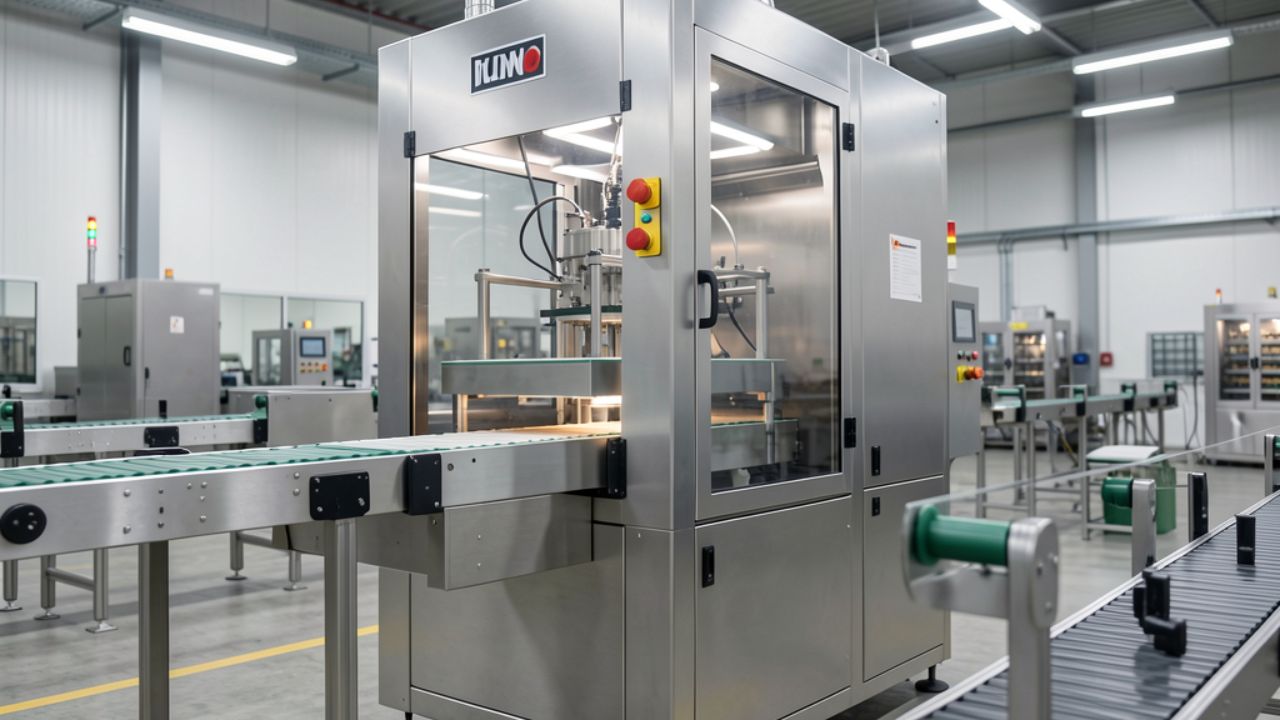
Automated bagging systems handle the complete packaging process from bag dispensing through filling to sealing. These machines run production lines in food manufacturing, pharmaceutical packaging, industrial distribution, and e-commerce fulfillment. Modern systems produce 42-132 bags per minute at speeds reaching 93 feet per minute with weighing accuracy of ±0.2%.
The automated bagging workflow follows five steps:
Bag feeding or dispensing: Machine pulls bags from magazine stacks or unwinds them from rolls
Bag opening: Air jets or mechanical grippers separate bag layers and position the opening for filling
Product insertion or filling: Weigh scales, volumetric fillers, or conveyors deposit product into the bag
Bag sealing or closure: Heat sealers, ultrasonic welders, or mechanical closures secure the bag
Bag discharge or conveyor transfer: Sealed bags move to downstream packaging or palletizing stations
Key components include:
Bag magazine or roll holder: Stores pre-made bags or holds film rolls for form-fill-seal operations
Bag opener or air blower: Uses vacuum suction or compressed air to separate and hold bag layers open
Filling station or product infeed: Integrates weigh scales, augers, or conveyors for precise product delivery
Heat sealer or closure mechanism: Applies controlled temperature and pressure to create hermetic seals
Control system and sensors: Monitors bag presence, fill weight, seal integrity, and machine speed
Conveyor or discharge system: Transports finished packages to downstream operations
Modern systems handle bag sizes from 10-50kg. High-speed horizontal flow wrapping systems reach output rates up to 100 flowpacks per minute for lighter products.
What Does Bag Material Compatibility Mean In Automated Bagging Systems?
Bag material compatibility refers to how well a specific film performs with the mechanical and thermal systems of an automated packaging machine. Compatible materials feed smoothly, open consistently, seal reliably, and run at designed speeds without jams, tears, or seal failures.
Material compatibility directly impacts efficiency. One medical products manufacturer increased productivity by 30% (from 480 to 540 bags per hour per employee) after optimizing material selection. Production time for 4,000 packages dropped from 17 hours to 4.67 hours through proper material matching.
Why compatibility matters:
Reliable feeding and opening: Films travel smoothly through feed rollers and separate cleanly
Consistent sealing: Matched materials achieve proper seal strength across full operating speed range
Reduced downtime: Films matching machine specifications eliminate jams and adjustment delays
Higher speeds: Optimized properties allow machines to run at maximum rated speeds
Lower waste: Proper compatibility reduces seal failures, torn bags, and quality rejects
Problems from incompatible materials:
Bags failing to open correctly due to high friction or static
Weak seals from mismatched sealing temperatures
Film tearing during filling from insufficient tensile strength
Static buildup is causing feeding issues
Increased jams from material thickness variations or friction problems
What Types Of Bag Materials Are Commonly Used In Automated Bagging Systems?
Polyethylene (PE) bags dominate automated bagging, accounting for 80% of installations. LDPE and LLDPE offer flexibility, excellent heat-seal characteristics, and wide operating windows. Film thickness ranges from 1 mil (25.4 microns) to 6 mil (152.4 microns). PE films seal across 120-160°C, providing the operational flexibility automated systems require.
Polypropylene (PP) bags deliver superior clarity and premium aesthetics for retail display. OPP films range from 30-100 micrometers and seal at 120-123°C. The polypropylene vs polyethylene comparison shows PP is more brittle with lower tear resistance. The narrow sealing window requires precise temperature control.
Laminated films combine multiple materials for superior barrier properties, durability, and print clarity. Outer layers provide controlled friction and printability, middle layers add puncture resistance, and inner sealant layers offer wider sealing windows.
Paper bags use kraft paper with polyethylene coatings to enable heat sealing. Paper-PE laminates seal from 90-220°C. Paper materials require careful tension control because excessive pull causes tearing.
Compostable materials like PLA offer renewable sourcing but present automation challenges. PLA's heat-seal window spans only 5-10°C compared to PE's 40°C range, requiring extremely precise temperature control.
Bag Material
Key Properties
Typical Applications
Compatibility
LDPE/LLDPE
Flexible, wide sealing window (120-160°C), 1-6 mil
Food, general packaging, bulky items
Excellent: 80% of applications
OPP
High clarity, 30-100 micron, seals at 120-123°C
Retail display, confectionery
Good: requires precise temperature
Laminated Films
Multi-layer, superior barriers
Extended shelf life, pharmaceuticals
Excellent: wide sealing windows
Paper/PE
Sustainable, 90-220°C seal window
Eco-conscious products, food service
Requires tension control
PLA
Renewable, narrow 5-10°C seal window
Sustainable packaging
Challenging: precision required
What Material Properties Determine Compatibility With Automated Bagging Systems?
Film thickness dictates tension settings, heat penetration time, and cutting blade pressure. Thicker films require more heat transfer time and higher tension settings. PE films range from 1-6 mil while OPP runs 30-100 microns.
Surface friction controls how film travels over forming tubes and rollers. High COF causes dragging and jamming. Low COF creates telescoping and misalignment. Manufacturers balance these properties through slip agent formulations.
Static characteristics determine whether films cling to machine parts during handling. Static causes bags to stick together, cling to filling tubes, or attract product dust. Most systems use anti-static additives or machine-mounted ionizers.
Tensile strength influences how films withstand product weight and machine tension. Co-extruded films use 3-layer structures: outer layers for printing and controlled friction, middle layers for strength and puncture resistance, inner layers for hot tack enabling instant sealing.
Heat sealability defines the temperature range, pressure, and dwell time needed for proper seals. PE offers a 120-160°C window (40°C range) providing operational flexibility. PP seals in a narrow 120-123°C window (3°C range). PLA's 5-10°C sealing window challenges high-speed systems. Paper-PE laminates seal from 90-220°C, offering exceptional process latitude.
Material Property
Impact on Automated Bagging
Typical Values
Film Thickness
Thicker films require adjusted machine parameters
PE: 1-6 mil; OPP: 30-100 microns
Heat-Seal Characteristics
Narrow windows require precision; wide windows offer flexibility
PE: 120-160°C; PP: 120-123°C; Paper/PE: 90-220°C
Coefficient of Friction
Too high = jamming; Too low = telescoping
Balanced with slip agent formulations
Static Buildup
Can prevent smooth feeding and sealing
Requires anti-static additives or ionizers
Tensile Strength
Heavy products require thicker or co-extruded films
Co-Ex enables down-gauging with maintained strength
How Do Automated Bagging Systems Interact With Different Bag Materials?
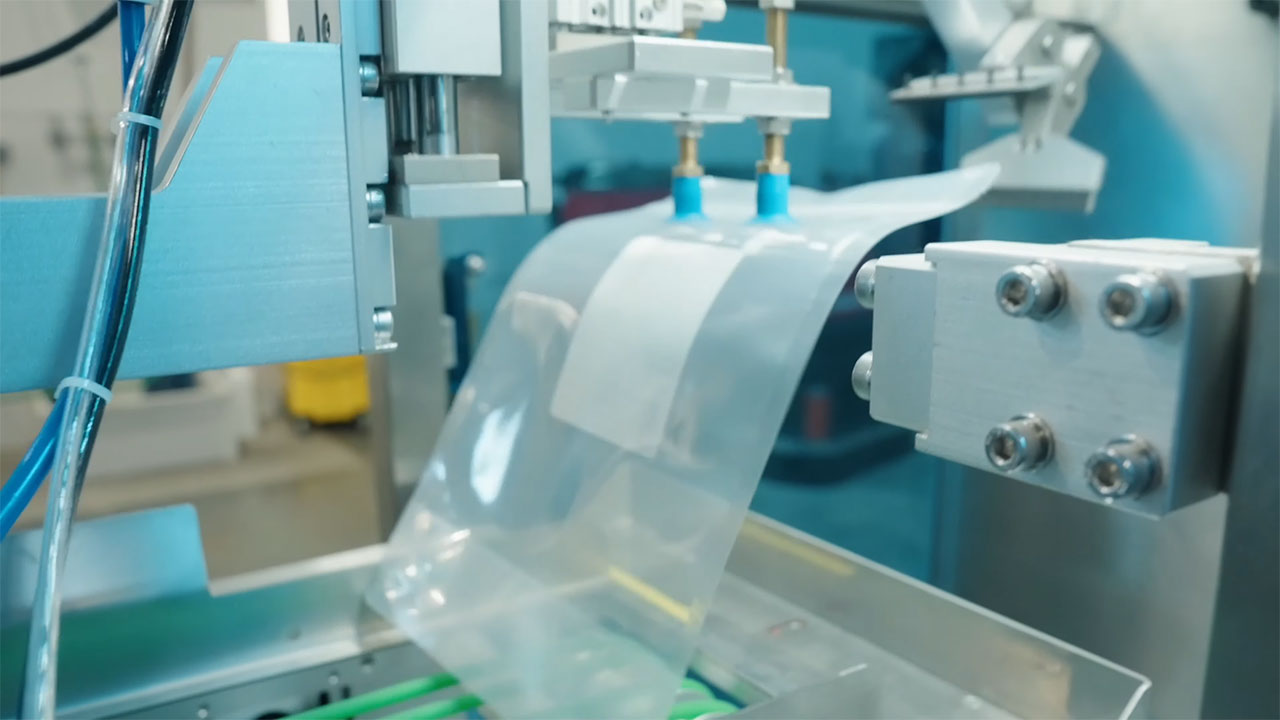
Bag feeding mechanisms pull bags from magazines or unwind film from rolls using vacuum suction, mechanical grippers, or friction rollers. Pre-made pouch bagging machines separate bags using air jets or mechanical fingers with capacitive sensors. Surface friction and static properties directly affect feeding reliability.
Bag opening systems use compressed air, vacuum, or mechanical grippers to separate layers and position them for filling. Static charge makes layers cling together despite air pressure. Anti-static treatments or ionizing bars eliminate this issue.
Product filling delivers measured quantities through gravity chutes, conveyors, or pneumatic systems. Static causes product to cling to bag interiors. Insufficient puncture resistance allows sharp products to tear through walls. Machine filling speeds range from 42-132 bags per minute.
Heat sealing systems press film layers together under controlled temperature, pressure, and time. PE films run at up to 93 feet per minute because their wide sealing window (120-160°C) tolerates variations. PP requires precise control due to narrow windows. Co-extruded films incorporate inner layers with hot tack properties enabling instant sealing and higher speeds.
Machine speed varies significantly based on material properties. High-speed systems achieve up to 100 flowpacks per minute with compatible films but drop to 40-60 per minute with challenging materials. Optimized material selection can triple throughput, with one manufacturer completing 4,000 packages in 4.67 hours versus 17 hours previously.
Which Bag Materials Work Best for Different Automated Bagging Applications?
The optimal bag material depends on product characteristics, packaging requirements, and operational goals. Polyethylene dominates 80% of applications due to its balance of flexibility, seal reliability, and machine compatibility.
Choose LDPE/LLDPE if: Products require flexible packaging with moderate barriers, you need high speeds (42-132 bags/minute), or want wide operating windows (120-160°C). Avoid when: Products require superior oxygen barriers or premium clarity is essential.
Food packaging across multiple industries uses LDPE/LLDPE for flexible items. Laminated films like PET/PE or Nylon/PE deliver extended shelf life for products requiring superior barriers. Paper/PE laminates serve sustainable food service applications.
Industrial parts require thicker PE films (4-6 mil) for puncture resistance. HDPE provides durability for rigid items. Co-extruded films allow down-gauging while maintaining strength.
Choose lightweight PE or Co-Ex if: You operate high-volume e-commerce requiring cost efficiency, need privacy features for HIPAA compliance, or want to down-gauge while maintaining strength. Avoid when: Products have sharp edges or the weight exceeds 10kg per package.
E-commerce packaging emphasizes lightweight PE for efficiency. Co-Ex structures with opaque layers provide privacy for medical shipments or high-value items.
Heavy products use co-extruded films with reinforced cores designed for 10-50kg bags. One frozen food producer achieved 65% labor cost reduction and doubled production speed through optimized automated bagging. Medical manufacturers reduced label costs by $10-15 per thousand packages while maintaining allergen control requirements.
Application
Recommended Material
Performance Benefits
Food Products
PE, Laminated Films
Used in 80% of applications; reliable feeding and consistent seals
Frozen Foods
LLDPE, Co-Ex Films
65% labor cost reduction; doubled production speed
Hardware Parts
Thicker PE (4-6 mil), HDPE
Handles sharp edges without tearing
E-commerce Packaging
Lightweight PE, Co-Ex
Cost-effective; can down-gauge with Co-Ex structures
Medical Products
Laminated Films, Specialized PE
30% productivity increase; 50% staffing reduction
Retail Display Items
OPP/PP (30-100 microns)
Excellent visual appeal; requires precise temperature (120-123°C)
Film tearing during filling: Insufficient tensile strength or puncture resistance
Feeding problems: High COF causes dragging; low COF causes telescoping
PLA's narrow seal window (5-10°C versus PE's 40°C) makes it prone to melting or weak seals. PP is naturally prone to static buildup. Paper bags tear if tension is too high or wrinkle if too low.
Common causes:
Incorrect film thickness: Machines calibrated for 2-mil film cannot handle 6-mil material
Poor sealing temperature: Critical for narrow-window materials where 2-3°C deviation causes failure
High static conditions: Particularly problematic with PP and cellulose films during low humidity
Incorrect bag dimensions: Oversized or undersized bags jam the feeding mechanisms
Inadequate tension control: Paper materials tear under excessive pull or wrinkle under insufficient tension
How Do You Choose The Right Bag Material For An Automated Bagging System?
Bag selection depends on machine design, product characteristics, and operational goals.
Machine-related factors:
Sealing method: Heat-seal systems require compatible melt temperatures and seal layer compositions
Machine speed capabilities: Faster speeds demand wide sealing windows and low static
Bag feeding mechanism: Air-based systems work best with low-static films
Maximum bag size or thickness: Machines designed for 2-mil films cannot accommodate 6-mil materials
Temperature control precision: PLA requires ±2°C control versus PE's ±10°C tolerance
Product-related factors:
Product weight: Systems handle 10-50kg range; heavier loads require thicker or co-extruded films
Sharp edges or puncture risk: Requiring thicker films (4-6 mil) or Co-Ex structures
Food safety requirements: Barrier properties and FDA-approved materials
Moisture or oxygen barriers: Laminated films provide superior barrier properties
Visual presentation: OPP delivers clarity for retail; opaque Co-Ex provides privacy
Choose Paper/PE if: You need sustainable packaging with eco-conscious branding, can manage tension control, or want the wide 90-220°C sealing window. Choose laminated films if: Extended shelf life is critical, you need superior barriers, or products require pharmaceutical-grade compliance.
Sustainability initiatives drive the adoption of compostable materials (PLA, PBAT) and paper-based laminates. However, PLA requires precision control within narrow 5-10°C windows compared to PE's forgiving 40°C range. Engineers must balance environmental goals against operational complexity.
Material testing prevented issues that could have cost production time. One manufacturer reduced package production from 17 hours to 4.67 hours through optimized bagging material selection. Co-Ex films enable cost savings through down-gauging. Automated systems with proper selection achieve weighing accuracy up to ±0.2% when integrated with inspection systems.
Why material testing should be performed before production:
Verifying seal strength: Prevents weak seals and product integrity issues
Testing machine compatibility: Identifies COF and static problems before production
Evaluating film durability: Prevents costly tearing and waste during product insertion
Identifying static or feeding issues: Particularly with PP and compostable films
Validating temperature control: For narrow-window materials (PLA: 5-10°C vs PE: 40°C)
What Best Practices Improve Bag Material Compatibility In Automated Bagging Systems?
Performance improves when materials and machine settings are optimized together. Facilities implementing systematic testing achieve 65% labor cost reductions and doubled production speeds. Proper setup increases productivity by 30% (from 480 to 540 bags/hour/employee) while reducing staffing by 50%. Label savings of $10-15 per thousand packages are possible through optimization.
Testing packaging materials:
Conduct pilot runs before large material orders to identify compatibility issues
Evaluate seal strength across the full sealing temperature range
Test bag feeding at production speeds (42-132 bags/minute) to ensure quality at designed throughput
Assess static buildup especially for PP and compostable films during low-humidity conditions
Adjust sealing temperature based on material (PE: 120-160°C; PP: 120-123°C; Paper/PE: 90-220°C; PLA: 5-10°C window)
Modify air pressure for different film thicknesses (thinner films need gentler pressure)
Tune conveyor speeds to match targets (up to 93 feet/minute for PE)
Calibrate tension control to prevent tearing (paper) or wrinkling
Install static eliminators for materials prone to buildup (PP, cellulose films)
Preventive maintenance:
Inspect sealing elements regularly to maintain consistent seal quality
Clean sensors and feeding components to prevent misfeeds
Monitor static control systems when running PP or compostable materials
Verify weighing accuracy remains within ±0.2% specification
Check tension control systems to prevent paper tearing or film distortion
Achieving Reliable Automated Bagging Through Material Compatibility
Material compatibility is critical for reliable automated packaging. Polyethylene dominates 80% of applications due to its balanced properties and wide sealing window (120-160°C versus PLA's narrow 5-10°C). Properly matched materials achieve production speeds of 42-132 bags per minute with weighing accuracy up to ±0.2%.
Different applications require different materials. Food packaging benefits from PE and laminates. Industrial parts need thicker films (4-6 mil). E-commerce uses lightweight PE. Medical products require specialized barriers.
Testing materials before production prevents operational issues. Optimized selection reduces labor costs by 65%, doubles production speed, and increases hourly productivity by 30%. Facilities report staffing reductions from 14 to 7 employees, production time cuts from 17 hours to 4.67 hours, and label savings of $10-15 per thousand packages.
Machine settings must match material characteristics. Proper temperature control, tension management, and static control enable systems to handle bag sizes from 10-50kg reliably. Co-extruded films allow down-gauging while maintaining strength and reducing costs.
Wolf Packing Machine Company engineers veteran-designed packaging systems with optimized film handling for reliable production across food, pharmaceutical, supplement, and chemical manufacturing applications.
Need help selecting the right bag material for your automated packaging line? Contact Wolf Packing Machine Company for expert guidance on material compatibility and system optimization.
At Wolf-Packing Machine Company, we believe that the key to success is a commitment to excellence in everything we do. That’s why we use only the highest quality materials and the most advanced technology to create packaging machines that are efficient, reliable, and cost-effective.
What’s new at Wolf Packing?
// <#?php
// /**
// * Exclude Current Posts from the query
// */
// add_action( 'pre_get_posts', function ( $query ) {
// // not an admin page and not the main query
// if ( ! is_admin() && ! $query->is_main_query() ) {
// $query->set( 'post__not_in', array( get_the_ID() ) );
// }
// } );
// ?>
From design through testing, installation and beyond, we work tirelessly to ensure your equipment is running at peak performance and maximizing your application. To learn more about our machines, reach out to set up a free consultation with our in-house experts.
From weigh filling, bagging, wrapping and conveying to capping, labeling, cartoning, case/tray forming, packing and palletizing, we offer packaging solutions for a diverse array of applications.