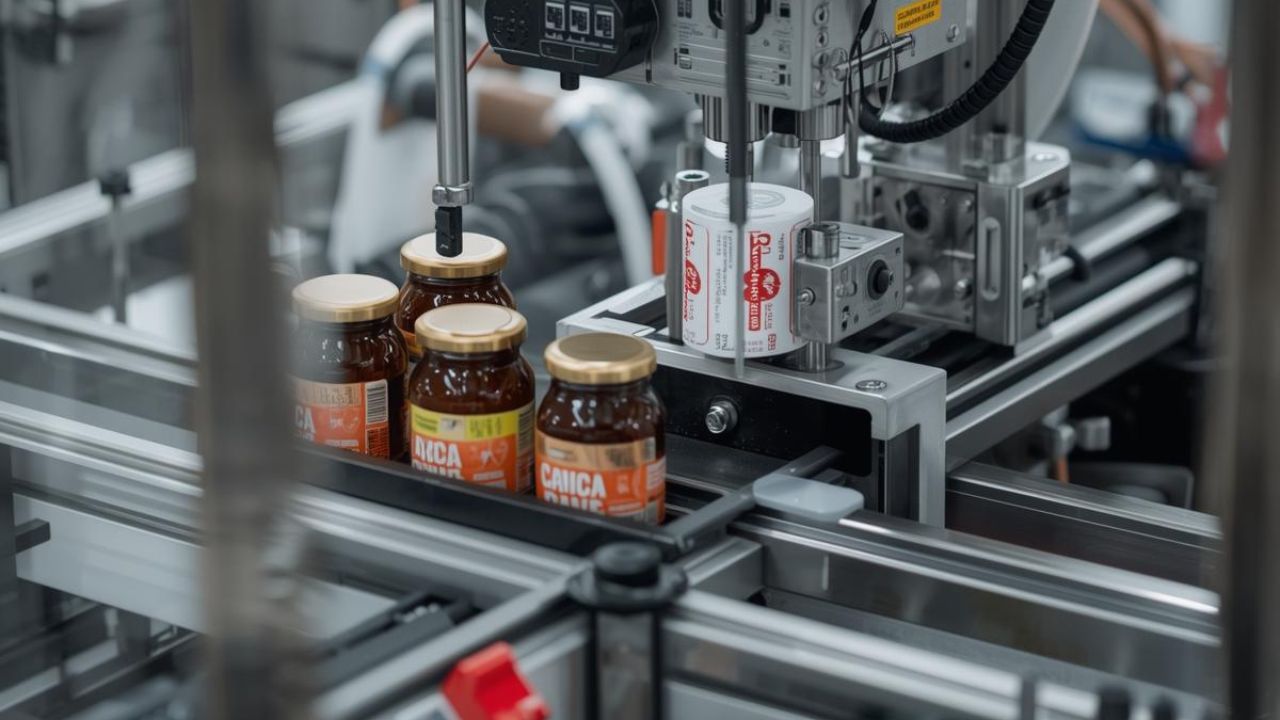
Automated labeling machines operate at speeds from 50 to 1,200 containers per minute with placement accuracy ranging from ±0.2 mm (AI vision systems) to ±2–3 mm (manual inspection). Label-related defects account for 15–20% of packaging line stoppages in the beverage industry. The difference between a 3.2% defect rate (wrong material) and a 0.15% defect rate (correct material + vision) equals 30,500 fewer defective units per million labels.
Understanding sticker types labeling machines, from adhesive materials stickers to application-specific stickers, directly impacts production efficiency across food, pharmaceutical, supplement, and chemical manufacturing.
This guide explains how to select labeling machine stickers that minimize defects and maximize line efficiency.
Key Takeaways
Material selection hierarchy: Environment narrows options first; substrate determines adhesive second; cost selects within acceptable choices last.
Vision multiplies performance: AI vision reduces defects 90%+ but only if materials behave predictably, correct material + vision achieves 0.15% vs. 3.2% without.
Total cost includes defects: $0.02/label difference minor vs. 3% defects = 30,000 units/million; choose on total ownership (material + waste + downtime + chargebacks).
What Are Sticker Types For Labeling Machines?
Sticker types for labeling machines are pressure-sensitive labels engineered for automated application at speeds from 50 to 1,200 containers per minute. At these velocities, even minor material inconsistencies cause defects. Label-related failures account for 15–20% of all packaging line stoppages in the beverage industry.
What Makes A Sticker Suitable For A Labeling Machine?
A machine-suitable sticker requires five critical attributes: consistent facestock behavior, predictable adhesive performance, controlled liner release, print method compatibility, and environmental stability. Facestock determines conformability to container and jar packaging surfaces. Adhesive controls bond strength. Liner release affects dispensing reliability. Placement accuracy ranges from ±0.2 mm with advanced AI vision to ±2–3 mm without guidance.
Why Do Material, Adhesive, And Application Need To Match?
Material and adhesive must be selected as a system. A polyester facestock with removable adhesive fails on frozen food, requiring freezer-grade bond strength. Label defect rates vary from 1.9% on flat bottles to 7.4% on metallic containers with manual inspection. Advanced AI vision systems reduce defect rates by over 90%, but only if label material behaves predictably.
Sticker Features That Affect Labeling Accuracy And Speed
What Materials Are Most Common In Stickers For Labeling Machines?
Seven material families dominate: paper (coated/uncoated), polypropylene (BOPP), polyethylene, polyester (PET), vinyl (PVC), metallic foil, and bio-based films (PLA). Paper offers the lowest cost but poor moisture resistance. BOPP provides optimal performance-cost balance for mainstream applications. Polyester delivers exceptional durability for pharmaceutical/industrial use.
What Are The Main Sticker Materials Used In Labeling Machines?
Paper (Uncoated): Most economical (10/10 cost) with excellent printability (9/10) but poor moisture resistance (2/10). Suitable only for dry indoor retail.
Paper (Coated): Improved moisture resistance (4/10) while maintaining high printability (9/10). Workhorse for general retail food in ambient storage.
BOPP (Polypropylene): Dominant for beverage/food/personal care. Excellent moisture resistance (8/10), flexibility (9/10), and best cost-performance balance (7/10). Works with vertical form fill seal systems.
Polyester (PET): Exceptional heat resistance (150°C+), chemical resistance (9/10), abrasion resistance (9/10). Standard for pharmaceutical sterilization, industrial equipment, and electronics.
Vinyl (PVC): Highly flexible (9/10) and UV-resistant (9/10). Standard for outdoor applications, vehicle identification, and chemical containers.
How Do Sticker Materials Differ In Labeling Applications?
Material Performance Comparison
Material
Moisture
Temp.
Flexibility
Printability
Cost
Recyclability
Paper (Uncoated)
2
4
6
9
10
8
Paper (Coated)
4
5
5
9
8
7
BOPP
8
7
9
8
7
5
Polyester (PET)
9
9
4
8
5
4
Vinyl (PVC)
9
8
9
7
6
2
PLA
5
5
6
7
6
9
Scores: 1 = Poor, 10 = Excellent
What Should You Know About Material Tradeoffs Before Choosing?
Frozen food labels fail from adhesive crystallization, specify freezer-grade adhesive regardless of facestock. Outdoor labels require vinyl or polyester for UV resistance. Pharmaceutical labels need thermal transfer on polyester for multi-year legibility meeting HACCP compliance. BOPP dominates food/beverage because most applications operate in ambient or refrigerated (not frozen) temperatures.
What Adhesive Types Are Used In Stickers For Labeling Machines?
What Are The Main Adhesive Types Used For Labeling Machine Stickers?
Permanent Acrylic: Industry standard with excellent UV/oxidation resistance. Wide temperature range (-20°C to +80°C). Superior long-term stability.
Rubber-Based: Higher initial tack than acrylics. Better for low-energy PE/PP surfaces. Poorer UV/temperature tolerance.
Freezer-Grade Acrylic: Maintains tack at -40°C using plasticizers. Standard adhesives crystallize at freezing, causing delamination.
High-Temperature: Survives 200°C+ sterilization. Standard acrylics fail above 80°C.
Wet-Strength Acrylic: Resists condensation, ice bath immersion, sustained humidity. Critical for beverage bottles and refrigerated packaging.
Removable Adhesive: Peels cleanly without residue. Used for promotional stickers, price tags, and temporary labels.
How Do Adhesive Families Differ In Practice?
Temperature tolerance separates families most. Standard acrylics crystallize at freezing; freezer-grade remains tacky to -40°C. High-temp survives 200°C+ where standard acrylics liquefy. Low-energy plastics (PE/PP) resist standard adhesives, require aggressive rubber-based or high-tack formulations. Acrylic resists yellowing for years; rubber-based deteriorates in outdoor environments within months.
How Do Adhesives Differ By Surface And Environment?
Adhesive and Material Matching by Environment
Application
Material
Adhesive
Key Consideration
Dry Retail
Coated Paper
Permanent Acrylic
Cost-effective
Beverage (Wet/Chilled)
BOPP
Wet-Strength Acrylic
Resists condensation
Frozen Food
BOPP/Polyester
Freezer-Grade Acrylic
Bonds at -40°C
Pharmaceutical
Polyester
Permanent Acrylic
Autoclave resistant
Industrial/Chemical
Polyester
Aggressive Acrylic
Chemical resistant
Outdoor/UV
Vinyl
UV-Resistant Acrylic
No yellowing
Promotional
Paper/BOPP
Removable Acrylic
Clean removal
What Should You Watch For When Matching Adhesives To Real Packaging Conditions?
Low-energy plastics: PE/PP containers (surface energy <38 dynes/cm) require high-tack formulations. Standard adhesives delaminate within days.
Cold application: Labels applied to pre-chilled substrates need freezer-grade adhesives. Standard adhesives won't bond below 10°C.
What Applications Use Different Sticker Types In Labeling Machines?
Sticker Types by Application
Application
Material
Adhesive
Priority
Speed (cpm)
Food/Beverage (Ambient)
Coated Paper, BOPP
Permanent Acrylic
Cost, printability
200–1,000
Food/Beverage (Refrigerated)
BOPP
Wet-Strength Acrylic
Condensation resistance
200–1,200
Frozen Food
BOPP, Polyester
Freezer-Grade Acrylic
-40°C bond
100–800
Pharmaceutical
Polyester
Permanent Acrylic
Sterilization
50–600
Logistics/Shipping
Paper, Thermal Transfer
Permanent Acrylic
Barcode readability
20–200
Industrial/Chemical
Polyester, Vinyl
Aggressive Acrylic
Chemical resistance
50–400
Why Do End-Use Requirements Change the Best Sticker Choice?
Pharmaceutical labels must withstand autoclave sterilization (121°C for 20+ minutes), only polyester survives. GS1 barcode compliance mandates ≥85% first-pass scan rates with quiet zones ≥10x narrowest bar width. Products with 2+ year shelf life require UV-stable, non-yellowing acrylic on polyester or BOPP.
How Do You Match Sticker Types To Packaging Surfaces?
What Packaging Surfaces Create The Biggest Labeling Challenges?
Square/flat bottles (1.9% defect rate): Easiest surface. Standard materials work well.
Oval/irregular (5.6% defect): Need highly flexible materials (vinyl: 9/10) and slower speeds.
Transparent containers (6.1% defect): Require backlighting or structured light for vision inspection.
Metallic/reflective (7.4% defect): Need polarized lighting to eliminate specular reflection.
Surface-Specific Matching Rules
Glass: Standard permanent acrylic works; watch for condensation in beverage applications
PET (transparent): Standard acrylic bonds well; vision needs backlighting
PE/PP (low-energy): High-tack adhesive REQUIRED; standard adhesives fail
Metal: Polarized lighting eliminates reflection
Flexible packaging: Front center achieves 92–96% scan reliability vs. 45–52% on seals from horizontal flow wrapping systems
Textured: High-tack penetrates irregularities
How Do Sticker Constructions Affect Labeling Machine Performance?
Construction details, roll format, core size, liner release, and dimensional consistency affect dispensing reliability more than material chemistry. High-speed systems (600+ cpm) require tighter tolerances. Core wobble, uneven winding, and inconsistent release cause errors that vision systems cannot correct.
Construction Details That Affect Machine Compatibility
Roll format: Verify outer diameter and core size (typically 76mm) fit unwind stations
Why Do Construction Details Matter More On High-Speed Lines?
At 1,000 bottles/min, a 0.5-second delay creates 8.3 misplaced labels before intervention. High-speed lines (600+ cpm) require ±0.2–0.3 mm accuracy, achievable only with AI vision and consistent rolls. Inconsistent liner release creates "stutter," causing cumulative drift.
How Do You Choose The Right Sticker Type For A Labeling Machine?
Selection follows hierarchy: environment narrows material options, substrate determines adhesive, durability sets minimums, budget selects within acceptable choices.
What Problems Can The Wrong Sticker Type Cause In Labeling Machines?
Common Problems Caused By Poor Sticker Selection
Wrinkling: Rigid facestock on curves (5.6% defect on oval bottles) → Switch to BOPP (9/10 flexibility)
Lifting/flagging: Standard adhesive on PE/PP (3.2% defect on glass) → Upgrade to high-tack
Poor barcode readability: Barcode over seals (45–52% scan) vs. front center (92–96%)
Peeling in cold: Standard adhesive crystallizes → Freezer-grade bonds to -40°C
Misfeeds/jams: Inconsistent release or dimensional variation causes stoppages on high-speed lines
Why Do These Problems Usually Start At The Selection Stage?
Material errors lock in failures before first label applies. A craft brewery reduced defects from 4.8% to 0.18% by switching to wet-strength acrylic + vision. A snack manufacturer improved scan rates from 79% to 97% by moving barcodes from fin seal to front center. Both required redesign, not machine adjustment.
How Can You Test Sticker Materials and Adhesives Before Full Production?
Main Pre-Production Tests To Run
Adhesion testing: Measure peel force on actual production substrates
Line-speed trials: Run at target speed for 30+ minutes; monitor defect rates
Environmental conditioning: 90% RH at 35°C for 48 hours; freeze-thaw cycles for frozen applications
Barcode verification: Confirm Grade B minimum (ISO standards) after conditioning
What Should A Good Sticker Qualification Process Confirm?
Application reliability: Labels dispense at speed without jams (<0.5% defects).
Print quality: Barcodes achieve Grade B minimum after distribution simulation.
Durability: Labels survive lifecycle with <0.1% failure rate.
What Should You Remember When Comparing Sticker Types For Labeling Machines?
Best Material Choices For Common Labeling Needs
Need
Material
Rationale
Cost-Performance
Standard (Dry)
Coated Paper
Printability (9/10) + cost (8/10)
Best for controlled environments
Moisture Resistance
BOPP
Moisture (8/10) + cost (7/10)
Industry standard food/beverage
Premium Appearance
Clear BOPP/Polyester
Seamless visual appeal
15–25% premium
Flexibility
BOPP or Vinyl
Flexibility (9/10)
Vinyl poor recyclability (2/10)
Extreme Durability
Polyester
Chemical/temp/abrasion (9/10)
Justified by harsh demands
Best Adhesive Choices For Common Bonding Needs
Need
Adhesive
Characteristic
Applications
Long-Term
Permanent Acrylic
Non-yellowing, 2+ years
Food/beverage, pharmaceutical
Removable
Removable Acrylic
Clean peel
Promotional, price tags
Cold-Chain
Freezer-Grade
Bonds to -40°C
Frozen food, ice cream
Low-Energy
High-Tack
Bonds <38 dynes/cm
PE/PP containers
High-Temp
High-Temp Acrylic
Survives 200°C+
Autoclave, industrial
How Can You Balance Application Performance, Durability, And Cost?
Optimal choice emerges from five factors: product environment, packaging substrate, line speed/accuracy (50–200 cpm vs. 600+ cpm), regulatory compliance (GS1 ≥85% scan, FDA labeling), and lifecycle duration (<6 months vs. 2+ years).
BOPP with permanent acrylic solves 80% of food/beverage applications (moisture: 8/10, flexibility: 9/10, cost: 7/10). Polyester with specialty adhesives handles demanding 20% (frozen, sterilized, industrial).
Total cost reality: $0.02/label difference × 1,000,000 = $20,000, but 3.2% defect rate produces 32,000 defective units vs. 0.15% = 1,500 units. The difference of 30,500 fewer defects far exceeds the material premium in rework, chargebacks, and brand damage.
Choose based on total cost of ownership (material + waste + downtime + defects), not unit price. Pre-production testing prevents costly errors locked in at the design stage.
Ready to specify the right labeling solution? Contact Wolf Packing Machine Company for expert guidance on automated labeling equipment designed for precision and reliability.
At Wolf-Packing Machine Company, we believe that the key to success is a commitment to excellence in everything we do. That’s why we use only the highest quality materials and the most advanced technology to create packaging machines that are efficient, reliable, and cost-effective.
What’s new at Wolf Packing?
// <#?php
// /**
// * Exclude Current Posts from the query
// */
// add_action( 'pre_get_posts', function ( $query ) {
// // not an admin page and not the main query
// if ( ! is_admin() && ! $query->is_main_query() ) {
// $query->set( 'post__not_in', array( get_the_ID() ) );
// }
// } );
// ?>
From design through testing, installation and beyond, we work tirelessly to ensure your equipment is running at peak performance and maximizing your application. To learn more about our machines, reach out to set up a free consultation with our in-house experts.
From weigh filling, bagging, wrapping and conveying to capping, labeling, cartoning, case/tray forming, packing and palletizing, we offer packaging solutions for a diverse array of applications.