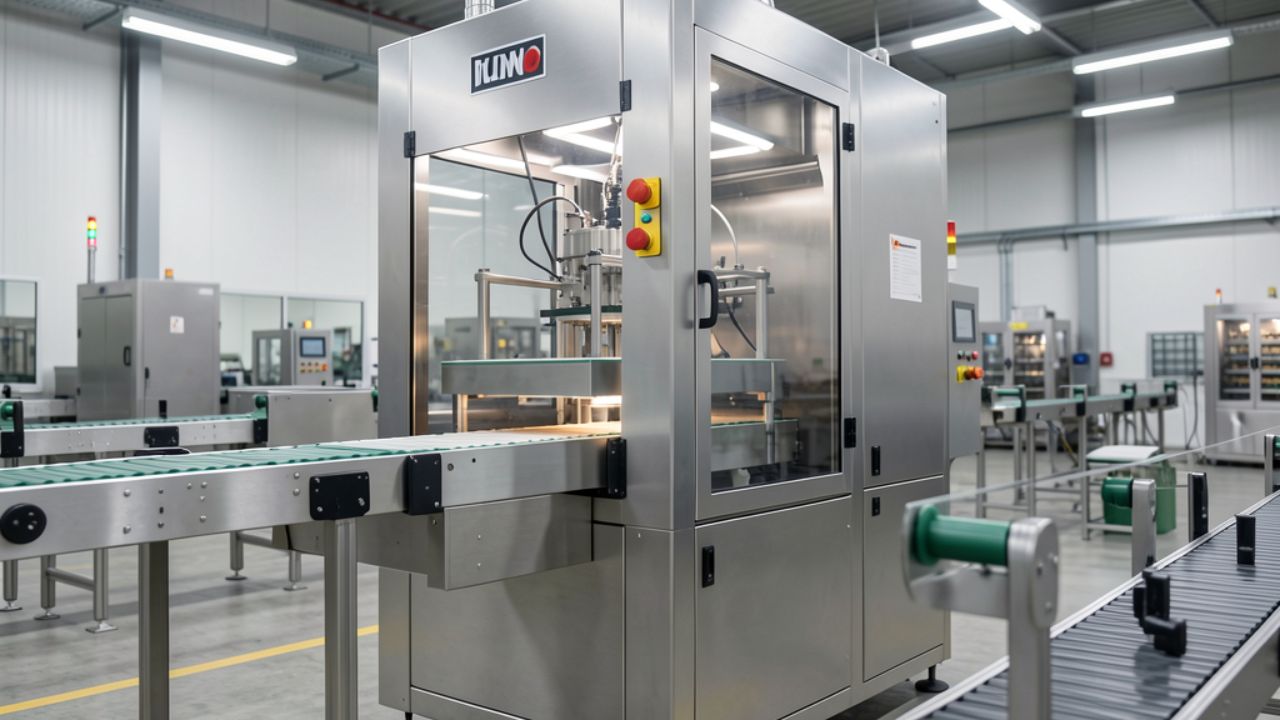
Understanding multihead weigher ROI requires analyzing how precision weighing technology reduces product giveaway and operational costs. Food manufacturers achieve measurable returns through decreased material waste, improved labor efficiency, and increased throughput. The decision to upgrade from volumetric or linear weighing equipment depends on calculating the financial impact of reduced giveaway cost against capital investment.
Manufacturers typically achieve payback periods between 18 and 36 months. Premium product operations packaging high-value items like nuts, confectionery, or specialty ingredients often see returns within 15 to 18 months due to significant weight accuracy savings.
Key Takeaways
- Multihead weighers deliver ±0.2% to ±1.0% accuracy compared to ±1-3% for volumetric fillers, reducing annual waste costs from $27,375-$54,750 to $1,825-$9,125
- Premium snack manufacturers upgrading to multihead systems save $8,000 monthly through giveaway reduction, labor efficiency, and throughput gains, achieving 22.5-month payback periods
- Capital investment ranges from $6,000 for budget systems to $150,000+ for enterprise solutions, with pricing tiers matching production volume and product value requirements
- Hybrid systems combining gravimetric accuracy with volumetric speed cost $15,000-$35,000 and deliver ±0.2-0.5% accuracy at 40-300 packs per minute
- The global multihead weighers market will grow from $2.27 billion in 2026 to $3.80 billion by 2036, expanding at 5.3% CAGR as manufacturers prioritize automation and waste reduction
What Is a Multihead Weigher and How Does It Work?
A multihead weigher uses multiple weighing heads working simultaneously to achieve precise portioning at high speeds. The system employs permutation and combination algorithms that select optimal weight combinations from available hoppers in milliseconds. This computational approach consistently delivers target weights while minimizing material waste across thousands of daily packaging cycles.
The technology differs from volumetric filling by measuring actual weight rather than volume, eliminating errors caused by density variations in granular or irregularly shaped products. The 99.5% accuracy capability makes multihead weighers valuable for premium snack foods, confectionery, and frozen products where material costs justify precision investment.
Key Features and Components
Industrial multihead weighers typically feature 10-14 weighing heads, though configurations range from 8 to 32 heads. Each head contains precision load cells and individual hoppers with volumes from 0.1 to 7.5 liters. The modular design allows manufacturers to customize configurations based on product characteristics, target weights, and production speed requirements.
Modern systems integrate programmable logic controllers storing multiple product recipes and enabling rapid changeovers between SKUs. Stainless steel construction meets food-grade manufacturing standards while ensuring durability. Advanced models include automated calibration and integration capabilities with upstream feeding and downstream packaging machinery.
Benefits Over Other Weighing Systems
Multihead weighers deliver ±0.2% to ±1.0% accuracy compared to ±1-3% for volumetric fillers. This precision advantage translates directly to reduced material waste and lower giveaway costs. Speed capabilities range from 30 to 300 packs per minute, depending on product characteristics and system configuration.
Volumetric fillers maintain speeds of 50-400 per minute but sacrifice accuracy for throughput. The fundamental difference lies in measurement methodology: multihead systems weigh each portion while volumetric systems dispense based on predetermined volumes. This distinction becomes critical when packaging products with variable density or irregular shapes.
Is Reducing Giveaways Important in Packaging?
Reducing giveaways directly impacts profit margins by eliminating unnecessary material costs in every package produced. Manufacturers operating at high volumes lose thousands annually when filling systems consistently overfill packages. These losses multiply across production lines running multiple shifts, making precision weighing equipment a strategic investment.
Regulatory compliance requirements mandate minimum fill weights to protect consumers while allowing reasonable variation tolerances. Manufacturers must consistently meet declared weights without significant overfilling to maximize profitability. Precision weighing systems enable tighter control, reducing both compliance risk and material waste.
Definition and Impact of Giveaway
Product giveaway refers to excess material packaged beyond the target weight. This overfilling occurs when weighing systems lack sufficient accuracy or when manufacturers set conservative fill targets to avoid underfilling penalties. Every gram of excess product represents an unrecoverable cost that erodes profit margins without adding consumer value.
The cumulative impact becomes substantial across high-volume production. A 2% giveaway rate on a $0.50 product wastes $100,000 in materials per 10 million units. This demonstrates why solving fill weight problems represents a critical financial priority.
Cost Implications of Product Waste
Volumetric filling systems generate daily waste costs of $75-$150 compared to $5-$25 for gravimetric systems when processing 10,000 units at $0.50 per unit. Annual waste costs for volumetric operations reach $27,375-$54,750 versus $1,825-$9,125 for gravimetric alternatives, demonstrating the long-term financial advantage despite higher upfront costs.
The cost differential increases when packaging premium products with higher material costs. Specialty ingredients, organic certifications, or imported components can increase base costs to $2-$5 per unit. At these price points, minor accuracy improvements generate substantial annual savings that justify faster equipment upgrades.
How Accuracy Affects Giveaway
Advanced weighing systems typically yield 2-5% savings compared to basic volumetric or linear alternatives. This improvement results from real-time weight measurement and automatic adjustment capabilities, compensating for product density variations. Precision load cells detect weight differences as small as 0.1 grams, enabling extremely tight tolerances.
Process efficiency improvements extend beyond direct material savings to include reduced quality control requirements and decreased reject rates. Consistent fill weights minimize manual weight checks and reduce packages failing compliance inspections.
How Does a Multihead Weigher Compare to Other Filling Technologies?
Multihead weighers occupy a performance category between basic linear scales and sophisticated hybrid systems, delivering superior accuracy compared to volumetric filling while maintaining higher throughput than traditional gravimetric systems. Understanding these distinctions helps manufacturers select equipment matching production requirements and budget constraints.
Equipment selection requires balancing accuracy requirements, production speed, and capital investment capacity. Manufacturers packaging low-margin commodities may prioritize speed over precision, while premium product operations justify higher costs through reduced giveaway. Different weighers and fillers serve specific market segments based on their performance and financial trade-offs.
Volumetric Vs. Gravimetric Filling Accuracy
Volumetric fillers dispense products based on predetermined volumes using fixed displacement mechanisms. These systems achieve ±1.0% to ±3.0% accuracy when handling products with consistent density. The measurement basis relies on space occupied rather than actual mass, making volumetric systems sensitive to density variations from granular materials, seasonal ingredient changes, or moisture content fluctuations.
Gravimetric fillers measure and dispense based on actual weight using precision load cells and real-time feedback systems, delivering ±0.1-0.5% accuracy while automatically adjusting for material property changes. Weight-based measurement eliminates errors from density variations, making gravimetric systems ideal for variable-density products like nuts, coffee beans, or irregularly shaped confectionery.
Advantages and Limitations of Multihead Weighers
Multihead weighers require skilled operators capable of understanding calibration procedures and troubleshooting performance issues. The learning curve for new operators typically spans several weeks as they master recipe programming and system optimization. Manufacturers must account for training time when transitioning from simpler weighing systems.
Complex calibration requirements present ongoing operational considerations affecting production uptime and consistency. Each weighing head requires periodic calibration to maintain accuracy specifications. Despite these requirements, the combination of speed and precision makes multihead weighers the preferred choice for food manufacturers prioritizing throughput and reduced giveaway cost.
Role of Hybrid Systems in Precision and Speed
Hybrid systems integrate gravimetric accuracy with volumetric feeding mechanisms. This two-stage approach uses fast volumetric dispensing for bulk filling followed by precision gravimetric fine-tuning to achieve target weights, delivering ±0.2-0.5% accuracy at 40 to 300 packs per minute.
Hybrid systems require skilled technical support for installation, programming, and maintenance. Integration complexity with existing production lines demands careful planning and potential modifications to conveyor systems and control interfaces. Equipment investment for hybrid volumetric-gravimetric systems ranges from $15,000 to $35,000, while premium integrated configurations exceed $60,000.
What Are the Financial Benefits of Using a Multihead Weigher?
The financial benefits of multihead weigher implementation extend across multiple operational categories beyond direct material savings. Manufacturers realize returns through reduced labor requirements, increased throughput, and improved quality consistency that reduces customer complaints and returns.
Financial analysis must account for both tangible savings in materials and labor, plus intangible benefits like enhanced brand reputation and regulatory compliance. Calculating your payback period requires systematic evaluation of all cost reduction opportunities and revenue enhancement possibilities. This comprehensive approach reveals true multihead weigher ROI potential for operations at various production volumes.
Giveaway Reduction and Material Cost Savings
A premium snack manufacturer upgrading from a linear weigher to a multihead system saves $4,500 monthly through giveaway reduction. The improvement comes from decreasing overfill rates from 3% to 0.5% while maintaining compliance with declared net weight requirements. Over 12 months, these material savings total $54,000 against typical equipment investments of $35,000 to $180,000.
The calculation becomes more favorable when processing high-value ingredients where material costs exceed $3-$5 per pound. Specialty nuts, organic grains, or imported confectionery ingredients magnify the financial impact of each percentage point improvement in fill weight accuracy. Manufacturers' packaging premium products often achieve faster payback periods due to higher per-unit savings.
Labor Efficiency and Productivity Gains
Automated operation reduces manual monitoring costs by $1,500 monthly compared to semi-automatic or manual weighing processes. Modern multihead weighers operate with minimal supervision once configured, eliminating dedicated operators to monitor fill weights and make constant adjustments. Labor savings accumulate to $18,000 annually while reducing human error, causing compliance issues.
Additional productivity gains emerge from faster changeover times between products or package sizes. Programmable recipe storage enables operators to switch between SKUs in minutes rather than the hours required for manual recalibration. These efficiency improvements increase overall equipment effectiveness and allow more product variety without sacrificing throughput or accuracy.
Throughput Improvements and Revenue Impact
A 35% increase in packaging speed generates an additional $2,000 in monthly value for manufacturers operating near capacity constraints. The throughput improvement allows existing production lines to fulfill larger orders without capital-intensive facility expansion or additional shift scheduling. Over annual production cycles, this increased capacity can translate to $24,000 in additional revenue or avoided costs from outsourced contract packaging.
Total monthly savings of $8,000 against a $180,000 equipment cost yield a 22.5-month breakeven period. This payback timeline falls within the 18-36 month range typical for multihead weigher installations. The financial analysis demonstrates how complete packaging line integration creates synergistic benefits, accelerating return on investment timelines.
How Do Buyer Motivations and Decision Criteria Influence ROI Calculations?
Buyer motivations fundamentally shape how organizations evaluate multihead weigher investments and structure financial justification for capital expenditures. Decision makers prioritize different performance metrics based on operational challenges, competitive pressures, and strategic growth objectives.
The evaluation process involves multiple stakeholders across operations, finance, quality assurance, and maintenance departments. Each group brings distinct priorities influencing final purchasing decisions. Successful equipment investments address the highest-priority needs while demonstrating acceptable performance across all evaluation criteria.
Cost Reduction and Payback Expectations
Buyers conduct rigorous cost vs. benefit analyses focusing on payback periods as the primary financial metric. Manufacturing organizations typically require payback periods under 36 months for automation investments, with many setting 24-month targets. Equipment evaluation cycles typically take 2-4 months as finance teams validate savings assumptions and operations personnel assess integration requirements.
Financial scrutiny intensifies for small and medium enterprises where capital constraints limit investment capacity and risk tolerance. These organizations often require more conservative ROI projections with sensitivity analysis showing positive returns under multiple scenarios. Flexible financing options and trade-in programs can address capital availability concerns while maintaining acceptable project economics.
Importance of Support, Quality, and Integration
Multiple stakeholders participate in purchasing decisions beyond operations managers, including plant engineers, quality directors, and maintenance supervisors. Engineering teams evaluate integration complexity with existing production lines and assess whether the current infrastructure can support new equipment. Quality personnel verify proposed systems meet accuracy specifications and regulatory compliance standards for their specific product categories.
Evaluation includes initial capital investment plus total cost of ownership calculations spanning 5-10 year equipment lifecycles. Maintenance costs, spare parts availability, energy consumption, and expected downtime frequency factor into long-term ownership economics.
Common Purchase Objections and Solutions
High initial capital investment creates financial barriers, particularly for smaller manufacturers with limited equipment budgets or constrained cash flow. Standard multihead weigher systems range from $25,000 to $150,000, depending on head count, speed capabilities, and automation features. These upfront costs require clear ROI justification showing material savings and productivity gains, recovering investment within acceptable timeframes.
Integration complexity with existing production lines generates concerns about installation timelines, facility modifications, and control system compatibility. Potential downtime during installation and production disruption fears during equipment transition can delay purchase decisions even when financial justification appears strong. Manufacturers address these concerns through phased implementation approaches, off-shift installation scheduling, and comprehensive operator training programs.
What Factors Affect the Return on Investment for Multihead Weighers?
Return on investment calculations depend on three primary factor categories: initial capital costs, ongoing operational savings, and production characteristics determining savings magnitude. Each factor influences the payback period differently based on manufacturer-specific circumstances and market conditions.
Financial analysis should incorporate sensitivity testing showing how ROI changes if assumptions vary from base case projections. This analytical rigor helps decision makers understand investment risks and identify scenarios where equipment upgrades deliver maximum value.
Capital Costs and Pricing Tiers
Large enterprises invest $25,000 to $150,000+ per system for high-capacity multihead weighers with advanced automation and integration capabilities. These premium configurations include features like automatic calibration, remote diagnostics, and seamless connection with enterprise resource planning systems.
Medium enterprises invest $10,000 to $50,000 per system for mid-range configurations, balancing performance and affordability. Small and medium enterprises invest $6,000 to $25,000 per system for entry-level multihead weighers or budget linear scale alternatives. Budget multihead weighers cost $6,000-$12,000 compared to premium systems exceeding $35,000, while hybrid systems range from $15,000-$35,000 versus premium integrated systems above $60,000.
Operational Savings and Payback Periods
Multihead weigher payback periods range from 18 to 36 months, depending on product value, production volume, and baseline giveaway rates. Operations packaging high-value products achieve faster payback through larger per-unit savings from reduced waste. Premium products can achieve payback in 15 to 18 months when material costs exceed $3 per pound, and production volumes surpass 50,000 units weekly.
Lower-value commodity products require higher production volumes to generate sufficient annual savings for acceptable payback periods. A manufacturer packaging $0.30 per pound products needs significantly higher throughput to match the annual savings achieved by premium product operations.
Product Type and Production Volume Considerations
Product characteristics directly influence achievable accuracy levels and corresponding giveaway reduction potential when upgrading to multihead weighers. Free-flowing granular products like rice, nuts, or candy pieces achieve the best accuracy results with standard configurations. Sticky, fragile, or irregularly shaped items may require specialized hoppers, gentle handling features, or slower operational speeds, affecting throughput and ROI calculations.
Production volume determines the total annual savings magnitude even when percentage improvements remain consistent across different operational scales. A facility producing 100,000 units weekly generates ten times the annual savings from identical accuracy improvements compared to operations producing 10,000 units weekly. This volume dependency explains why high-volume manufacturers justify premium equipment investments while smaller operations may select budget configurations.
How to Calculate Savings from Reduced Giveaway Using a Multihead Weigher?
Calculating savings from reduced giveaway requires systematic data collection, establishing current performance baselines, and realistic projections for post-upgrade performance. Manufacturers must measure existing fill weight distributions, identify root causes of excessive giveaway, and quantify opportunities for improvement through precision weighing technology.
The calculation process incorporates multiple benefit categories beyond direct material savings to capture the full economic value of accuracy improvements. Labor efficiency gains, quality improvement benefits, and throughput enhancements contribute additional financial returns, strengthening investment justification.
Identifying Giveaway Baselines
Baseline giveaway measurement requires statistical sampling of current fill weights across representative production runs to establish actual performance distributions. Manufacturers should collect a minimum of 100-unit samples across different shifts, operators, and product batches to account for normal variation. Weight data analysis reveals average overfill percentages, standard deviation ranges, and underfill incident frequency, creating compliance risks.
Current volumetric or linear weighing systems typically produce 2-4% average giveaway rates with wider variation ranges than precision multihead alternatives. Identifying these baseline metrics enables accurate calculation of material waste costs and savings potential from equipment upgrades. The installation and optimization of multihead systems requires careful baseline documentation to verify projected improvements after implementation.
Estimating Material and Labor Savings
Material savings calculations multiply daily production volume by unit material cost and giveaway reduction percentage to determine daily waste elimination value. A facility producing 50,000 units daily at $0.40 material cost per unit with 3% baseline giveaway currently wastes $600 daily. Reducing giveaway to 0.5% through multihead weigher implementation saves $500 daily or $182,500 annually.
Labor savings emerge from reduced manual monitoring requirements, fewer quality control interventions, and decreased time spent adjusting equipment during production runs. Automated weighing systems eliminate dedicated scale operators while reducing supervisor time spent troubleshooting fill weight problems. These labor efficiency gains typically contribute $12,000-$24,000 in annual savings, depending on labor rates and staffing models.
Incorporating Throughput and Quality Gains
Throughput improvements from faster weighing cycles increase effective production capacity without additional capital investment in facility expansion or equipment duplication. A 30% speed increase on a line producing 100 units per minute adds 30 units per minute of capacity. This additional throughput generates value through increased revenue from higher sales volume or avoided costs from reduced contract packaging requirements.
Quality gains from consistent fill weights reduce customer complaints, product returns, and regulatory compliance risks, carrying both direct costs and brand reputation consequences. Quantifying these benefits requires estimating current quality issue costs and projecting reduction percentages from improved accuracy.
Multihead Weigher ROI and Savings Synthesis
The global multihead weighers market demonstrates a strong growth trajectory supporting continued technology adoption across food manufacturing operations. Market valuation stands at $2.27 billion in 2026, with projections reaching $3.80 billion by 2036. The market is expanding at a 5.3% compound annual growth rate, driven by automation adoption and waste reduction priorities.
Regional growth patterns show the Asia-Pacific region holds 34.75% market share in 2024, with expansion expected at 6.0% to 6.4% annually. This geographic concentration reflects rapid industrialization in China and India, where rising labor costs accelerate automation investment. North American and European markets represent mature segments where manufacturers prioritize equipment upgrades to improve sustainability performance and operational efficiency.
Manufacturers evaluating multihead weigher investments should base decisions on a comprehensive financial analysis incorporating all savings categories and realistic performance assumptions. Conservative ROI modeling using verified baseline data and achievable improvement targets builds credibility with financial stakeholders. The technology delivers measurable returns through reduced giveaway cost, labor efficiency, and throughput gains that justify capital investment across diverse production scales and product categories.
Successful implementation requires matching equipment capabilities to production requirements while ensuring proper installation, calibration, and operator training. Organizations should evaluate vendor support capabilities, parts availability, and integration services when selecting equipment suppliers. Wolf-Packing Machine Company provides US-based technical support and flexible financing options that address common purchase barriers while ensuring long-term operational success.
Precision weighing technology represents a strategic investment that reduces operating costs while improving product quality and regulatory compliance performance. The combination of material savings, labor efficiency, and capacity gains creates compelling business cases for manufacturers committed to operational excellence. Calculate your specific savings potential using actual production data to determine optimal equipment configuration and implementation timing.
Stop Giving Away Product. Start Working with Wolf Packing.
Every package you overfill is money you never get back. If your current weighing system is running at 2% to 4% giveaway, you already know what that costs across a full production year. The math is straightforward. The fix is, too.
Wolf Packing Machine Company supplies American-made multihead weighers backed by US-based engineering support, flexible financing, and a trade-in program that lowers your upfront cost. Our team will run the ROI numbers with you before you commit to anything.No overseas lead times. No language barriers. No disappearing after the sale. Request a free ROI analysis today and find out exactly how fast a Wolf Packing multihead weigher or high-efficiency vffs machine pays for itself in your facility.