Bagging machine speed directly determines production capacity and profitability in packaging operations. The global bagging machines market reached USD 14.43 billion in 2025 and is projected to grow to USD 27.21 billion by 2034, driven by automation and efficiency demands. Selecting the right packaging technology requires understanding how VFFS vs HFFS systems compare against premade pouch machines across speed, cost, and operational parameters.
Production throughput varies dramatically based on product characteristics and packaging format requirements. Each technology—vertical form fill seal, horizontal form fill seal, and premade pouch systems—delivers distinct advantages in bagging machine speed and application suitability.
Key Takeaways
- VFFS machines operate at 30-120 packs per minute, while HFFS systems reach 40-200 packs per minute
- Premade pouch machines deliver 20-70 bags per minute, depending on linear or rotary configuration
- VFFS systems offer the fastest ROI at 2-3 years with lower initial investment costs
- Film selection directly affects machine compatibility, with BOPP commanding 65.58% market share
- Total cost of ownership must account for machine investment, operating costs, and material expenses
What Are the Core Functions of VFFS, HFFS, and Premade Pouch Machines?
Understanding bagging machine types requires examining how each system forms, fills, and seals packages. Each technology employs fundamentally different mechanical processes that influence speed capabilities and product compatibility.
Product flow direction and packaging sequence differentiate these systems at the core mechanical level. VFFS machines create packages vertically using gravity-assisted filling, while HFFS systems operate horizontally with lateral product placement. Premade pouch machines eliminate the forming stage, focusing exclusively on filling and sealing pre-manufactured bags.
How Does a Vertical Form Fill Seal (VFFS) Machine Operate?
VFFS machines form bags vertically from film rolls, fill them with product using gravity, and seal them in a continuous downward process. Film pulls through, forming tubes where heat seals create the bag bottom and sides before product dispenses from above. The completed package receives a top seal that simultaneously becomes the bottom seal of the next bag.
This continuous motion enables VFFS machine speed optimization ranging from 30 to 120 bags per minute. Gravity-fed products like coffee, snacks, and pet food achieve maximum throughput rates. The compact vertical footprint makes these systems ideal for facilities with limited floor space.
How Does a Horizontal Form Fill Seal (HFFS) Machine Work?
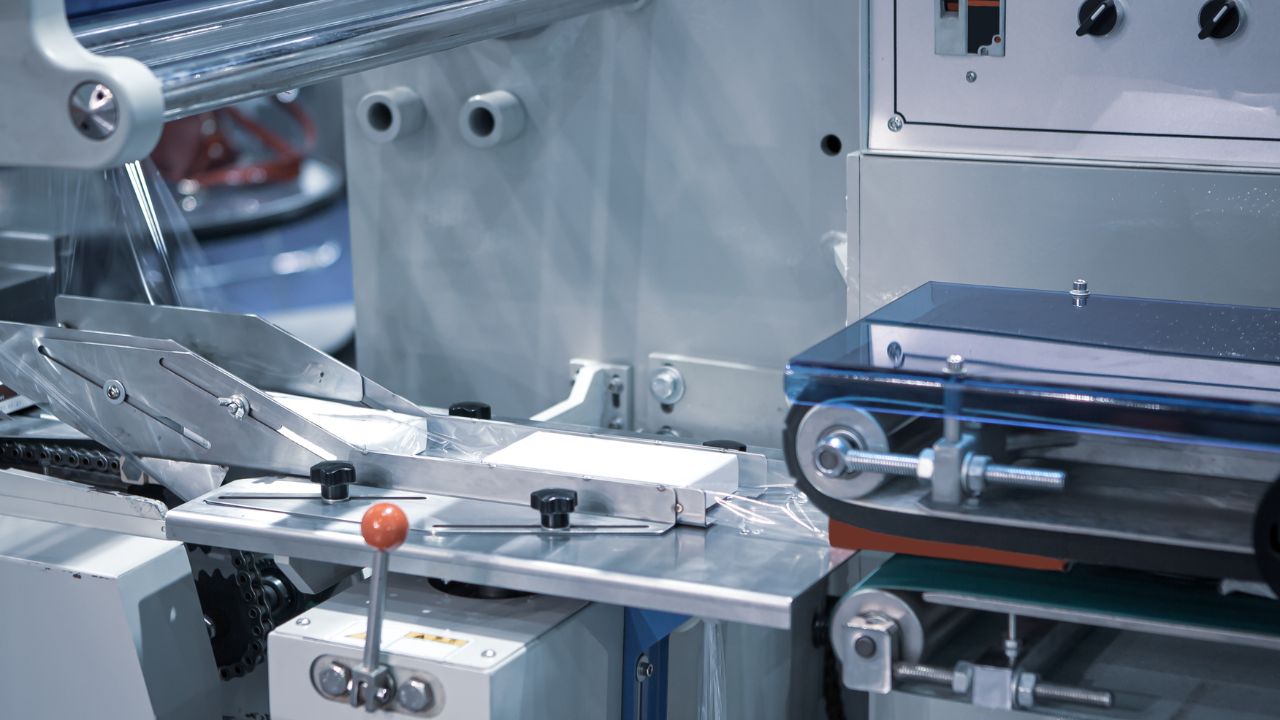
HFFS machines operate horizontally, with the product typically placed on a conveyor while the packaging film wraps around it from the side before sealing. Film unwinds horizontally and wraps beneath and around the product, creating side and end seals.
Speed ranges from 40 to 200 packs per minute for compatible solid products. Biscuits, hardware items, and pre-shaped products benefit from precise horizontal positioning. The lateral orientation provides superior retail presentation but requires significantly larger floor space compared to vertical systems.
What Is the Process for Premade Pouch Filling Machines?
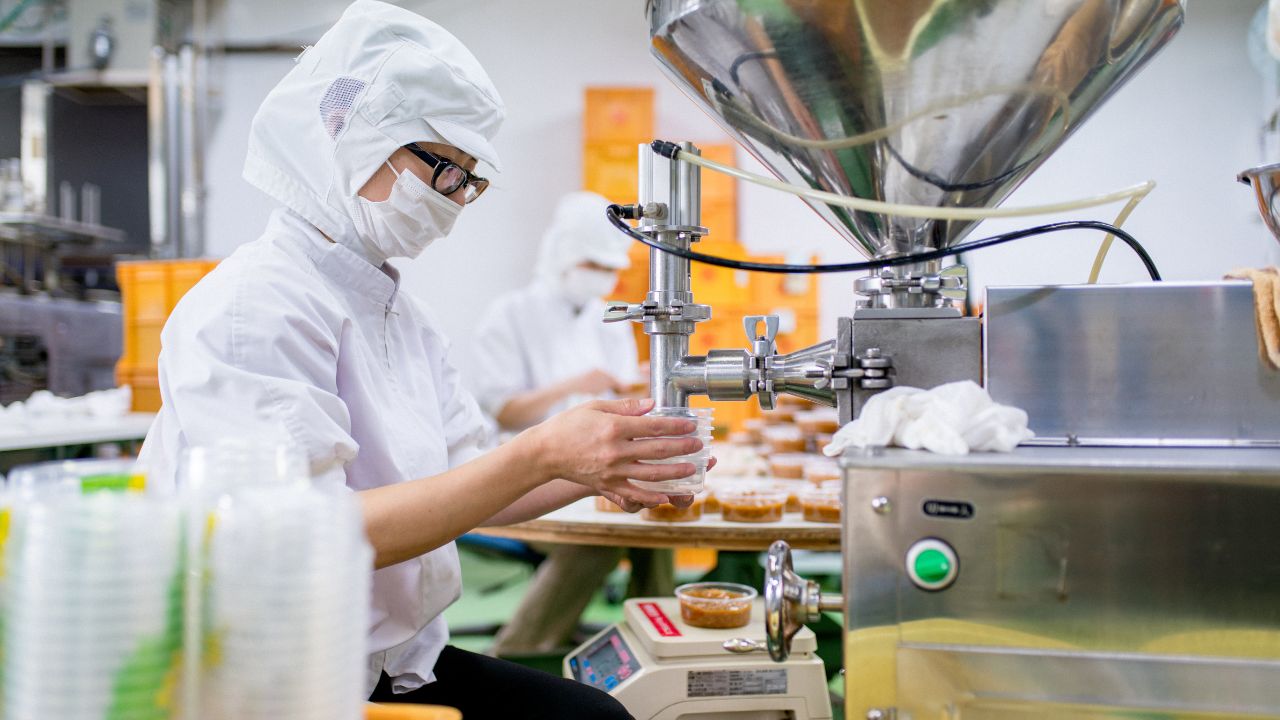
Premade pouch machines load, open, fill, and seal pre-manufactured pouches. Pouches are placed in a magazine, mechanically opened using vacuum or mechanical grippers, filled with product, and sealed. Linear configurations handle pouches sequentially through individual stations, while rotary systems move pouches through a continuous circular path.
Linear premade pouch machines operate at 20-40 bags per minute, while rotary systems achieve 30-70 bags per minute. Stand-up pouches, doypack formats, and specialty shapes require no film-forming adjustments. Changeover between different pouch styles typically completes within 15-30 minutes.
What Are the Key Differences in Speed and Suitability Among These Machines?
Bagging machine speed varies substantially based on technology type and product characteristics. VFFS systems represent 30% of the bagging machine market share, reflecting widespread adoption for free-flowing products. Production throughput comparisons must account for both maximum rated speed and sustained operational performance. Machine selection depends on matching product requirements with system capabilities. Free-flowing materials achieve optimal speeds on VFFS equipment, while solid items perform better on HFFS systems.
How Do Speeds Compare Across VFFS, HFFS, and Premade Pouch Machines?
VFFS machines operate between 30 and 120 packs per minute, depending on product and bag size. Lightweight powders and granules achieve speeds approaching 120 bags per minute on high-performance systems. Heavier products and larger bag formats typically operate at 50-80 bags per minute.
HFFS machines range from 40 to 200 packs per minute for optimized applications. Small, uniform products like candy bars reach maximum speeds exceeding 150 packs per minute. Premade pouch linear machines operate at 20-40 bags per minute, while rotary systems deliver 30-70 bags per minute based on pouch complexity and fill requirements.
Which Products Are Best Matched to Each Machine Type?
VFFS systems suit powders, granules, snacks, coffee, and pet food requiring gravity-assisted filling. Free-flowing characteristics enable consistent fill accuracy and maximum speed optimization. Products requiring precise weight control benefit from integration with multihead weighers upstream.
HFFS machines excel with solid items, trays, biscuits, and hardware requiring horizontal orientation. Delicate products maintain structural integrity throughout the horizontal wrapping process. Premade pouch machines accommodate snacks, powders, liquids, and premium pre-portioned items across diverse formats without retooling.
What Are the Advantages and Disadvantages of Each Machine?
VFFS machines offer compact footprints and lower initial investment but remain limited to free-flowing products. Systems handle powders and granules efficiently but struggle with irregularly shaped items.
HFFS machines provide superior product presentation but require significantly larger floor space. Initial investment ranges higher, and maintenance complexity increases due to additional horizontal mechanisms. Premade pouch systems deliver exceptional format flexibility but depend on pre-made pouch supply chain reliability and incur higher per-unit material costs.
How Do Cost Factors Influence the Choice of Bagging Machines?
Investment analysis extends beyond initial equipment purchase to include operating costs and total cost of ownership. Entry-level systems start below USD 10,000, while premium high-speed configurations exceed USD 120,000. Financial planning must account for film costs, maintenance requirements, and operational labor over the expected equipment lifespan. Return on investment timelines vary significantly based on production volume and operational efficiency gains. VFFS systems typically deliver ROI within 2-3 years for high-volume operations.
What Are the Initial Investment Ranges for VFFS, HFFS, and Premade Pouch Systems?
Entry-level VFFS machines range from USD 8,000 to USD 18,000 for basic configurations. Mid-range VFFS systems cost USD 18,000 to USD 35,000, while high-end models exceed USD 60,000. Advanced features like servo motors, touchscreen controls, and automated changeover capabilities increase pricing.
Entry-level HFFS machines start between USD 20,000 and USD 40,000. Mid-range HFFS systems require USD 40,000 to USD 70,000, with premium configurations ranging from USD 70,000 to over USD 120,000. Premade pouch semi-automatic systems cost USD 4,000 to USD 20,000, automatic linear models range from USD 12,000 to USD 50,000, and rotary systems span USD 30,000 to over USD 100,000.
How Do Operating and Maintenance Costs Vary?
Premade pouch filling machine changeover processes complete faster but incur higher per-unit packaging costs. Pre-manufactured pouches cost 2-4 times more than equivalent roll stock film. Labor requirements decrease due to simpler mechanical systems.
VFFS and HFFS systems consume more energy during film forming, but use less expensive roll stock materials. Maintenance costs increase proportionally with machine complexity. Preventive maintenance schedules typically require monthly inspections and quarterly component replacements.
What Role Does Total Cost of Ownership Play in Selection?
VFFS offers the fastest ROI within 2-3 years compared to other systems for high-volume operations. Lower initial investment combines with reduced material costs to accelerate payback periods. Five-year total cost of ownership typically favors VFFS for operations exceeding 50,000 units daily.
HFFS systems justify higher investment through superior product presentation and retail shelf appeal. Premium pricing potential offsets elevated operating costs for branded consumer goods. Premade pouch machines deliver the lowest total cost for flexible, low-to-medium volume production requiring frequent format changes.
How Does Packaging Film Impact Machine Performance and Product Packaging?
Film selection directly affects machine speed, seal quality, and product protection capabilities. The BOPP films market reached USD 31.51 billion in 2025 and will grow to USD 53.01 billion by 2035. Material properties determine sealing temperatures, line speeds, and barrier performance across different bagging technologies.
Machine compatibility requirements limit film choices based on sealing mechanisms and forming capabilities. Vertical form fill seal systems require films with specific heat-seal characteristics and dimensional stability.
What Are the Characteristics of OPP, BOPP, and Laminated Films?
OPP films are stretched in a single direction (uniaxially) during manufacturing. This orientation provides good clarity and tensile strength in the machine direction. Standard thickness ranges from 20 to 40 microns.
BOPP films are stretched in both machine and transverse directions, creating superior mechanical properties. Typical thickness ranges from 15 to 50 microns with exceptional clarity and stiffness. Laminated films consist of multiple layers of different materials (e.g., BOPP/PE, PET/AL/PE) bonded together for enhanced barrier performance.
How Do Film Properties Affect Machine Compatibility and Speed?
OPP has limited oxygen barrier properties and lower overall strength compared to BOPP alternatives. The material often requires coating for effective heat sealing on high-speed packaging lines.
BOPP films command 65.58% share of the polypropylene packaging films market due to superior performance characteristics. Higher stiffness enables faster machine speeds and more reliable film tracking through forming sections. Excellent printability supports vibrant graphics without compromising mechanical performance or processing speeds.
What Are the Sustainability and Cost Considerations for Each Film Type?
OPP pricing ranges from USD 1.50 to USD 2.50 per kg for budget grades. BOPP costs USD 3.00 to USD 4.50 per kg for standard grades, reflecting superior manufacturing processes. Laminated films range from USD 6.00 to USD 15.00+ per kg, depending on layer composition and barrier requirements.
BOPP delivers a higher cost than standard OPP but provides better overall value through improved efficiency. Sustainable film materials for VFFS systems include mono-material BOPP that supports single-stream recycling infrastructure. Multi-material laminated films make recycling highly complex, presenting challenges for companies pursuing circular economy goals.
What Factors Should Guide Packaging Professionals in Selecting the Right Machine?
Machine selection requires balancing production volume, product characteristics, and budget constraints against operational goals. Production requirements exceeding 50,000 units daily typically justify VFFS investment for free-flowing products. Lower volumes with multiple SKUs favor premade pouch systems offering rapid changeover capabilities.
Floor space availability and facility layout significantly influence equipment decisions beyond pure speed considerations. Packaging line automation levels determine labor requirements and operational complexity.
When Is VFFS the Optimal Choice?
VFFS systems excel for high-volume production of free-flowing powders and granules. Compact footprints conserve valuable floor space in constrained manufacturing facilities. Lower initial investment enables faster return on investment for operations scaling production capacity.
Products like coffee, snacks, pet food, and supplements achieve optimal speeds on VFFS equipment. Gravity-assisted filling ensures consistent fill accuracy without complex product handling mechanisms. Facilities producing 50,000+ units daily maximize efficiency gains from VFFS technology.
What Conditions Favor Choosing an HFFS System?
HFFS systems suit solid products requiring precise horizontal orientation during packaging. Biscuits, candy bars, hardware items, and pre-shaped products benefit from lateral wrapping. Premium retail presentation justifies higher investment for branded consumer goods competing at the shelf level.
Products exceeding 100,000 units daily with consistent dimensions achieve maximum ROI from HFFS installations. Floor space availability must accommodate horizontal machine footprints spanning 15-25 feet.
Under What Circumstances Are Premade Pouch Machines Preferred?
Premade pouch machines serve operations requiring exceptional format flexibility across multiple SKU configurations. Stand-up pouches, doypacks, and specialty shapes require no forming adjustments between production runs. Lower volume production with frequent changeovers benefits from rapid format transitions.
Premium product positioning justifies higher per-unit material costs for distinctive pouch presentations. E-commerce fulfillment and direct-to-consumer brands leverage unique pouch formats for brand differentiation. Production volumes below 30,000 units daily, with 5+ SKU variations, optimize premade pouch efficiency advantages.
How Do Industry Trends and Consumer Preferences Affect Bagging Machine Selection?
Consumer demand for sustainable packaging drives equipment and material selection decisions across all industries. 90% of consumers express a higher likelihood to purchase from brands prioritizing sustainable packaging. Environmental considerations now influence machine selection beyond traditional cost and speed parameters.
The food and beverage sector accounts for 35% of the total market share in bagging equipment. Product-specific requirements and regulatory compliance standards shape technology choices.
What Impact Does Sustainability Demand Have on Machine and Film Choices?
54% of respondents purchased products specifically for eco-friendly packaging within the past six months. Younger demographics demonstrate the highest engagement, with 59% of Millennials and 56% of Gen Z choosing sustainable packaging options. This consumer pressure accelerates the adoption of recyclable mono-material films over complex laminates.
49% of Gen Z and 47% of Millennials willingly pay premiums for eco-friendly packaging materials. Only 37% of Boomers share this willingness, revealing generational differences in sustainability prioritization. Machine investments increasingly favor equipment compatible with recyclable BOPP films over traditional multi-layer laminates.
How Does Product Type and Market Segment Influence Packaging Decisions?
The food and beverage sector accounts for 35% of the total market share in bagging machinery. Pharmaceuticals require high-barrier laminated films despite recycling challenges to ensure product integrity. Cosmetics and personal care products prioritize aesthetic presentation alongside functional protection.
Snack foods and confectionery favor VFFS systems for high-volume production efficiency. Coffee and premium supplements utilize laminated films when extended shelf life justifies additional material costs.
What Regional and Demographic Variations Affect Equipment Demand?
The Asia Pacific region held 40% market share in 2024, driven by manufacturing expansion. North American markets prioritize automation and labor reduction through advanced machine capabilities. European facilities emphasize sustainability compliance and recyclable material compatibility.
Urban consumers seek variety and premium presentation, favoring sophisticated pouch formats. Rural buyers prioritize price and convenience, supporting cost-effective VFFS packaging solutions.
What Are the Practical Considerations for Integrating Bagging Machines into Production?
Floor space requirements vary from 4 square meters for compact VFFS systems to 25+ square meters for HFFS installations. Facility layout must accommodate material staging, operator access, and maintenance clearances.
Electrical requirements range from 220V single-phase for entry-level systems to 480V three-phase for high-speed installations. Compressed air supply must deliver 6-8 bar pressure for pneumatic actuators and sealing mechanisms.
How Does Floor Space Influence Machine Selection?
VFFS machines require 4-8 square meters of floor space for standard configurations. Vertical orientation minimizes footprint while maximizing production capacity per square meter. Facilities with limited available space prioritize compact vertical systems over horizontal alternatives.
HFFS systems demand 15-25 square meters, depending on product length and machine configuration. Product infeed conveyors and outfeed accumulation zones extend the total line length. Facilities planning new construction can accommodate HFFS footprints, while retrofit installations favor compact VFFS solutions.
What Are the Changeover and Flexibility Requirements for Different Machines?
VFFS changeover between bag sizes requires 30-60 minutes for mechanical adjustments and film threading. Tool-free changeover systems reduce transition time to 15-30 minutes on premium models.
Premade pouch machines complete changeovers in 15-30 minutes when switching between similar pouch formats. Different pouch styles may require 45-60 minutes for mechanical adjustment and validation. HFFS systems typically require 45-90 minutes for complete format changes, including film splicing and seal validation.
How Can Automation and AI Enhance Operational Efficiency?
The future of packaging through automation includes vision systems for quality verification and reject mechanisms. Machine learning algorithms optimize seal temperatures and dwell times based on film characteristics. Predictive maintenance sensors identify component wear before failures occur.
Integrated production monitoring tracks output rates, downtime events, and material consumption in real-time. Remote diagnostics enable technicians to troubleshoot issues without on-site visits. Automated changeover sequences reduce operator training requirements and minimize format transition errors.
Bagging Machine Speed Comparison: Comprehensive Evaluation of VFFS, HFFS, and Premade Pouch Systems
The global bagging machines market, projected to reach USD 27.21 billion by 2034 with 7.3% CAGR, reflects sustained industry growth. Current market valuation stands at USD 14.43 billion in 2025, driven by automation adoption and e-commerce expansion. The flow wrap packaging market will reach USD 44.7 billion by 2033 at 5.3% CAGR, supporting broader packaging equipment demand.
The BOPP films market, valued at USD 31.51 billion in 2025, will expand to USD 53.01 billion by 2035 with 5.34% CAGR. Material innovation continues to advance recyclable mono-layer films compatible with circular economy initiatives.
Selecting optimal bagging equipment requires a comprehensive analysis of speed requirements, product characteristics, and total cost of ownership. VFFS systems deliver maximum throughput for free-flowing products with the fastest ROI timelines. HFFS technology provides a superior presentation for solid items, justifying a premium investment, while premade pouch machines offer unmatched flexibility for diverse product portfolios.
Production professionals must balance immediate capacity needs against long-term operational flexibility and sustainability objectives. Equipment decisions made today determine competitive positioning for years ahead. Wolf-Packing Machine Company provides expert consultation to match your specific production requirements with optimal packaging technology.
Ready to optimize your packaging line performance? Contact our packaging experts for customized equipment recommendations tailored to your production goals.