Manufacturers evaluating filling technology face a fundamental choice between volumetric and gravimetric systems. Each approach delivers distinct accuracy levels, operational costs, and suitability for different product types. Understanding these differences determines material waste rates, regulatory compliance capability, and long-term profitability. The decision affects daily production efficiency and annual financial performance across food, pharmaceutical, and industrial operations.
Key Takeaways
- Gravimetric fillers achieve ±0.1-0.5% accuracy compared to ±1-3% for volumetric systems
- Reducing giveaway from 3% to 0.5% saves $4,500 monthly in material costs
- Volumetric systems excel at high-speed liquid filling with consistent-density products
- Gravimetric technology adapts automatically to density variations and variable products
- Multihead weighers combine speed and precision, delivering 30-300 packs per minute
What Defines Volumetric and Gravimetric Filling Systems?
Volumetric systems dispense products by measuring fixed space, while gravimetric systems measure actual mass. The gravimetric filling comparison reveals fundamentally different operational principles that impact accuracy and application suitability. Both technologies serve essential roles across packaging operations, with selection depending on product characteristics and precision requirements.
How Does Volumetric Filling Work?
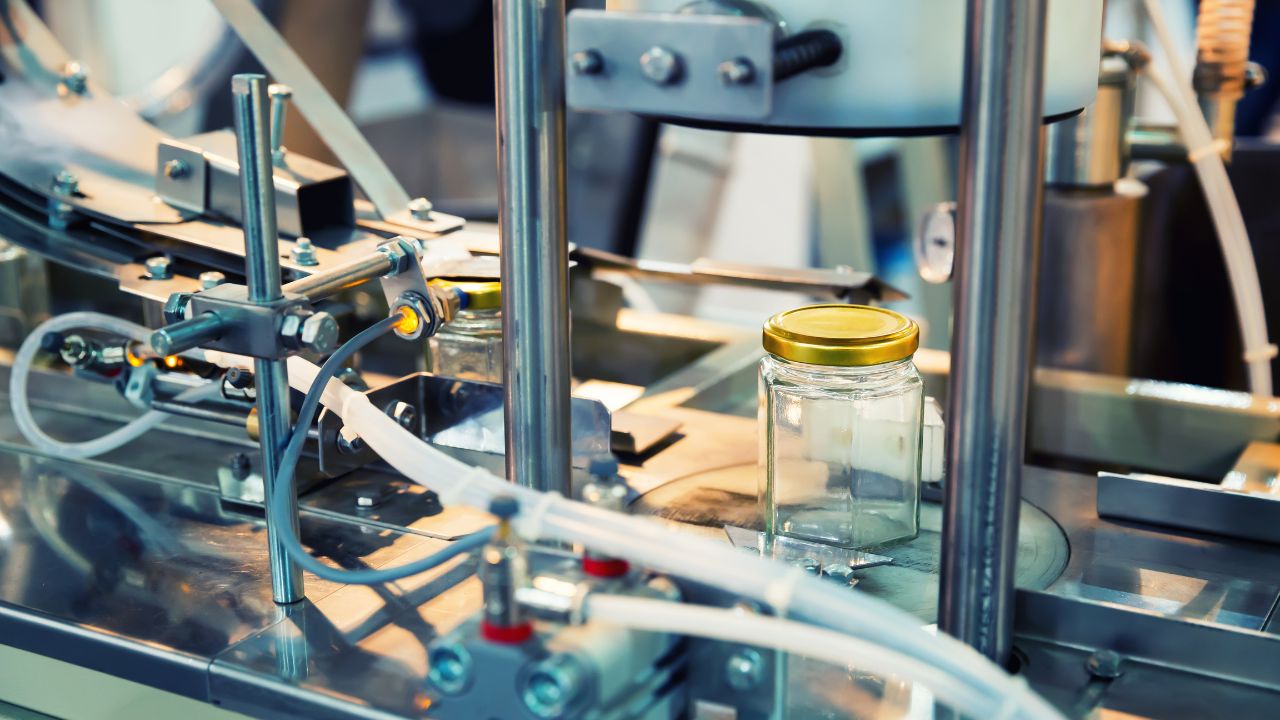
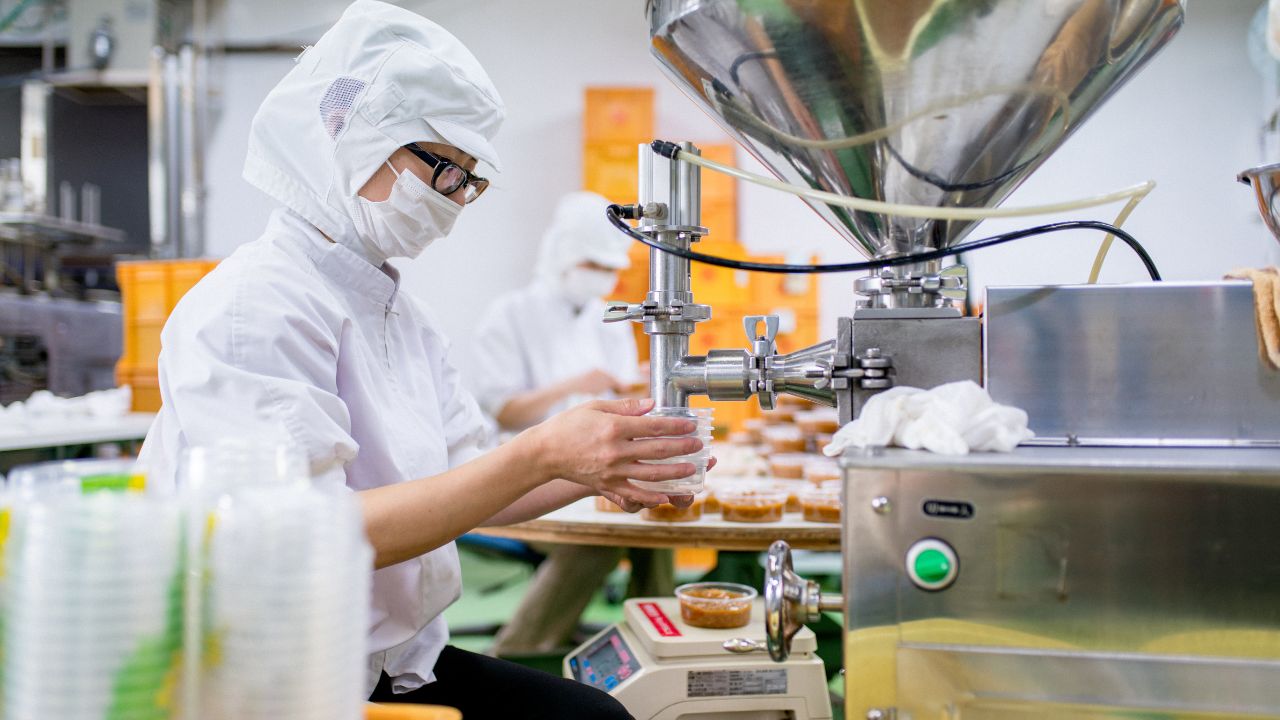
Volumetric fillers dispense products based on predetermined volumes using fixed displacement mechanisms. Pistons, rotary valves, or auger systems push material through calibrated chambers to achieve target fills. These systems measure the space a product occupies rather than its actual weight. Speed advantages make volumetric technology ideal for homogeneous liquids and consistent-density materials where rapid throughput outweighs precision concerns.
What Are the Principles of Gravimetric Filling?
Gravimetric fillers measure and dispense products based on actual weight using precision load cells. Real-time feedback systems adjust dispensing continuously to maintain the target mass regardless of density fluctuations. Multihead weighers utilize multiple weighing heads working simultaneously to achieve precise portioning at high speeds. These systems use permutation and combination algorithms to select optimal weight combinations from hoppers in milliseconds.
What Materials and Products Are Best Suited for Each?
Snacks, confectionery, and frozen foods represent primary applications where weighers and fillers deliver measurable accuracy improvements. Beverage and liquid filling applications for volumetric systems capitalize on speed advantages with consistent-density fluids.
Pharmaceutical packaging using gravimetric systems ensures regulatory compliance through superior measurement precision. Premium nuts packaging demands gravimetric accuracy to minimize costly product giveaway on high-value items. Food-contact surfaces utilize 316 stainless steel construction to meet sanitation standards and ensure long-term durability.
Why Is Accuracy Critical in Filling Processes?
Measurement precision directly controls material waste, regulatory compliance, and profit margins across packaging operations. Filling system precision determines whether manufacturers meet legal weight requirements while minimizing product giveaway. Accuracy differences between technologies translate into thousands of dollars in monthly material savings. The choice between volumetric filling accuracy and gravimetric precision shapes operational costs and competitive positioning.
How Does Measurement Accuracy Affect Product Waste?
Product giveaway refers to excess product dispensed beyond the target weight or volume. Reducing giveaway from 3% to 0.5% through improved accuracy yields $4,500 in monthly material savings. Volumetric systems generate daily waste costs of $75-$150 compared to gravimetric systems at $5-$25. Annual waste reaches $27,375-$54,750 for volumetric equipment versus $1,825-$9,125 for gravimetric technology. Gravimetric precision saves up to $125 daily and $45,625 annually compared to volumetric alternatives.
What Are the Challenges with Variable Product Densities?
Volumetric fillers demonstrate high sensitivity to product density variations that compromise fill accuracy. These systems remain limited to homogeneous materials with stable physical properties throughout production runs. Volumetric accuracy drops significantly when density changes due to moisture content, temperature, or particle size distribution. Gravimetric systems automatically compensate for density fluctuations by measuring actual mass rather than volume. This adaptive capability makes gravimetric technology essential for products with inherent variability or environmental sensitivity.
How Do Regulatory and Quality Standards Influence Accuracy?
Regulatory agencies enforce strict fill weight compliance to protect consumers from underfilled packages. Pharmaceutical and food manufacturers face financial penalties and liability exposure when accuracy tolerances exceed legal limits. Quality standards demand consistent product consistency across production batches to maintain brand reputation and customer satisfaction. Advanced weighing systems provide documented evidence of compliance through continuous monitoring and data logging. Manufacturers achieving tighter accuracy tolerances reduce regulatory risk while simultaneously lowering material costs through reduced overfill margins.
What Are the Key Differences Between Volumetric and Gravimetric Filling?
Measurement methodology represents the fundamental distinction between these filling approaches and determines operational characteristics. Volumetric systems calculate fills based on fixed chamber volumes, while gravimetric systems use load cells. Performance variations in speed, accuracy, and maintenance requirements directly impact the total cost of ownership. Understanding technical differences enables informed equipment selection aligned with product characteristics and business objectives.
How Do Measurement Techniques Compare?
Multihead weigher accuracy ranges from ±0.2% to ±1.0% of target weight through combination algorithms. Volumetric filler accuracy ranges from ±1-3% depending on product consistency and density stability. Gravimetric filler precision typically achieves ±0.1-0.5% of target weight through continuous mass measurement. The master guide to industrial weighing and filling machines details how these tolerances affect different applications and production environments. Measurement technique selection determines whether operations prioritize maximum speed or minimum waste based on product value.
What Are the Speed and Efficiency Trade-offs?
Multihead weighers operate at speeds of 30-300 packs per minute while maintaining tight tolerances. Volumetric speeds vary from 50-200 bottles per hour for semi-automatic systems to 400 per minute for automated lines. Gravimetric fillers have longer cycle times than volumetric systems due to stabilization requirements during weighing. A 35% increase in packaging speed through advanced automation generates $2,000 in additional monthly value. Speed advantages offset accuracy limitations for high-volume operations processing low-value products with minimal giveaway concerns.
How Do Cost and Maintenance Requirements Differ?
Gravimetric fillers require more maintenance-intensive calibration schedules and load cell verification procedures. Multihead weighers require complex calibration processes involving multiple heads and combination algorithms. Volumetric systems feature simpler mechanical designs with fewer precision components requiring specialized adjustment. Initial capital investment for gravimetric technology exceeds volumetric alternatives by 40-60% for comparable throughput. Maintenance costs, operator training requirements, and downtime frequency contribute significantly to total cost of ownership calculations.
How Do Consumer Preferences Influence Filling Technology Adoption?
Equipment purchasing decisions reflect buyer priorities around ROI, regional market dynamics, and operational risk management. Manufacturers evaluate filling technologies through 2-4 month assessment cycles involving multiple stakeholders and vendor comparisons. Regional adoption patterns reveal distinct preferences based on labor costs, regulatory environments, and product types. Understanding buyer motivations and objections enables manufacturers to align technology selection with business growth objectives.
What Are the Typical Buyer Motivations and ROI Expectations?
Equipment purchasing involves 2-4 month evaluation cycles with rigorous financial analysis and operational testing. Buyers conduct cost vs. benefit analyses focusing on payback periods under 12-24 months for capital approval. Multihead weigher payback periods typically span 18 to 36 months, depending on production volume and product value. Premium product applications achieve payback periods of 15 to 18 months through aggressive giveaway reduction. Packaging machine ROI calculations reveal how accuracy improvements translate into material savings and competitive advantages.
Which Regional Trends Affect Filling System Choices?
The Asia-Pacific region holds 34.75% market share in 2024, driven by large-scale manufacturing expansion. This region expects to grow at 6.0%-6.4% CAGR through automation investments, offsetting rising labor costs. The Middle East and Africa represent the fastest-growing emerging market at 8.14% CAGR through facility construction. North American and European markets prioritize equipment upgrades, emphasizing sustainability compliance and precision engineering. Regional labor costs, regulatory stringency, and product categories shape technology adoption patterns across global markets.
What Common Objections Arise in Equipment Purchasing?
High initial capital investment for advanced systems creates the primary financial barrier to adoption. Integration complexity concerns arise when connecting new equipment to existing production lines and control systems. Potential downtime during installation creates production disruption fears among operations managers, balancing output commitments. Manufacturers worry about changeover speed and the need for specialized operator training on complex systems. These objections require clear ROI documentation, integration support commitments, and operator training programs to overcome.
How Do Volumetric and Gravimetric Fillers Perform in Industrial Applications?
Real-world performance reveals distinct operational advantages and limitations for each filling approach across different industries. Volumetric technology delivers unmatched speed for homogeneous products while gravimetric systems excel with variable materials. Application-specific requirements determine whether speed, accuracy, or product handling flexibility drives technology selection. Industry experience demonstrates how matching equipment capabilities to product characteristics optimizes operational efficiency.
What Are the Operational Strengths and Weaknesses of Volumetric Systems?
Volumetric systems deliver exceptional speed advantages, reaching 400 fills per minute on automated beverage lines. Lower initial costs and simplified mechanical designs reduce entry barriers for budget-conscious operations and smaller manufacturers. These systems maintain consistent performance with liquids and homogeneous materials exhibiting stable density throughout production. Volumetric limitations become apparent with granular products, powders, or materials experiencing density shifts during storage. Accuracy degradation with sticky materials or products bridging in hoppers creates fill weight inconsistencies.
What Advantages Do Gravimetric Fillers Offer for Variable Products?
Gravimetric technology automatically compensates for density fluctuations, maintaining accuracy regardless of material property changes. Superior precision minimizes product giveaway on high-value items where overfill costs significantly impact profitability. Pharmaceutical filling machines leverage gravimetric accuracy to meet strict regulatory requirements and reduce waste simultaneously. Real-time weight monitoring enables immediate adjustment, maintaining consistent fill weights across production shifts. Process optimization through gravimetric feedback prevents batch-to-batch variations, compromising product consistency and customer satisfaction.
When Are Hybrid Systems Preferred?
Hybrid systems integrate the real-time accuracy of gravimetric technology with volumetric feeding speed and simplicity. These systems employ two-stage processes involving fast bulk dispensing followed by precision fine-tuning to target weight. Hybrid approaches achieve ±0.2-0.5% accuracy at speeds reaching 40-300 packs per minute, depending on configuration. Integration challenges require skilled technical support to optimize performance and maintain both subsystems effectively. Powder filling applications often utilize hybrid technology to balance throughput demands with accuracy requirements for specialty ingredients.
What Are the Financial Implications of Accuracy Differences?
Accuracy variations translate directly into material costs, labor expenses, and equipment depreciation, affecting operational profitability. Gravimetric precision reduces product giveaway by 80-90% compared to volumetric alternatives on variable-density products. Financial analysis reveals that the total cost of ownership encompasses capital investment, waste reduction, and labor savings. Understanding complete financial implications enables data-driven equipment selection aligned with long-term business objectives.
How Does Product Giveaway Impact Production Costs?
Product giveaway represents the most significant ongoing cost difference between volumetric and gravimetric filling technologies. A manufacturer processing 10,000 units daily at $0.50 per unit incurs $27,375-$54,750 annual waste with volumetric systems. Gravimetric precision reduces annual waste to $1,825-$9,125 through superior measurement accuracy and density compensation. High-value products amplify giveaway impact where each percentage point of overfill eliminates thousands in annual profit. Powder packaging solutions demonstrate how accuracy improvements preserve profit margins on premium ingredients and specialty formulations.
What Does ROI Look Like for Upgrading Filling Equipment?
Labor savings of $1,500 monthly from automated operation reduce manual monitoring requirements and increase productivity. Total monthly savings of $8,000 from combined giveaway reduction and labor efficiency offset the $180,000 equipment investment. The breakeven point reaches 22.5 months for premium snack manufacturers upgrading from linear to multihead systems. Advanced automation delivers 35% throughput increases generating additional $2,000 monthly value through expanded production capacity. Complete packaging line integration maximizes ROI by optimizing workflow across all production stages simultaneously.
How Do Waste Reduction and Labor Savings Contribute Financially?
Waste reduction eliminates raw material costs while simultaneously reducing disposal fees and environmental compliance expenses. Automated gravimetric systems require fewer operators for monitoring and manual correction compared to volumetric alternatives. Labor savings compound over time as wage inflation increases the value of reduced staffing requirements. Energy efficiency improvements in modern equipment lower operating costs by 15-25% compared to legacy systems. Combined financial benefits create compelling business cases for equipment upgrades even when capital budgets face constraints.
How Can Manufacturers Choose Between Volumetric and Gravimetric Filling?
Technology selection requires a systematic evaluation of product characteristics, production requirements, and financial constraints affecting operations. Manufacturers must balance accuracy requirements against speed demands, capital availability, and integration complexity. Large enterprises invest $25,000-$150,000+ per system, while medium enterprises allocate $10,000-$50,000, and SMEs budget $6,000-$25,000. Decision frameworks incorporating product type, production volume, and ROI expectations guide optimal equipment selection.
What Factors Should Guide Technology Selection?
Product value represents the primary selection criterion where high-value items justify gravimetric precision investment. Production volume requirements determine whether speed advantages offset accuracy limitations for volumetric technology. Density consistency throughout production runs indicates volumetric suitability, while variable products demand gravimetric compensation capability. Regulatory compliance stringency in pharmaceutical and food applications often mandates gravimetric accuracy levels. Existing infrastructure compatibility and operator skill levels influence integration feasibility and training requirements.
How Should Product Characteristics Influence the Decision?
Liquid products with stable viscosity and density perform optimally with high-speed volumetric filling systems. Granular products, nuts, and confectionery benefit from multihead weigher combination algorithms, minimizing giveaway on irregular pieces. Powder applications require gravimetric precision to compensate for density variations caused by moisture and particle distribution. Sticky materials or products prone to bridging challenge volumetric accuracy and favor gravimetric load cell measurement. Temperature-sensitive products experiencing density shifts during processing demand gravimetric real-time compensation to maintain accuracy.
What Role Does Integration with Existing Lines Play?
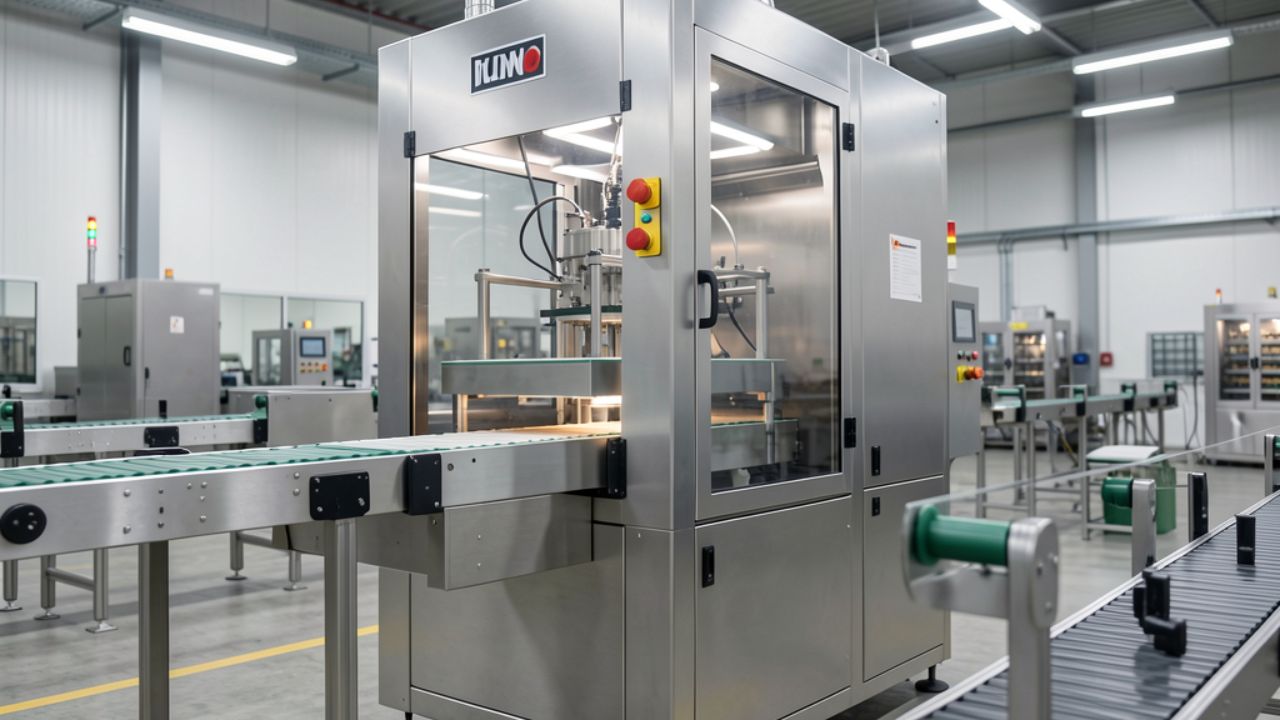
Equipment compatibility with current conveyor systems, control architectures, and facility layouts affects installation costs and downtime. Legacy production lines may require extensive modification to accommodate advanced gravimetric systems and load cell platforms. Manufacturers operating multiple product formats need flexible systems handling changeovers without significant downtime or recalibration. Automation integration capabilities determine whether new equipment connects seamlessly to existing SCADA and quality management systems. Technical support availability from non-outsourced teams ensures rapid troubleshooting and minimal production interruptions during integration.
Integrating Volumetric and Gravimetric Filling: Accuracy and Efficiency Implications
The global multihead weighers market, valued at $2.27 billion in 2026, reflects growing demand for precision packaging. Market projections reaching $3.80 billion by 2036 demonstrate sustained investment in accuracy-focused automation technology. The market expands at 5.3% CAGR over the forecast period, driven by giveaway reduction priorities. Volumetric fillers market, estimated at $1.70 billion in 2026, maintains relevance for high-speed liquid applications. The gravimetric fillers market, estimated at $0.80 billion in 2026, serves premium product manufacturers prioritizing precision.
Selecting between volumetric and gravimetric filling technologies requires balancing accuracy requirements against operational realities and financial constraints. Gravimetric systems deliver superior precision, minimizing waste on high-value products, while volumetric technology maximizes throughput on consistent materials. Understanding measurement principles, product characteristics, and total cost of ownership enables manufacturers to optimize packaging operations. Regional market dynamics, regulatory requirements, and product portfolio complexity further influence technology selection decisions.
Wolf-Packing Machine Company helps manufacturers navigate these technology decisions through engineering expertise and lifetime support commitments. Veterans of the packaging industry provide consultative guidance, matching equipment capabilities to specific production requirements and business objectives.
Stop Overfilling. Start Saving. Talk to Wolf Packing.
Every percentage point of product giveaway costs your operation thousands of dollars each year. Wolf Packing Machine Company works directly with food, supplement, and industrial manufacturers to identify the right filling system for their product, their line, and their budget. Our US-based engineering team reviews your current waste rates, evaluates your product characteristics, and delivers a recommendation with a documented payback timeline. You get American-made equipment, veteran-engineered reliability, and a support team that answers the phone after installation. Request your free filling accuracy assessment and find out how much your current system is costing you.